TransNamib’s 1.4 million-tonne target places renewed emphasis on rebuilding freight volumes through improved locomotive availability, operating performance and commercial partnerships. Achieving the target would give the operator its strongest annual freight performance in four years, despite volumes for the first seven months of 2026 remaining below the comparable 2025 level.
The agreement with MSC could also strengthen the role of rail in moving containerised freight between Walvis Bay and Windhoek. With initial volumes estimated at around 10,000 tonnes per month and potential growth to approximately 30,000 tonnes by 2028, the arrangement could increase utilisation of the Windhoek–Walvis Bay corridor and the WINCON container facility.
- TransNamib is targeting approximately 1.4 million tonnes of cargo for the 2026 financial year.
- Freight volumes reached 652,531 tonnes between January and the end of July 2026.
- The operator moved 709,750 tonnes during the corresponding period in 2025.
- TransNamib and MSC are targeting initial container volumes of around 10,000 tonnes per month, potentially increasing to approximately 30,000 tonnes by 2028.
- Container volumes on the Windhoek–Walvis Bay corridor reached approximately 20,404 tonnes by the end of July 2026.
- The WINCON Depot in Windhoek has a current capacity of approximately 1,500 containers, with scope for expansion as rail volumes increase.
Namibia's state rail operator, TransNamib, is aiming to move approximately 1.4 million tonnes of cargo in the 2026 financial year, which would be the company's highest volumes in the past four years.
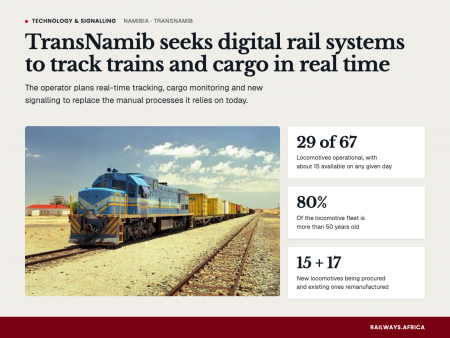
According to Alina Garises, manager of corporate communications, this target is supported by efforts to improve locomotive availability, operational efficiency and business development aimed at encouraging the shift of cargo from road to rail.
From January to the end of July 2026, TransNamib moved approximately 652,531 tonnes, compared to 709,750 tonnes during the corresponding period in 2025. The slight decline in year-to-date volumes can be attributed to higher fuel prices affecting demand and disruptions to operations, but the company is confident it can make up these volumes during the remainder of the financial year.
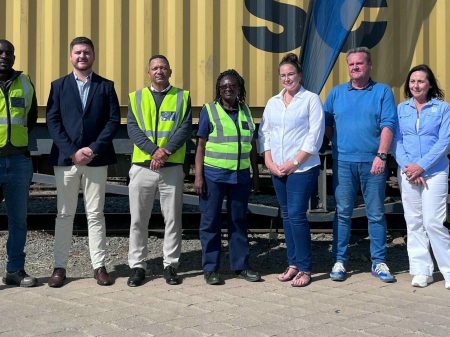
The company recently signed an agreement with Mediterranean Shipping Company (MSC), taking an important step towards expanding containerised cargo movement by rail from TransNamib's Windhoek Container Terminal (WINCON) Depot in Windhoek to Walvis Bay.
The collaboration reflects MSC's commitment to moving and growing container cargo on rail with TransNamib, with the immediate focus on utilising the WINCON facility to facilitate container cargo movements between Windhoek and Walvis Bay.
Early indications show that volumes will be around 10,000 tonnes per month, but these volumes are expected to grow significantly to around 30,000 tonnes by 2028.
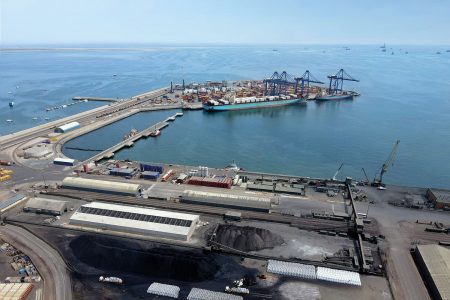
The WINCON is an important part of TransNamib's logistics infrastructure, facilitating the handling and transfer of containerised cargo.
The facility supports the movement of containers between rail and road and plays an important role in connecting the Port of Walvis Bay with inland markets. The WINCON's current capacity is approximately 1,500 containers, with opportunities to increase capacity as rail volumes grow.
The containers that move between Walvis Bay and Windhoek carry a diverse range of general and commercial cargo, including imported and exported goods, consumer products, industrial goods, mining machinery and other commodities.
TransNamib and MSC see further opportunities to strengthen rail-based logistics and increase the movement of containerised cargo by rail.
According to TransNamib, this relationship can support greater volumes, improved connectivity and more efficient movement of goods between the Port of Walvis Bay and inland destinations. Discussions around future opportunities will continue as the business relationship develops.
Garises said container volumes on the Windhoek–Walvis Bay rail corridor stood at approximately 20,404 tonnes by the end of July 2026. TransNamib continues to work with its container customers and logistics partners to grow rail volumes and provide a reliable alternative to road transportation.