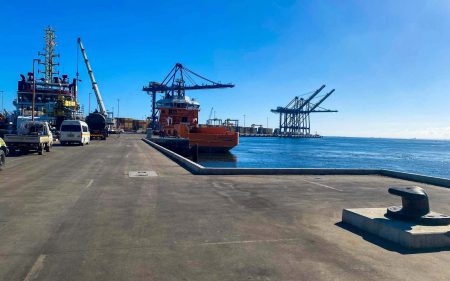
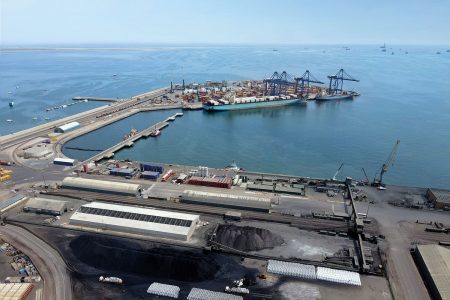
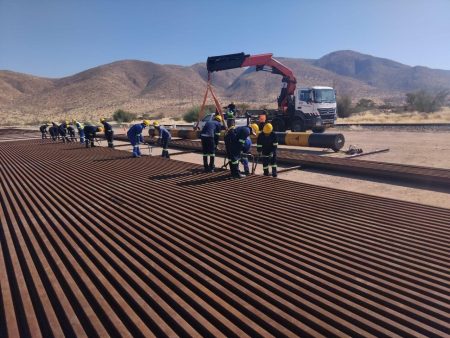
Walvis Bay is the focus of two projects aimed at landlocked Southern African markets: Dangote’s fuel storage and regional pipeline, and the proposed Trans-Kalahari Railway between Namibia and Botswana.
The railway is expected to increase cargo volumes through the Port of Walvis Bay and give Botswana an alternative to South African ports, while the pipeline is aimed at fuel supply for Botswana, Zambia, Zimbabwe, Malawi and the southern Democratic Republic of Congo.
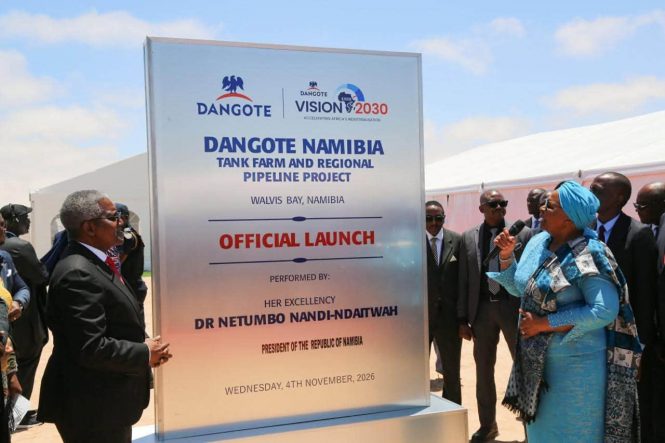
- The Dangote Group officially launched its Namibia tank farm and regional pipeline project at Walvis Bay on 4 November 2026, with President Netumbo Nandi-Ndaitwah performing the launch.
- The investment is valued at US$2.5 billion, with storage for 360 million litres of diesel and 240 million litres of petrol.
- The proposed pipeline network of about 1,700 kilometres would serve Botswana, Zambia, Zimbabwe, Malawi and the southern Democratic Republic of Congo.
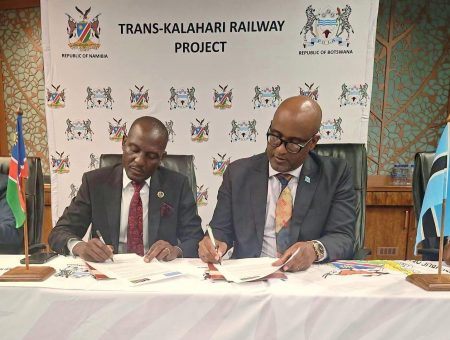
- A CPCS feasibility study found the Trans-Kalahari Railway technically feasible and economically justified.
- The railway’s proposed financing model is a public-private partnership concession, and the project is moving into procurement.
- The Trans-Zambezi Railway between Namibia and Zambia is at the feasibility assessment stage.
The proposed US$8 billion Trans-Kalahari Railway and the Dangote Group’s US$2.5 billion fuel storage and pipeline investment are positioning Walvis Bay as a major regional logistics and energy hub, with both projects expected to strengthen Namibia’s trade links with landlocked Southern African countries.
The Dangote Group has launched construction of a fuel storage facility with a capacity of 600 million litres and a regional pipeline network spanning approximately 1,700 kilometres, aimed at securing petroleum supplies for Namibia and neighbouring countries.
The storage facility will comprise 360 million litres of diesel and 240 million litres of petrol, while the proposed pipeline network will connect Walvis Bay to regional markets, including Botswana, Zambia, Zimbabwe, Malawi and the southern Democratic Republic of Congo.
Namibian President Netumbo Nandi-Ndaitwah said the investment marked a major step towards strengthening Namibia’s energy security, expanding regional trade and accelerating industrial development.
The infrastructure is expected to improve fuel supply and distribution while positioning Namibia as an important energy and logistics gateway to Southern Africa, particularly landlocked markets.
From Walvis Bay, the proposed pipeline will extend towards Otjiwarongo, with branches northwards towards Rundu and eastwards towards Ghanzi and Francistown in Botswana.
Nandi-Ndaitwah said the value of major investments should be measured by the opportunities they create for ordinary Namibians.
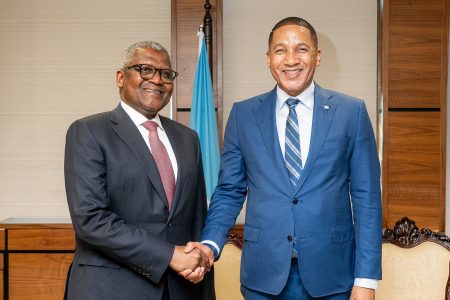
Aliko Dangote, President and Chief Executive of Dangote Industries Limited, reaffirmed his confidence in Namibia’s investment potential, saying Africa must industrialise Africa.
Dangote was encouraged by the support demonstrated by Namibia and Botswana, as well as progress on complementary infrastructure initiatives, including the proposed Trans-Kalahari Railway.
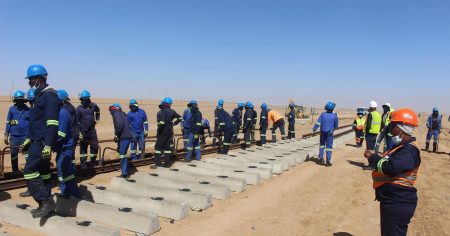
The approximately 1,850-kilometre railway is expected to connect Namibia and Botswana, improving access to mineral markets and increasing cargo volumes through the Port of Walvis Bay.
A feasibility study conducted by consultancy firm CPCS found that the railway was technically feasible, economically justified and capable of generating positive returns at infrastructure level. The railway is also expected to reduce Botswana’s reliance on South African ports, particularly Durban, which faces congestion challenges.
The proposed financing model is a public-private partnership concession, although the governments involved will still determine the appropriate financing structures and procurement processes.
The project is moving into its second phase, which involves procurement, including the preparation of documentation, inviting proposals and engaging a private-sector partner.
Meanwhile, the proposed Trans-Zambezi Railway linking Namibia and Zambia remains at the feasibility assessment stage. The government entered into a contract on 9 June 2026 for consultancy services to conduct a public-private partnership feasibility study.
Dangote said the wider pipeline network would improve fuel delivery to Zambia, supporting mining and other energy-intensive industries. For Zimbabwe and other regional markets, it would provide an alternative supply corridor, easing logistical constraints and petroleum transportation costs.
The Walvis Bay investment comes as Namibia prepares for an expanded role in the regional energy sector, particularly with the development of its oil and gas industry.
Written by Chamwe Kaira for Railways Africa