The company has identified real-time tracking, cargo monitoring, improved traffic management and better operational efficiency as key objectives of its digitalisation ambitions. It is also planning to implement new signalling technology to improve traffic management across its rail network.
Executive for Technology and Innovation Ruben Francisco called on telecommunications companies in Namibia to invest in fibre infrastructure across the country to support the digitalisation of rail operations, naming MTC Namibia, Telecom Namibia and Paratus Namibia. TransNamib is procuring 15 new locomotives and remanufacturing 17 existing locomotives.
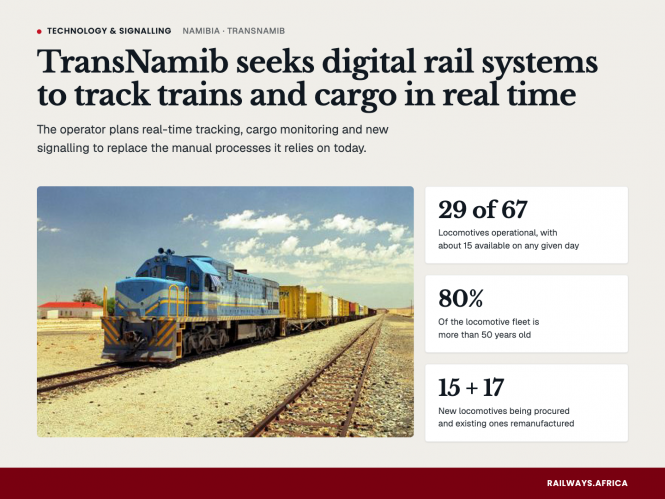
- TransNamib says digitalising its rail operations is necessary to improve the tracking of trains and cargo and to monitor operations in real time.
- TransNamib Executive for Technology and Innovation Ruben Francisco called on telecommunications companies in Namibia to invest in fibre infrastructure across the country.
- Francisco named MTC Namibia, Telecom Namibia and Paratus Namibia as companies to invest in expanding fibre connectivity.
- TransNamib has identified real-time tracking, cargo monitoring, improved traffic management and better operational efficiency as key objectives of its digitalisation ambitions.
- TransNamib is also planning to implement new signalling technology to improve traffic management across its rail network.
- The company is procuring 15 new locomotives and remanufacturing 17 existing locomotives.
Namibia’s rail operator, TransNamib, says digitalisation of its rail operations is necessary to improve the tracking of trains and cargo, monitor operations in real time and strengthen operational efficiency and service delivery.
The company currently relies on manual systems that are used to contact staff and customers about the location of trains and the status of goods being transported.
TransNamib has 67 locomotives, of which 80% are older than 50 years. Currently, 29 are operational, with approximately 15 available for service on any given day. TransNamib owns 1,572 wagons in total, of which 1,380 are operational.
TransNamib Executive for Technology and Innovation, Ruben Francisco, believes that digitalising rail operations would enable the company to track trains and monitor its activities more effectively.
TransNamib has a vision to digitalise the movement of trains, with the ambition of operationalising technology through real-time tracking and monitoring systems for trains and cargo.
The company’s planned digitalisation would also help improve operational efficiency and service delivery by providing better information on the movement of trains and goods.
TransNamib is also planning to implement new signalling technology to improve traffic management across its rail network. The modern signalling systems would improve the company’s ability to control train movements and reduce incidents. Namibia has recorded a growing number of major train derailments and operational incidents, including the Rovos rail derailment in March 2026.
Francisco said Namibia needed a digital rail system that would provide TransNamib with digital data to support its operations and improve the management of train movements.
The transition from manual processes to digital systems was necessary for the company to obtain more accurate and timely information about its trains and cargo.
The proposed digital systems would allow TransNamib to track its operations through technology rather than relying solely on manual communication.
Francisco also called on telecommunications companies in Namibia to invest in fibre infrastructure across the country to support the digitalisation of rail operations.
He identified MTC Namibia, Telecom Namibia and Paratus Namibia as companies that could invest in expanding fibre connectivity.
Investment in fibre infrastructure would provide the connectivity needed to improve the monitoring and tracking of trains.
The company has identified real-time tracking, cargo monitoring, improved traffic management and better operational efficiency as key objectives of its digitalisation ambitions.
The digitalisation plans come at a time when the company is in the process of procuring 15 new locomotives and remanufacturing 17 existing locomotives.
Written by Chamwe Kaira for Railways Africa.