The Trans-Kalahari Railway has moved beyond feasibility into the stage where Namibia and Botswana must decide how an estimated US$8 billion cross-border railway could be financed and procured. The preferred Copperbelt Corridor route would give Botswana’s mineral exports a direct rail connection towards Walvis Bay while adding a new regional freight corridor serving coal, copper, iron ore, fuel, cement and container traffic.
The next material stage is procurement. Although the feasibility study supports the project technically and economically, the final PPP structure, regulatory approvals and procurement process still need to be agreed before construction can begin. For Namibia, the project could materially increase the strategic importance of the Port of Walvis Bay within Southern African trade flows.
- Proposed Trans-Kalahari Railway length: 1,850 km
- Estimated capital cost: US$8 billion
- Preferred route: Copperbelt Corridor
- Development model under consideration: Public-private partnership concession
- Procurement is expected to move forward once financing and regulatory arrangements are agreed
- The corridor is intended to serve coal, copper, iron ore, fuel, cement and containerised freight
- The railway would provide Botswana with an alternative export route through the Port of Walvis Bay
- More than 36,000 jobs are estimated for Namibia during construction and operations
- A definitive construction start date has not yet been confirmed
- Namibia is separately progressing a PPP feasibility study for the proposed Trans-Zambezi Railway
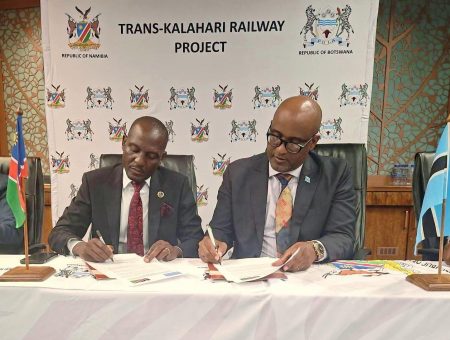
The proposed Trans-Kalahari Railway is technically feasible, economically justified and capable of generating positive operating returns, according to a feasibility study conducted by CPCS, Namibia's Ministry of Works and Transport has said.
The 1,850-kilometre Greenfield-Brownfield railway corridor is now expected to move into the procurement phase, with the governments of Namibia and Botswana set to determine the appropriate financing structure and procurement process.
The estimated capital cost of the project is US$8 billion, with a public-private partnership (PPP) concession model proposed as the potential funding structure. However, the two governments will still have to agree on the final financing arrangements.
The preferred route has been approved as the Copperbelt Corridor route, which is intended to provide access to major coal, copper and iron ore deposits in Botswana while strengthening regional trade links.
The ministry said procurement was estimated to start in August 2026, although the timing will depend on factors including regulatory approvals. It cautioned that a definitive construction start date cannot yet be confirmed.
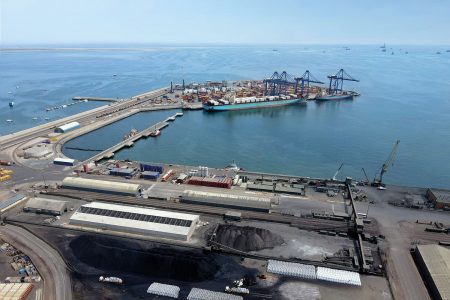
The project is expected to have significant implications for Namibia's logistics sector, particularly the Port of Walvis Bay.
According to the ministry, the railway would position Walvis Bay as a regional import and export hub, particularly for Botswana's mineral exports, while reducing Botswana's dependence on congested South African ports such as Durban.
The corridor is expected to serve a diversified freight market, with bulk commodities such as coal, copper, iron ore, fuel and cement forming the main freight base, alongside containerised cargo.
The ministry estimates that the project could create more than 36,000 jobs in Namibia during construction and operations.
The Trans-Kalahari Railway forms part of broader efforts to strengthen regional transport infrastructure and improve access to markets through alternative trade corridors.
Meanwhile, Namibia is also advancing work on the proposed Trans-Zambezi Railway.
The ministry said the government entered into a contract on 9 June 2026 for consultancy services to undertake a PPP feasibility study for the project.
The study is intended to assess whether the proposed railway can deliver value for money and whole-life cost efficiency, while generating economic benefits and contributing to poverty reduction and employment creation.
It will also examine affordability as well as the project's potential social, environmental and climate-change impacts.
The ministry said the outcome of the feasibility process will help determine the viability and appropriate structure for developing the Trans-Zambezi Railway under a PPP arrangement.