Why it Matters
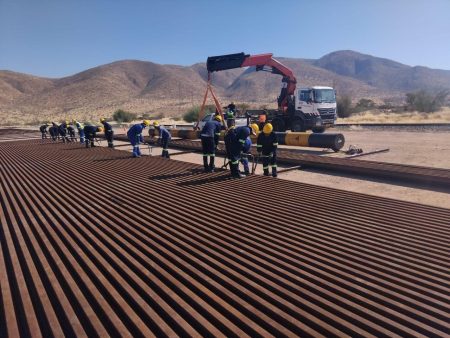
Namibia’s N$291 million in railway material imports points to continued activity around the country’s rail infrastructure upgrade programme, including work linked to the Kranzberg–Otjiwarongo, Otjiwarongo–Tsumeb and Otavi–Grootfontein sections. The scale of rail, switch blade and crossing piece imports suggests a focus on core track infrastructure rather than peripheral rail equipment.
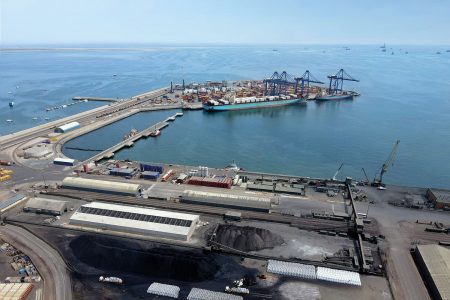
The data also sits within Namibia’s broader logistics corridor strategy. With the Trans-Kalahari Railway and Trans-Zambezi Railway extension both positioned around regional freight, mining flows and access to the Port of Walvis Bay, investment in existing railway infrastructure remains central to Namibia’s role as a Southern African logistics gateway.
Namibia imported railway infrastructure materials valued at approximately N$291 million during the first four months of 2026, with China emerging as the dominant supplier, according to trade data covering railway-related products.
The government is upgrading railway infrastructure, including the Kranzberg–Otjiwarongo line, the Otjiwarongo–Tsumeb line and the Otavi–Grootfontein sections.
The imports consisted primarily of railway rails, switch blades, crossing frogs and other track construction materials, with total volumes exceeding 10.3 million kilograms between January and April 2026.
Railway rails of iron or steel accounted for the largest share of imports, valued at about N$229.8 million. The second-largest category was railway switch blades, crossing frogs and other crossing pieces of iron or steel, which amounted to N$59.6 million. Additional imports included railway track construction materials valued at N$2.2 million and railway fish plates and sole plates worth just under N$10 000.
China supplied the overwhelming majority of the railway materials, accounting for approximately N$284.6 million, or more than 97% of the total import value. South Africa was the second-largest supplier, providing railway products worth about N$7 million during the period. Smaller consignments were imported from Germany and Turkey.
The data shows that the largest single shipment occurred in March, when Namibia imported railway rails from China valued at nearly N$225 million and weighing more than 8.3 million kilograms. During the same month, imports of railway switch blades and crossing pieces from China reached almost N$59.6 million, with a net weight of about 1.86 million kilograms.
South Africa remained an important source of smaller railway-related consignments throughout the period, supplying rails, track construction materials and other components required for rail infrastructure maintenance and development.
Separate rail transport import data indicates that relatively few non-railway products entered Namibia via rail transport during the period under review. Recorded imports transported by rail included hair preparations, candles and pharmaceutical products from South Africa.
The railway infrastructure imports come as Namibia continues efforts to strengthen its transport and logistics network, with rail infrastructure playing a critical role in supporting regional trade, freight movement and connectivity between production centres, ports and neighbouring countries.
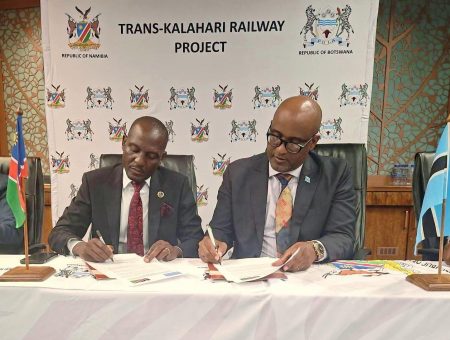
Namibia is planning to develop the Trans-Kalahari Railway with Botswana at an estimated cost of US$16 billion. The Trans-Kalahari Railway is a proposed 1 500-kilometre line linking coalfields and mineral areas in Botswana, including Mmamabula, to the Port of Walvis Bay in Namibia.
Furthermore, Namibia is advancing a 760 km to 772 km extension of the Trans-Zambezi Railway, linking Grootfontein to Katima Mulilo via Rundu and Divundu. The project aims to connect mining areas in Zambia and the DRC to the Port of Walvis Bay.
Written by Chamwe Kaira for Railways Africa