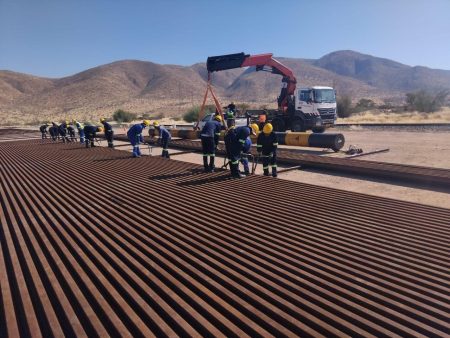
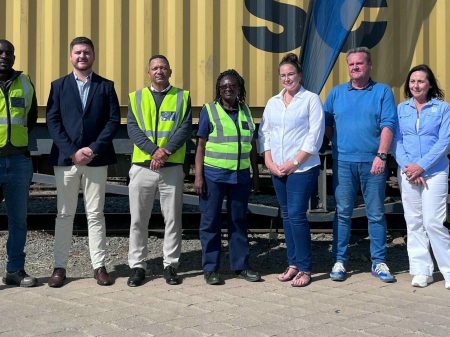
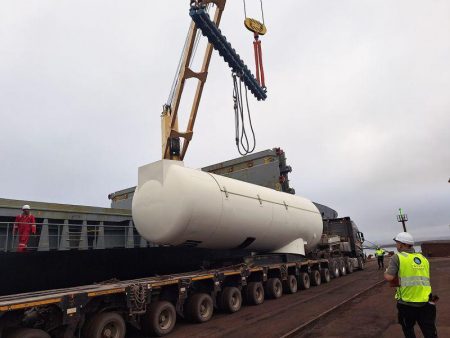
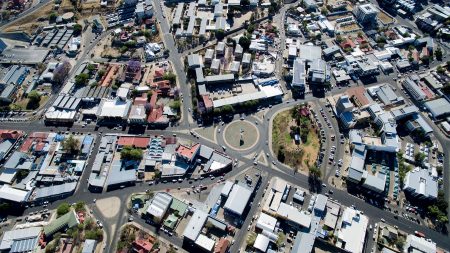
Rail and port infrastructure development has emerged as one of the major outstanding opportunities under the Namibia-European Union Strategic Partnership, even as significant progress continues across green hydrogen, mining and industrial investment projects.
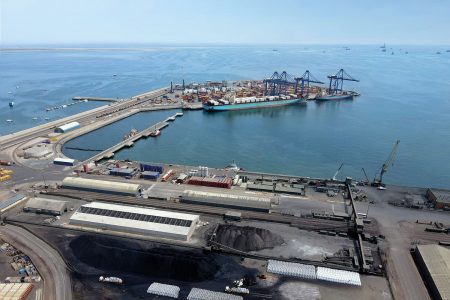
Officials speaking during the Namibia-EU Business Forum held in Windhoek said master plans for the expansion of the ports of Walvis Bay and Lüderitz have already been completed, while additional studies and partnerships are being explored involving Namport, POABI and the Port of Rotterdam.
The European Union has entered into a service agreement with the Port of Rotterdam for the design of a Green Minerals Terminal at the Angra Point Hydrogen Hub in Lüderitz.
The EU’s Global Gateway funding will support the development of the multi-user terminal design, which will serve the export of processed mineral ores as well as the import and export of various other cargoes.
Namport is positioning itself to become sub-Saharan Africa’s premier green hydrogen export port. Despite this progress, officials noted that further opportunities remain in rail and port development, while a EUR500 million framework loan facility from the European Investment Bank is still to be rolled out.
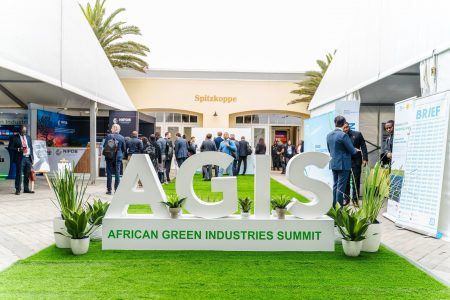
The forum highlighted broader progress being made under the Namibia-EU Strategic Partnership roadmap for 2023-2025, with both sides pointing to expanding investment pipelines, infrastructure planning and skills development aimed at positioning Namibia as a green industrial hub.
One of these projects is by CMB.TECH Namibia, which is developing a green hydrogen, powered locomotive. The locomotive is currently being assembled at the facilities of Traxtion, a South African rail engineering and refurbishment specialist.
Namibia has a large fleet of idled locomotives that can be repowered with this cost-effective and future-proof technology. Set for launch later this year, the project is the result of a strategic partnership between three companies, TransNamib Holdings Limited, Africa Global Logistics and CMB.TECH Namibia.
The partners will operate Namibia’s first heavy‑duty freight service running on locally produced green hydrogen. Initially, 50 round trips will be covered between the Port of Walvis Bay and the Container Depot near Windhoek during the trial period, with the option to extend operations. Green hydrogen for the project will be produced off‑grid at CMB.TECH Namibia’s hydrogen plant in Walvis Bay.
The initiative aims to show how hydrogen can be integrated into freight rail without the need for new rolling stock or major infrastructure changes.
Under the EU-Namibia partnership, several green hydrogen and critical raw material projects have advanced into investment pipelines supported by EU initiatives. These include HyIron, Hyphen, Zhero, Cleanergy and Daures, as well as mining-related investments involving Andrada and Northern Graphite.
Written by Chamwe Kaira for Railways Africa