TransNamib Holdings Limited will begin a six-month trial of a prototype dual-fuel locomotive powered by hydrogen and diesel, marking a significant step toward modernising Namibia’s rail sector and reducing reliance on fossil fuels.
The trial, approved by the company’s board, will be conducted in partnership with CMB.TECH and will involve approximately 50 round trips along the Walvis Bay–Windhoek corridor. The pilot project forms part of TransNamib’s broader strategy to adopt advanced rail technologies and support decarbonisation efforts.
According to TransNamib, the locomotive will be evaluated using a comprehensive performance matrix, including fuel consumption, reliability, operational efficiency, maintenance requirements and overall cost-effectiveness within Namibia’s operating conditions. A decision on whether to expand the project will be made after the six-month evaluation period.
TransNamib Chief Executive Officer Desmond Van Jaarsveld said the trial will also assess safety protocols, staff training and operational procedures related to hydrogen storage, handling and refuelling. He added that while CMB.TECH will manage all hydrogen-related infrastructure and technical components, TransNamib will focus on building internal capacity and ensuring compliance with rail safety standards.
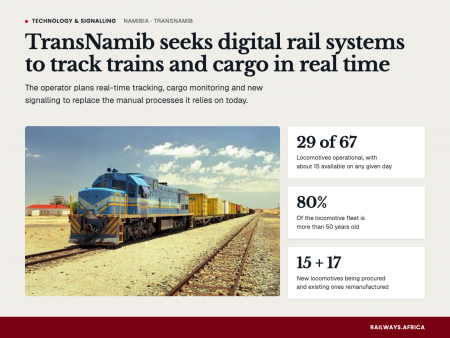
The company’s current fleet operates primarily on conventional diesel locomotives. However, depending on the trial’s outcome, TransNamib may consider transitioning parts of its fleet to dual-fuel technology. The long-term viability of hydrogen-powered rail in Namibia will depend on economic factors, particularly the cost and availability of hydrogen, as well as performance under the country’s harsh climatic conditions.
Van Jaarsveld said TransNamib will continue to update its board and the relevant government ministry as the trial progresses.
The project positions TransNamib at the forefront of sustainable rail innovation and aligns with Namibia’s ambitions to develop a green hydrogen economy.
CMB.TECH Namibia is leading the engineering and development of the locomotive, which is being assembled at the facilities of Traxtion in South Africa. The initiative is part of a broader partnership involving TransNamib, Africa Global Logistics and CMB.TECH Namibia, aimed at demonstrating how hydrogen can be integrated into the country’s freight rail system.
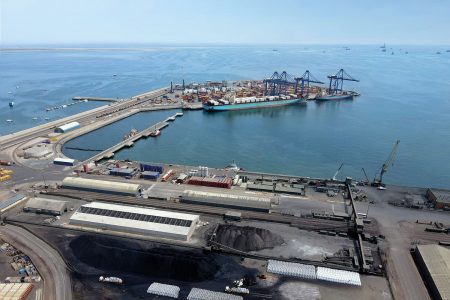
Green hydrogen for the project will be produced off-grid at CMB.TECH Namibia’s plant in Walvis Bay, showcasing the potential for locally produced energy to power existing logistics corridors.
The locomotive is fitted with a dual-fuel hydrogen combustion engine developed by BeHydro, a joint venture between CMB.TECH and Anglo Belgian Corporation. The 2,250-horsepower engine is designed for use across rail, marine and power generation sectors and can operate on both diesel and green hydrogen.
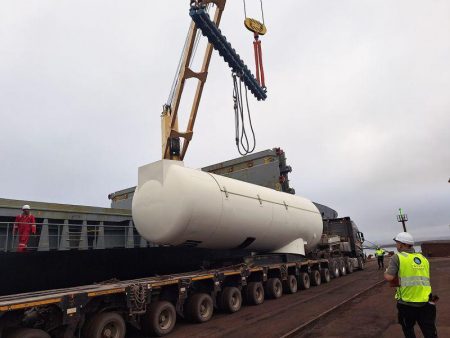
Hydrogen will be stored in two 20-foot containers mounted on a fuel tender behind the locomotive, each capable of carrying up to 360 kilograms of compressed hydrogen. The containers can be refuelled using a mobile system developed by CMB.TECH or swapped out within minutes to minimise downtime.
Written by Chamwe Kaira for Railways Africa