Walvis Bay Faces Pressure from the Revitalisation of TAZARA and Lobito

The revitalisation of the Lobito Corridor and the Tanzania–Zambia Railway Authority (TAZARA) are reshaping trade patterns across Southern Africa, altering cargo flows and intensifying competition among regional ports and corridors, the Namibian Ports Authority observed.

Walvis Bay Faces Pressure from the Revitalisation of TAZARA and Lobito
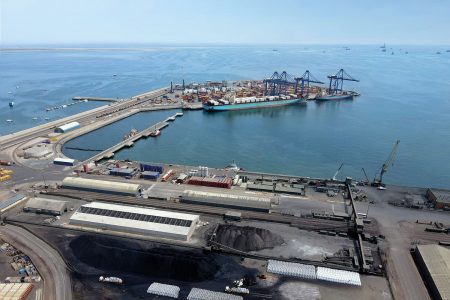
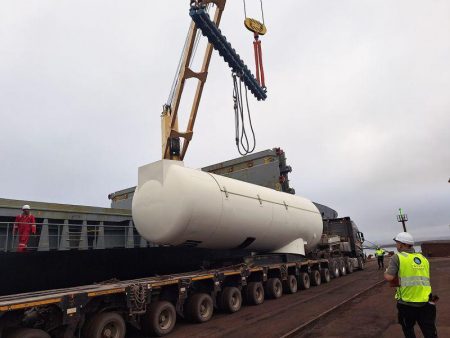
Photo Credit. Namport

These developments, supported by international financing and industrial policy objectives, are redefining how landlocked economies access global markets and are influencing the long-term positioning of Namibia’s ports.

The Lobito Corridor, anchored by the rehabilitated Benguela Railway in Angola, has emerged as a transformative logistics route for the Democratic Republic of the Congo (DRC) and Zambia.

Operated by the LAR consortium, comprising Mota-Engil, Trafigura and Vecturis, the corridor offers shorter transit times and lower transport costs than many existing routes. Its design and operational focus position it to transport critical raw materials, including copper and cobalt, and to support regional value chains linked to electric vehicle battery manufacturing.

As a result, exporters in the DRC and Zambia are increasingly viewing Lobito as a viable alternative to traditional southern and western routes, the Namibian Ports Authority noted in its 2025 Integrated Report.

The impact of the Lobito Corridor is amplified by efforts to revitalise and integrate the Tanzania–Zambia Railway Authority (TAZARA) railway.

Recent interventions, however, have repositioned the railway as a strategic eastward extension of regional trade corridors. China, which holds substantial interests in critical raw material mining across the region, has also secured operational control of TAZARA, strengthening its role as an alternative export route to the Indian Ocean and reinforcing east–west trade linkages across Southern and East Africa.

The Namibian Ports Authority fears that the Lobito Corridor and a revitalised TAZARA are shifting cargo flows away from established routes and introducing new competitive dynamics. Improved reliability, reduced transit times, and lower logistics costs are encouraging shippers to reconsider traditional gateways, including Walvis Bay. For Namibia, these changes represent a structural shift in regional trade patterns rather than a temporary competitive challenge. Namport faces increasing pressure to respond to corridor-driven changes in trade behaviour.

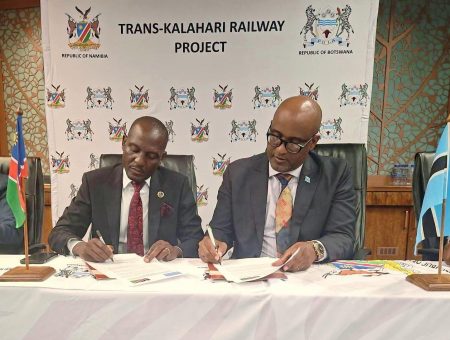
The long-standing development of new rail connections, particularly the Grootfontein–Katima Mulilo and Trans-Kalahari rail links, is becoming increasingly critical as neighbouring countries invest heavily in alternative routes.

At the same time, competition is intensifying from the south. South Africa’s Transnet Port Terminals (TPT), the state-owned operator of 16 terminals, has made measurable progress in restoring port performance following prolonged inefficiencies. During the 2024/25 financial year, TPT exceeded volume targets at five major terminals and shifted its focus towards asset modernisation and operational efficiency.

A capital budget of R3.4 billion has been allocated for the 2025/26 financial year to expand container yards, upgrade rail infrastructure and improve bulk and agricultural terminals. These measures signal South Africa’s intent to reclaim cargo volumes and reassert its role in regional trade.

For Namport, the combined effect of corridor development to the north and east and improving port performance to the south heightens competitive pressure. Cargo volumes previously redirected to Namibian ports during periods of regional disruption may increasingly shift to alternative routes as reliability improves elsewhere.

The Authority stated that a key limitation for Namibia remains the absence of direct rail links to Botswana and Zambia, both of which are central to changing regional trade patterns.

To address this gap, feasibility studies are underway for two strategic rail projects. The Trans-Kalahari Railway feasibility study is expected to be completed by the fourth quarter of the 2025/26 financial year, after which a private development partner will be appointed, with construction anticipated to begin in 2029. In parallel, a feasibility study has been completed for the extension of the railway from Grootfontein to Katima Mulilo, a development that would enable the Trans-Zambezi Railway to connect directly to Zambia and expand the reach of the Walvis Bay–Ndola–Lubumbashi Corridor.

In 2025, cross-border cargo handled through Namport’s ports originated primarily from South Africa (35%) and Zambia (34%), together accounting for nearly 70% of total cross-border volumes. Botswana contributed 18%, followed by the DRC at 10% and Malawi at 8%. Zimbabwe and Angola remained marginal contributors.

Related News Articles