Kaleido Logistics and TransNamib Launch Walvis Bay–Karibib Rail Corridor to Boost Namibia’s Freight Capacity
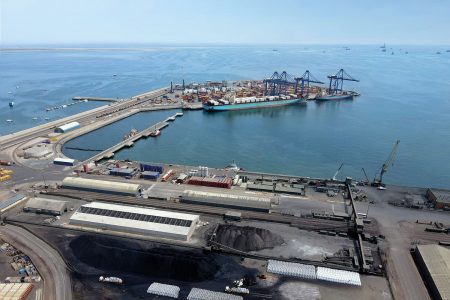
The Walvis Bay–Karibib corridor strengthens the inland connection between Namibia’s main port and the Karibib region through a rail-supported logistics model designed to improve cargo movement, reduce transit times and increase supply chain efficiency.
Projected volumes of up to 25,000 tonnes per month could shift significant freight from road to rail, reduce pressure on Namibia’s road network and support more integrated rail, road and maritime transport operations.
- The Walvis Bay–Karibib rail corridor became operational in July 2025.
- The service is supported by Kaleido Logistics’ new logistics hub in Karibib.
- The facility has direct access to TransNamib’s rail infrastructure.
- Services include cargo handling, storage, loading, unloading and transhipment.
- The hub will consolidate marble, granite blocks and other commodities.
- Initial freight volumes are projected to reach up to 25,000 tonnes per month.
- The service could remove approximately 735 trucks from Namibian roads each month and reduce carbon emissions by about 900 tonnes annually.
Kaleido Logistics and TransNamib have launched the Walvis Bay–Karibib rail corridor, a new freight service aimed at improving the movement of cargo between Namibia’s main port and inland regions.
The corridor, which became operational in July 2025, is supported by the opening of a new logistics hub in Karibib by Kaleido Logistics. The facility is designed to support rail and logistics operations in the region and complements Kaleido’s existing logistics centre in Walvis Bay.
Located alongside the railway line, with direct access to TransNamib’s rail infrastructure, the Karibib hub will provide cargo handling, storage, loading, unloading and transhipment services. The companies said the facility is expected to reduce transit times and improve supply chain efficiency.
The hub is equipped with specialised cargo-handling equipment and will support the consolidation of marble and granite blocks, as well as other commodities and cargo from the Karibib area. The service is expected to provide a competitive alternative to road transport by improving inland logistics efficiency.
Initial freight volumes are projected to reach up to 25,000 tonnes per month. According to the companies, this could remove approximately 735 trucks from Namibian roads each month, contributing to improved road safety, reduced pressure on road infrastructure and an estimated reduction of about 900 tonnes of carbon emissions annually.
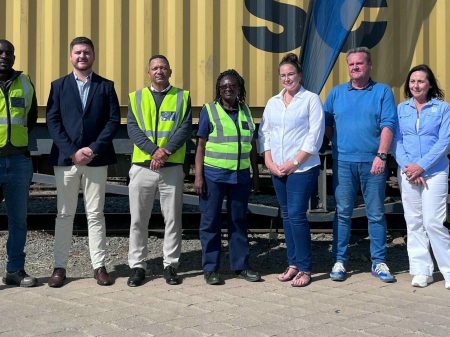
Kaleido Logistics CEO Xoán Martínez said the launch of the corridor and the Karibib logistics hub marked an important step in expanding the company’s integrated logistics solutions in Namibia and across African transport corridors.
Building on its rail operations in Angola, Zimbabwe and Mozambique, the company sees the new corridor, developed in partnership with TransNamib, as a clear competitiveness driver for Namibia.
TransNamib CEO Desmond van Jaarsveld said the partnership demonstrated the company’s commitment to restoring rail as a central component of Namibia’s logistics network.
TransNamib believes that, by working with strategic partners such as Kaleido Logistics, the company will create efficient, reliable and sustainable freight solutions that strengthen the country’s position as a regional logistics hub.
The rail corridor operates on a cargo consolidation model that allows rail to complement road transport rather than replace trucking services. The model enables the movement of both bulk commodities and containerised cargo, depending on the nature of goods and the most efficient transport options.
Kaleido’s international ocean freight operations will allow the company to integrate rail, road and maritime transport solutions through a single logistics network.