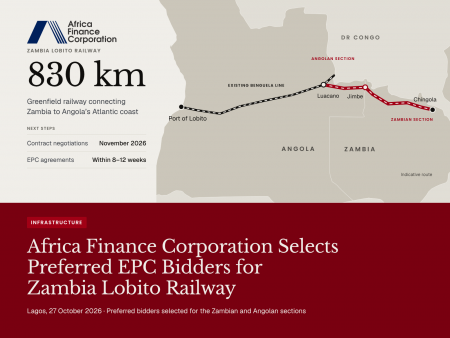
Pensana Plc has stated that its Longonjo rare earth mine in central Angola, adjacent to the Lobito rail corridor, will export directly from the Port of Lobito via the Lobito Corridor railway. The company says the mixed rare earth carbonate produced will be railed 273 kilometres in containers to the port, at an initial 20,000 tonnes a year, expanding to 40,000 tonnes a year in Year 4.
The company says commissioning is planned for January 2028, with full production by September 2028. Subsidiary Ozango Minerais sa's proposed equity financing is expected to be in the range of US$75 million to US$90 million.
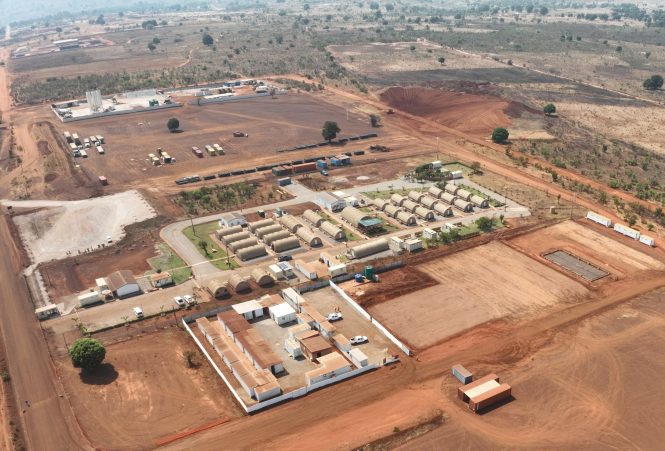
- Pensana Plc has issued an update on financing and development of its Longonjo rare earth mine in Angola, which is adjacent to the Lobito rail corridor.
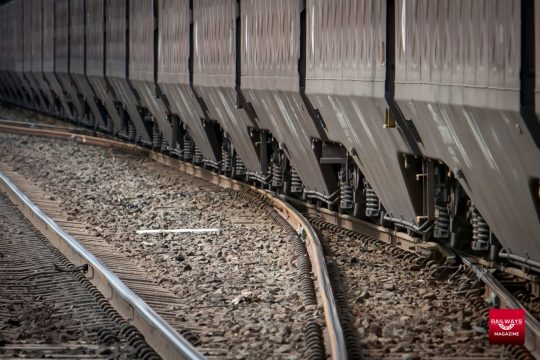
- The company says Longonjo will export directly from the Port of Lobito via the Lobito Corridor railway.
- The mixed rare earth carbonate will be railed 273 kilometres in containers to the Atlantic port of Lobito.
- Initial production is planned at 20,000 tonnes a year, expanding to 40,000 tonnes a year in Year 4.
- The proposed equity financing for subsidiary Ozango Minerais sa is expected to be in the range of US$75 million to US$90 million.
- Commissioning is planned for January 2028, with full production by September 2028.
Pensana Plc said in an announcement on 26 October 2026 that it is continuing discussions with major shareholders, including Cascade, on the equity needed by its subsidiary, Ozango Minerais sa, to bring the Longonjo rare earth mine in central Angola through commissioning in early 2028 and into full production in late 2028. The mine is adjacent to the Lobito rail corridor, and Pensana says the mixed rare earth carbonate (MREC) it produces will be railed 273 kilometres in containers to the Atlantic port of Lobito for export.
The proposed Ozango equity financing is expected to be in the range of US$75-90 million of which Cascade expects to deploy a significant tranche within the next 14 days. Cascade has so far invested US$15 million of its US$165 million overall commitment.
Longonjo ranks as one of the world’s largest undeveloped rare earth mines and, despite the current slowdown due to concluding equity financing, is expected to be one of the first major rare earth mines to come into production in the past decade, supplying both light and heavy rare earths in the form of a mixed rare earth carbonate (MREC).
Longonjo is fully permitted, fully engineered and the overall construction schedule is 30% complete coupled with over 60% of procurement committed. It has the lowest capital and largest ore body by peer group and is one of only five rare earth mines classified as ‘highly probable’ by independent Benchmark Minerals Intelligence.
It also has the highest total rare earth oxides (TREO) by peer comparison containing light rare earths (NdPr) and heavy rare earths (DyTb).
Alongside a signed Power Purchase Agreement for hydro power supply from Laúca Dam, Longonjo will export directly from the Port of Lobito via the U.S. Government backed Lobito Corridor railway providing the independent supply chain security of a world class ore body and logistics infrastructure.
Producing initially 20,000 tpa of clean MREC containing 2,400 tpa of NdPr and 73 tpa DyTb, expanding to 40,000 tpa of MREC in Year 4 containing 4,200 tpa NdPr and 122 tpa DyTb making it one of the world’s largest heavy rare earth producers outside of China.
The very low phase 1 Capex of US$250 million, due to the excellent infrastructure, an EBITDA Margin of 80% and based on the TREO grade and low operating costs, generates an NPV of US$2.3 billion with high upfront cash returns and a pay-back period of under 2 years at current prices.
The Company has spent over US$90 million to date in bringing the mine from exploration to production in around nine years (through COVID) which compares with a global average, according to S&P Global Market Intelligence, of over 16 years for most mines with some rare earth mines expected to take well over 20 years to bring into production.
Commissioning is planned for January 2028 with conditional deployment of equity shortly, and binding offtakes and debt approvals by February 2027, for full production by September 2028.
As previously advised the Company has had successful detailed discussions with potential major offtake partners in Japan and is well advanced with agreements to support the proposed debt facilities with ABSA and EXIM.
These offtake agreements are expected to cover the majority, if not all, of the initial annual production of 20,000 tonnes of MREC. Discussions are underway with potential US offtake partners for some of the initial production however US customers are generally more focussed on the stage 2 production of an additional 20,000 tonnes of MREC to be delivered when the US market is expected to have become more fully developed.
There continues to be strong demand for magnet metal products in the ex-China market with heavy rare earth Dy in particular currently trading at many multiples of the China domestic price.
This pricing disparity reflects the ongoing constraints in obtaining non-magnet product from China and is supportive of those seeking to develop independent mid-stream and downstream rare earth production.