ARCCLA Sets Out Caála Platform as Pilot for Angola's Logistics Network on the Lobito Corridor

Corridor traffic depends on what happens where cargo is consolidated, and Caála places that function on the Lobito Corridor in Huambo, between the agricultural interior and the railway to the coast.

Whether the platform changes what the corridor carries will depend on the definitive configuration following the interim cold-chain arrangement, and on the coordination role ARCCLA attributes to institutions such as the new tri-national transit facilitation agency.

ARCCLA Sets Out Caála Platform as Pilot for Angola's Logistics Network on the Lobito Corridor
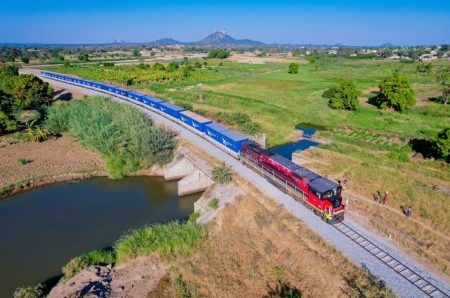
Photo: ARCCLA

  • ARCCLA has identified the Caála logistics platform in Huambo as the structuring and pilot project of Angola's National Network of Logistics Platforms.
  • The platform sits on the Lobito Corridor and is designed to integrate agricultural and industrial production, logistics services and different transport modes.
  • An Intermediate Cold Solution (SIF) is associated with it as a transitional arrangement for perishable products.
  • The Netherlands supports development of the platform, with investment support through the World Bank-funded Diversifica Mais programme.
  • ARCCLA cited the Agency for the Facilitation of Transit Transport in the Lobito Corridor, created under an agreement between Angola, the DRC and Zambia, as an advance for the corridor.
  • The remarks were made at a round table during the sixth E&M Conference on the Blue Economy.

Angola's Regulatory Agency for Cargo and Logistics Certification (ARCCLA) has set out the Caála logistics platform in Huambo, on the Lobito Corridor, as the structuring and pilot project of the National Network of Logistics Platforms (RNPL) it is implementing.

The platform is designed to promote integration between agricultural and industrial production, logistics services and different modes of transport, according to Alcides Paulo, director of ARCCLA's Directorate for the Dynamisation of the National Network of Logistics Platforms. Associated with it is an Intermediate Cold Solution (SIF), described as a transitional arrangement to meet immediate needs for the conservation and movement of perishable products while the platform advances towards its definitive configuration.

Paulo said the development of the Caála platform has the support of the Netherlands, while investment on the granting side is supported by the Diversifica Mais programme, funded by the World Bank.

He told the round table that the RNPL has a strategic role in the development of logistics corridors and in strengthening the value chains associated with the blue economy, bringing production centres closer to markets and to the country's main transport infrastructure. An integrated approach between ports, railways, roads, transport corridors and logistics platforms matters, he said, because the competitiveness of a corridor depends not only on physical infrastructure but on institutional mechanisms capable of ensuring coordination, trade facilitation and efficiency in the transit of goods.

Among the advances on the Lobito Corridor, Paulo pointed to the creation of the Agency for the Facilitation of Transit Transport in the Lobito Corridor (AFTTCL), established under the agreement signed between Angola, the Democratic Republic of Congo and Zambia.

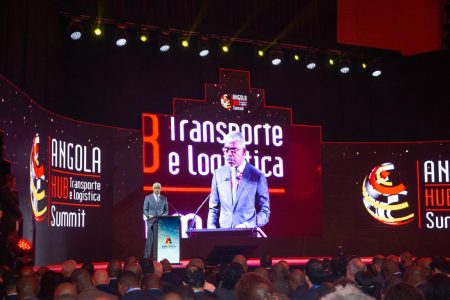
Paulo was speaking at a round table on ports and logistics corridors held during the sixth E&M Conference on the Blue Economy, whose opening session was chaired by the Minister of Fisheries and Marine Resources, Carmen do Sacramento Neto. He shared the panel with Ottoniel Manuel, a director of Lobito Atlantic Railway, and André Reigota of Standard Bank Group.

Related News Articles