Zambia has vowed to mobilise the US$700 million required to complete the Lwakano-to-Chingola section of the Lobito Railway, a greenfield project considered critical to connecting copper-producing areas in Zambia and the Democratic Republic of Congo (DRC) to the Port of Lobito in Angola. World Bank Managing Director of Operations Anna Bjerde said the Bank was ready to support Zambia in closing the remaining gap through construction of the link.
At the second Lobito Corridor Coordination meeting in Lusaka, World Bank Director for Infrastructure Erik Fernstrom said the working group will develop a 24-month agenda aimed at moving the project from political momentum to implementation. The International Finance Corporation (IFC) has identified 118 investment opportunities along the corridor, and the railway in Angola is fully operational.
- Zambia has said it will mobilise the US$700 million needed to complete the Lwakano-to-Chingola section of the Lobito Railway.
- Zambian President Hakainde Hichilema said the Lwakano-to-Chingola link must not fall behind, given Zambia’s ambition of producing three million tonnes of copper for export through the Lobito Corridor.
- World Bank Managing Director of Operations Anna Bjerde said shipments currently take about 28 days to travel from a mine to the port, while a properly functioning Lobito Railway could reduce the journey to about five days.
- The coordination group has developed the Lobito Corridor Monitoring Tool for Investment Visibility, known as LocoMotiv, and a Lobito Development Atlas that brings together the master plans of Angola, the DRC and Zambia.
- The International Finance Corporation (IFC) has identified 118 investment opportunities along the corridor, spanning sectors including mining and energy, according to Bjerde.
- World Bank Director for Infrastructure Erik Fernstrom said the working group would develop a 24-month agenda aimed at moving the project from political momentum to implementation.
Zambia has vowed to mobilise the US$700 million funding required to complete the Lwakano-to-Chingola section of the Lobito Railway, as regional governments and development partners push to turn the corridor into a major trade and investment route linking the Copperbelt to Angola’s Atlantic port.
The Zambian section is an entirely greenfield project and is considered critical to connecting the Democratic Republic of Congo (DRC) and Zambia’s copper-producing areas to the Lobito Port in Angola.
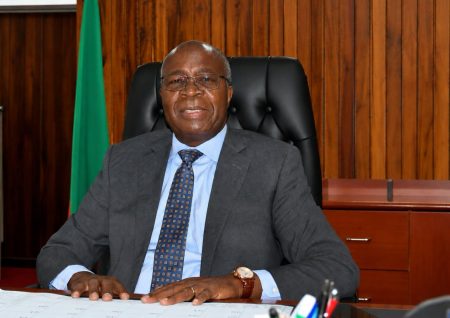
Zambian President Hakainde Hichilema said the Lwakano-to-Chingola link must not fall behind, given its importance to Zambia’s ambition of producing three million tonnes of copper for export through the Lobito Corridor.
Major mines near the proposed railway include operations owned by First Quantum Minerals and Barrick Gold.
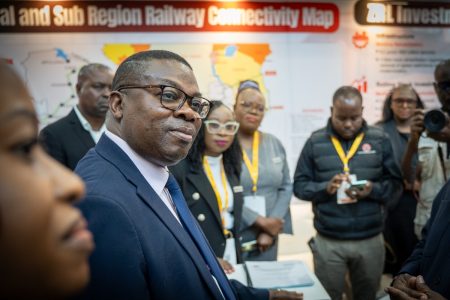
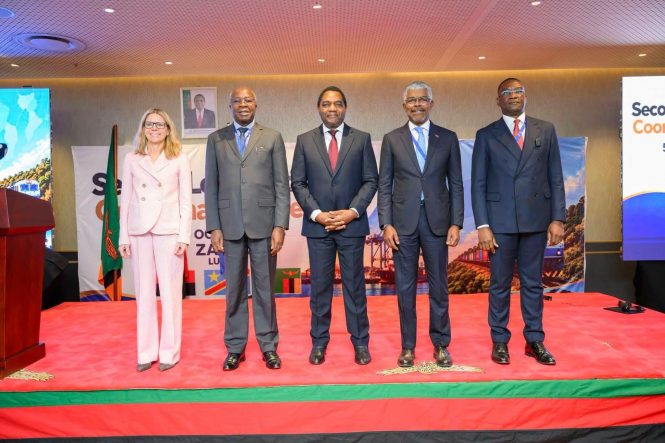
Speaking at the second Lobito Corridor Coordination meeting in Lusaka, World Bank Managing Director of Operations Anna Bjerde said the working group had made progress since its first meeting in Luanda, Angola, eight months earlier.
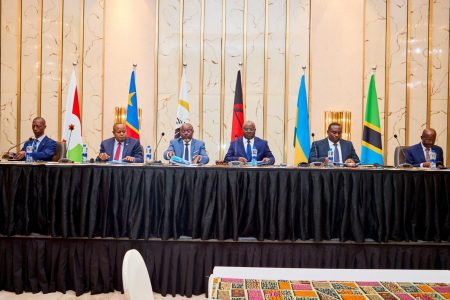
The Lusaka meeting brought together officials from Angola, the DRC and Zambia, the World Bank Group, development partners and private-sector stakeholders to advance implementation of the corridor.
Bjerde said the three countries had significant economic potential in agriculture, industry, energy and trade, with Zambia and the DRC together supplying 17 per cent of the world’s copper and 70 per cent of its cobalt.
Angola, she said, provided the Atlantic gateway through which these resources could reach international markets.
The corridor could also significantly reduce transport times. Bjerde said shipments currently take about 28 days to travel from a mine to the port using existing routes, while a properly functioning Lobito Railway could reduce the journey to about five days.
She said about 23 million people live along the Lobito Corridor route and should become active participants in its economic development.
By 2030, another 10 million people in Angola, the DRC and Zambia are expected to enter the job market, Bjerde said, adding that a fully developed corridor could help absorb this growing workforce.
Progress has already been made on other sections of the corridor. In Angola, the railway linking the interior to the Atlantic Ocean is fully operational, while master planning work is advanced in the DRC.
Bjerde also pointed to the signing of an agreement for the Dilolo–Sakania Railway Mega-Project, a US$1.258 billion rail modernisation initiative in the DRC. The project was formalised in August through a 30-year public-private partnership concession agreement with Portuguese infrastructure group Mota-Engil Africa.
The World Bank, Bjerde said, was ready to support Zambia in closing the remaining gap through construction of the Lwakano-to-Chingola link.
The coordination group has also developed a corridor monitoring system known as the Lobito Corridor Monitoring Tool for Investment Visibility, or LocoMotiv, which tracks projects and their progress.
Bjerde said the International Finance Corporation (IFC) had identified 118 investment opportunities along the Lobito Corridor with a combined value of US$28 billion, spanning sectors including mining and energy.
A Lobito Development Atlas has also been developed to bring together development master plans from the three countries.
Bjerde said the project needed to maintain momentum and that bottlenecks had to be resolved quickly.
Executive Secretary of the Lobito Corridor Transit Transport Facilitation Agency Amadeu Nunes described the corridor as an economic development corridor rather than simply a transportation or railway project.
World Bank Director for Infrastructure Erik Fernstrom said the working group would develop a 24-month agenda aimed at moving the project from political momentum to implementation.
Fernstrom said the focus would include understanding the expectations and challenges facing the private sector in the three countries, trade facilitation, border interfaces and reforms.
The agenda will also cover the corridor master plan, a clearer definition of the economic corridor, the monitoring tool, a trade facilitation roadmap and private-sector mapping.
The private-sector mapping exercise has identified 118 investment opportunities worth about US$28.6 billion, according to Fernstrom.
He said the objective was to bring the various plans into a 24-month action agenda focused on delivery.
Angolan Minister of Transport Ricardo Viegas D’Abreu called for the rapid development of the corridor, saying Angola was committed to diversifying its economy and developing critical minerals.
The development of the Lobito Corridor is intended to provide Zambia and the DRC with an alternative route to international markets while strengthening regional trade, mining and investment links through Angola’s Atlantic port.
Written by Chamwe Kaira for Railways Africa