The case the minister sets out ties rail investment directly to production targets: mines moving from exploration into development, and agricultural output the road network is not expected to carry.
What follows will show whether the capacity arrives in time. TAZARA's rehabilitation under the CCECC concession, the Lobito route and the Zambia Railways business plan all carry tonnage targets that only count once track, locomotives and wagons are in service.
- Zambia is investing in rail rehabilitation and development to carry freight from rising mineral and agricultural production, according to Finance and National Planning Minister Situmbeko Musokotwane.
- The TAZARA project covers Zambia's rail link to the port of Dar es Salaam and includes an inland port at Kapiri Mposhi.
- The planned Lobito Railway would link copper mines in Zambia and the DRC to the port of Lobito in Angola.
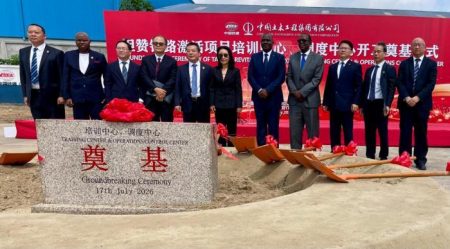
- TAZARA signed a PPP concession with CCECC on 29 September 2025, providing for investment exceeding US$1.4 billion.
- Zambia Railways plans to lift annual freight from 800,000 tonnes to 2,600,000 tonnes by 31 December 2028.
- The company moved 804,214 tonnes in 2023, a 4% share of an estimated 21 million of bulk cargo.
Zambia's roads would not be able to handle the expected increase in freight volumes as mining and agriculture expand, making investment in rail infrastructure a priority.
Zambia is investing in the rehabilitation of the TAZARA Railway and the development of the Lobito Railway as it seeks to expand transportation capacity to support rising mineral and agricultural production, Finance and National Planning Minister Situmbeko Musokotwane revealed.
The TAZARA project will improve Zambia's rail link to the port of Dar es Salaam in Tanzania, while the planned Lobito Railway will provide a route linking copper mines in Zambia and the Democratic Republic of Congo to the port of Lobito in Angola.
The TAZARA investment will also include the construction of an inland port at Kapiri Mposhi, which is the starting point of the TAZARA Railway in Zambia.
Musokotwane said the government was also investing in the rehabilitation of Zambia Railways as part of a broader effort to increase the country's transportation capacity.
Under Zambia Railways' strategic business plan 2024-2028, the company plans to increase annual freight cargo hauled from 800,000 tonnes to 2,600,000 tonnes by 31 December 2028.
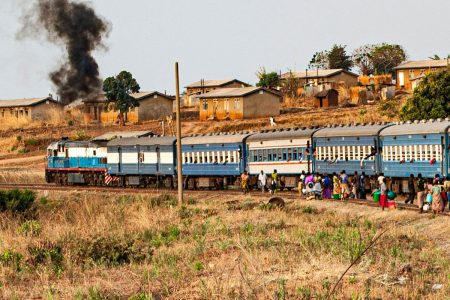
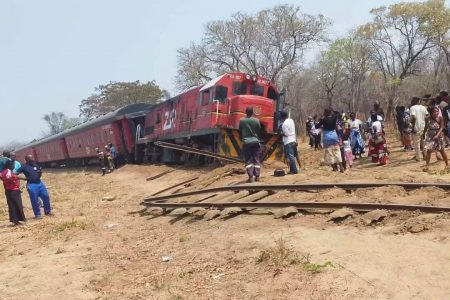
The company moved 804,214 tonnes of cargo in 2023 from an estimated bulk cargo of 21 million, which translated into a 4% market share. This was due to capacity constraints and deplorable track conditions, which have resulted in inefficient service levels.
Many projects are moving from exploration to mine development, Musokotwane said, adding that mineral production was expected to increase over the next five years.
The government expects the expansion of TAZARA to contribute to job creation once the railway was operating at full capacity.
On 29 September 2025, TAZARA signed a Public-Private Partnership concession agreement with China Civil Engineering Construction Corporation (CCECC) to rehabilitate, modernise and operate the freight component of the railway. The concession provides for an investment exceeding US$1.4 billion, including the rehabilitation of railway infrastructure and the acquisition of new locomotives and wagons.
The railway investments form part of Zambia's broader infrastructure programme, which is being pursued as the country seeks to increase production and exports.
The government's long-term targets include producing 10 million tonnes of maize, three million tonnes of soya beans, three million tonnes of copper, one million tonnes of sugar and one million tonnes of wheat by 2030.
It also aims to increase electricity generation to 10,000 megawatts, attract five million tourists and expand beef production.
The government's immediate priority following last August's election was to maintain economic stability and avoid a return to the period when inflation fluctuated between 15% and 20%.
The government also wants to accelerate job creation by encouraging growth in the mining and agriculture sectors.
The increased production would require corresponding investment in infrastructure to move commodities to export markets.
The government is also seeking to increase the production of manufactured goods for export through foreign direct investment. The national budget, which is due to be released later this month, would allocate more resources towards infrastructure development, including roads and railways.
Zambia is using a public-private partnership model to finance infrastructure development, with the government seeking private-sector participation in major projects.
Musokotwane said the revival of mines and the movement of projects from exploration into development would increase mineral production and place additional demands on the country's transport infrastructure.