Under the model outlined in Zambia’s 2027 Budget, Zambia Railways Limited will remain responsible for railway infrastructure management, while freight and passenger train services will be opened to private sector participation through an open-access system.
The government said the reforms are intended to improve operational efficiency and ensure sustainable financing of railway infrastructure.
- Zambia plans to repeal and replace its 1984 Railways Act, according to the country’s 2027 Budget.
- The reforms will introduce a vertical separation model, with Zambia Railways Limited remaining responsible for railway infrastructure management.
- Freight and passenger train services will be opened to private sector participation through an open-access system.
- An initial €60 million has been secured for rehabilitation of the Kapiri Mposhi–Ndola section of Zambia Railways.
- Construction of the Lobito railway line is expected to begin in the fourth quarter of 2027.
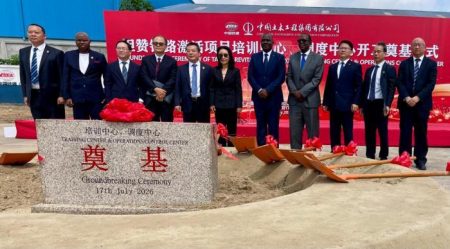
- The government is also pursuing rehabilitation of the TAZARA line and construction of a dry port at Kapiri Mposhi.
Zambia plans to repeal and replace its 1984 Railways Act as part of efforts to improve railway operational efficiency, attract private investment and strengthen transport infrastructure supporting exports.
The proposed reforms, outlined in the country's 2027 Budget, will introduce a vertical separation model under which Zambia Railways Limited will remain responsible for railway infrastructure management, while freight and passenger train services will be opened to private sector participation through an open-access system.
The government said the reforms are intended to improve operational efficiency and ensure sustainable financing of railway infrastructure.
The railway reforms form part of Zambia's broader strategy to develop transport corridors that will support export growth by improving the movement of goods to regional and international ports.
Under the Grow Zambia Agenda, the government aims to expand exports by developing transport corridors that combine road, railway and border infrastructure with economic activities along their routes.
The government intends to encourage producers of identified export commodities and other goods to establish investments along these corridors.
Zambia is targeting copper production of three million tonnes by 2031, with output projected to reach a record 930,000 tonnes in 2026.
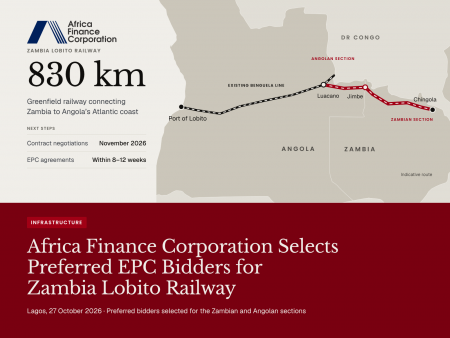
Among the key infrastructure projects is the Lobito Corridor, which will connect Zambia to Angola, the Democratic Republic of Congo and international markets through improved road, railway and border facilities. Construction of the Lobito railway line is expected to begin in the fourth quarter of 2027.
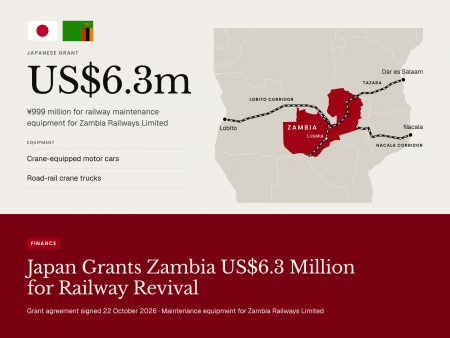
The government is also pursuing the rehabilitation of the Tanzania-Zambia Railway Authority (TAZARA) line, alongside the construction of a dry port at Kapiri Mposhi. The project is intended to increase the movement of freight and passengers between Kapiri Mposhi and the port of Dar es Salaam in Tanzania.
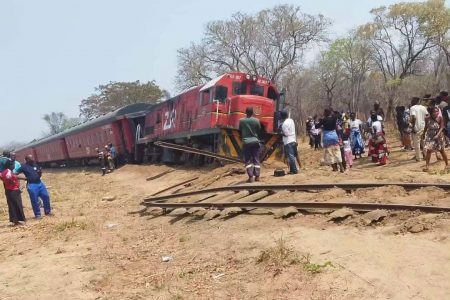
Zambia Railways is also earmarked for rehabilitation, with an initial €60 million already secured for the Kapiri Mposhi–Ndola section.
The government said it was engaging additional partners to finance the rehabilitation of the remaining Zambia Railways network.
Other transport routes being considered include the Nacala and western corridors, which connect Zambia to neighbouring countries and regional trade networks.
The government has identified the TAZARA and Lobito railway corridors as priority areas for expanding the production of maize, wheat, soya beans, sugar and forestry products.
However, investors will remain free to establish operations along other transport routes, including the Nacala and western corridors.
To finance infrastructure development and other economic projects, Zambia plans to mobilise long-term funding from public, private, domestic and international sources.
The government said public resources would be deployed strategically to attract and support private investment. As part of this strategy, Zambia plans to re-establish a development finance institution in 2027.
Other financing mechanisms identified in the budget include foreign direct investment, public-private partnerships, disaster risk financing, green financing, value chain financing and blended financing combining concessional and commercial funding instruments.
Written by Chamwe Kaira for Railways Africa