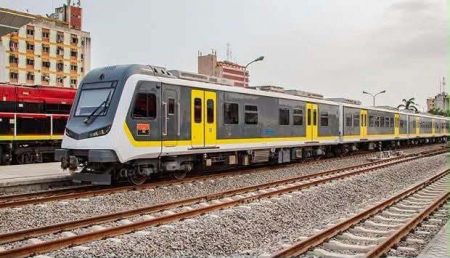
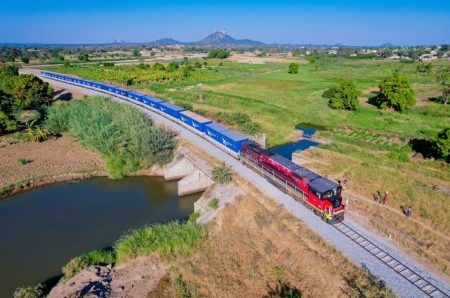
The Lobito Railway Corridor is increasingly being treated as part of a wider transport and logistics system rather than as a standalone railway investment. USTDA’s focus on the relationship between rail and ports points to the next layer of opportunity around the corridor: port capacity, cargo handling, logistics systems, security, digitalisation and supporting infrastructure.
For Angola, that could broaden the investment impact of the Lobito Railway beyond the railway itself. With the corridor extending into the DRC and Zambia’s Copperbelt, improved integration between rail, ports and logistics infrastructure could strengthen Lobito’s role as an Atlantic gateway for regional trade and mineral exports.
The development of the Lobito Railway Corridor is expected to create opportunities for investment in Angola’s ports and strengthen the integration of rail, port, logistics and supply-chain infrastructure across the region, according to the US Trade and Development Agency (USTDA).
The Lobito Corridor extends from the Atlantic coast of Angola through to the Democratic Republic of the Congo (DRC) and Zambia’s Copperbelt.
In July 2026, it was announced that the Lobito Railway had reached financial close on a US$753 million funding package for the modernisation of the corridor.
USTDA said ports and rail infrastructure are “integrally linked” and that enabling investment in ports throughout Angola and along the Lobito Corridor could help move goods more efficiently while attracting private investment into Angola’s broader infrastructure network.
The agency’s comments come as it seeks to deepen relationships with African ports and connect them with US companies providing technologies and infrastructure solutions.
Transportation is one of the agency’s four focus industries, covering both port and rail infrastructure.
USTDA said African ports serve as commercial gateways to the continent and that it is working with African governments and companies to support the modernisation and improvement of port and rail infrastructure.
Its funding decisions, the agency said, are based on whether an infrastructure project directly advances the strategic priorities of both the United States and its partner country.
USTDA’s engagement with African ports included both new and existing relationships. The agency said it has longstanding partnerships with ports in some of Africa’s largest markets and is seeking to deepen those partnerships by connecting them with US innovations.
In September, the agency hosted a US-Africa Port Security Modernization Business Briefing aimed at connecting African delegations with US companies offering port infrastructure and security solutions.
The delegation of port operators and government officials came from Angola, Kenya, Nigeria and Senegal.
The 15-person delegation of senior port officials and technical decision-makers travelled to New York, Washington DC and Wilmington.
Delegates also toured the ports of New York and New Jersey, Liberty Bayonne and Wilmington to see US technologies in practice and met port officials and organisations.
The agency said the briefings were designed to make US companies aware of infrastructure opportunities while allowing foreign decision-makers to examine American technologies that could meet their needs.
The briefings form part of USTDA’s reverse trade missions, which bring overseas decision-makers to the United States to observe American infrastructure design, manufacturing and operations.
These missions are intended, USTDA said, to link US industry with export opportunities associated with infrastructure priorities in partner countries.
The agency cited Senegal’s Minergy Port as an example of its engagement in Africa. USTDA funded a feasibility study for the port, which has since completed its initial construction and is developing its digital systems.
The port is now seeking further engagement with US companies as it considers automation and other technologies for its development.
USTDA said it is also assessing a number of other transport projects in Africa but declined to provide details, saying it would be premature to discuss activities still under development.
Written by Chamwe Kaira for Railways Africa