African Development Bank Strengthens Partnership with Germany to Advance Railway Infrastructure in Africa
The African Development Bank Group is deepening its partnership with Germany to advance modern, sustainable and integrated transport systems across the continent.
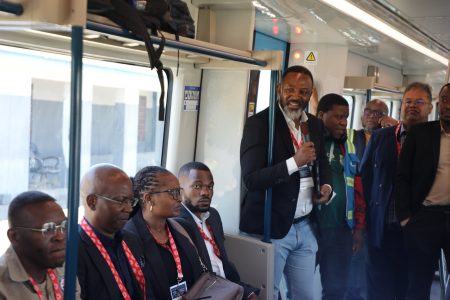
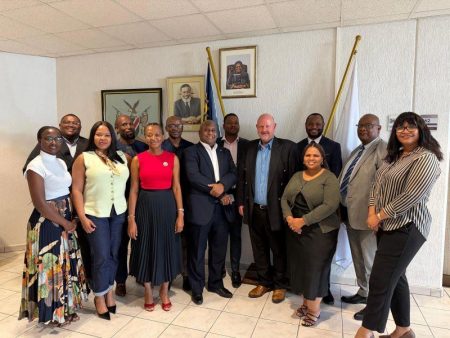
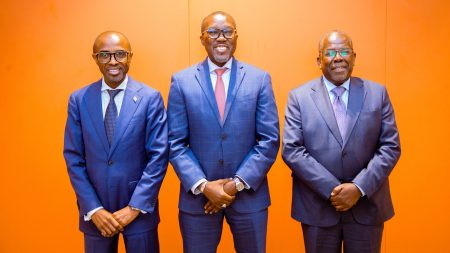
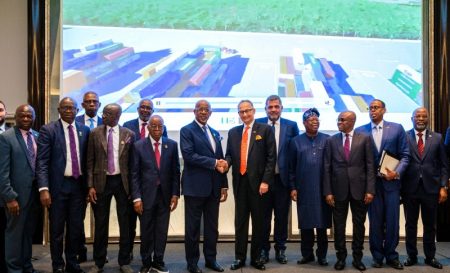
During a mission to Germany in the last quarter of 2025, a delegation from the Bank Group, led by Mike Salawou, Director of the Infrastructure and Urban Development Department, held discussions with government bodies associated with transport infrastructure and digital connectivity.
The delegation met with DB Engineering & Consulting, the engineering and consulting arm of Deutsche Bahn, Germany’s national railway company. Discussions focused on how advanced skills development and STEM-focused training can support African countries as they modernise their rail sectors.
As part of the engagement, the team visited the DB Railway Academy in Potsdam, one of the world’s leading railway training centres. The academy offers more than 2,500 training courses and has served 250,000 participants annually since 1995.
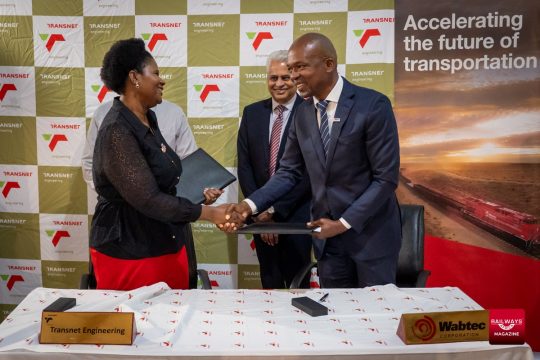
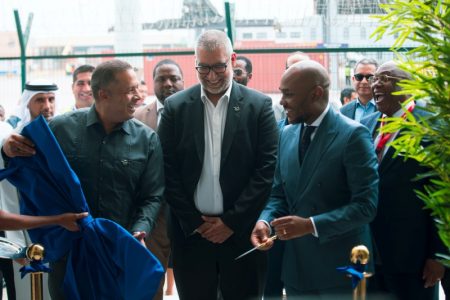
A Letter of Intent signed between the African Development Bank Group and DB Engineering & Consulting establishes a framework for collaboration on a feasibility study for an African Rail Competence Centre. The proposed centre is expected to serve as a hub for knowledge, innovation and skills development in railway systems, supporting the modernisation and expansion of Africa’s rail infrastructure.
Both parties agreed to explore different institutional models, including decentralised, cooperative and centralised approaches, to identify the most suitable option for the continent.
The partnership is intended to build local capacity, enhance technical skills and support sustainable and efficient rail systems across Africa. It also forms part of a wider effort to advance capacity building for the railway sector and support resilient infrastructure development on the continent.
The delegation also examined Germany’s multimodal transport system, where railways are integrated with tram, bus and cycling networks. The visit highlighted how coordinated land-use planning, reliable rail services and transit-oriented development can support compact urban growth, reduce car dependency, enhance accessibility and promote sustainable mobility.
Following the signing of the agreement, the delegation held further discussions with the German Federal Ministry for Economic Cooperation and Development. The ministry confirmed its support for capacity-building initiatives through its implementing agency, the German Agency for International Cooperation.
The delegation also met with the Federal Ministry of Transport, the Federal Ministry for Economic Affairs and Energy, and KfW IPEX-Bank to advance the Bank’s broader priority agenda. These discussions covered regional economic corridor development, critical minerals and electric vehicle supply chain initiatives, and SME capacity building for infrastructure projects.
Talks with KfW IPEX-Bank explored opportunities for strengthened cooperation and co-investment in transformative infrastructure projects across Africa. Discussions focused on major cross-border and national projects, including the Lobito Corridor, the Abidjan–Lagos Corridor Highway, the Uganda–Kenya Standard Gauge Railway and Ethiopia’s Bishoftu International Airport.
Both institutions reaffirmed their commitment to advancing sustainable, high-quality infrastructure that enhances connectivity, accelerates economic integration and supports long-term development.
As part of the mission, the Bank delegation also visited the EUREF Campus in Berlin, where it gained insights into innovative urban development models, clean energy solutions and smart mobility approaches. The visit reinforced the mission’s broader focus on sustainable and future-oriented transport development.
The German Federal Ministry for Economic Cooperation and Development also emphasised its long-standing commitment to supporting Africa’s economic and social development, international climate commitments and mutually beneficial economic relationships.
The cooperation between the African Development Bank, Deutsche Bahn and German development partners is expected to support capacity building and training for the rail sector, create job opportunities and contribute to an enabling environment for private sector investment in rail, energy and related sectors.