The European Lightweighting Network has opened its 2026 R&D call for projects focused on lighter, more sustainable materials, circular design, advanced manufacturing and resource-efficient product development.
- Although the call is open to a wide range of sectors, railway is specifically listed among the sectors where lightweighting technologies may be applied. Other sectors identified include automotive, aerospace, space, maritime, mechanical engineering, energy, construction, infrastructure, health, farming and forestry.
- Eureka is the world’s biggest public network for international cooperation in research and development (R&D) and innovation, present in over 45 countries. It is a decentralised intergovernmental organisation aiming to boost the productivity and competitiveness of industries by funding and supporting international collaborative market-driven R&D projects. This call for projects has been launched by the Austrian Research Promotion Agency (FFG) following Eureka’s Network Projects framework.
A new international funding call has opened for research and development projects focused on lightweighting, circular design, advanced materials and sustainable manufacturing, with railway among the sectors specifically identified as eligible.
The Transnational Eureka Lightweighting Call 2026 is open from 6 May 2026 to 8 October 2026. National funding procedures are expected to take place between December 2026 and March 2027, with approved projects expected to begin between February and June 2027.
The call has been launched under Eureka’s Network Projects framework by the Austrian Research Promotion Agency. Eureka is a public network for international cooperation in research and development and innovation, supporting collaborative, market-driven R&D projects across participating countries.
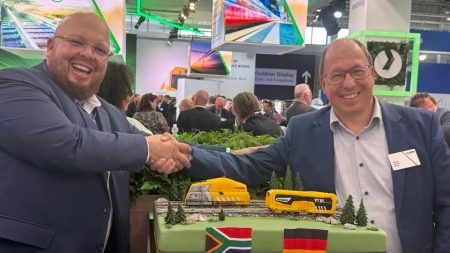
Participating countries include Austria, Belgium, Estonia, Germany, Lithuania, Poland, Slovakia, Spain, South Africa, South Korea and Türkiye. South Africa is participating through the Department of Science, Technology and Innovation.
The funding call is focused on lightweighting design and manufacturing, including safe-and-sustainable-by-design approaches, advanced materials, joining technologies, additive manufacturing, circular product design, lifecycle assessment, material tracking, digital twins and machine learning.
Although the call is open to a wide range of sectors, railway is specifically listed among the sectors where lightweighting technologies may be applied. Other sectors identified include automotive, aerospace, space, maritime, mechanical engineering, energy, construction, infrastructure, health, farming and forestry.
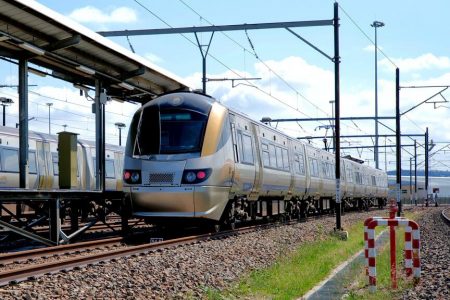
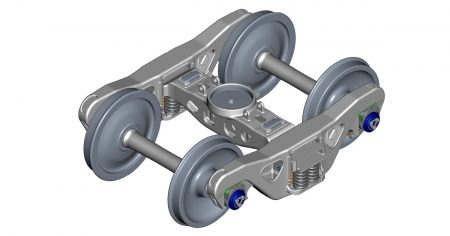
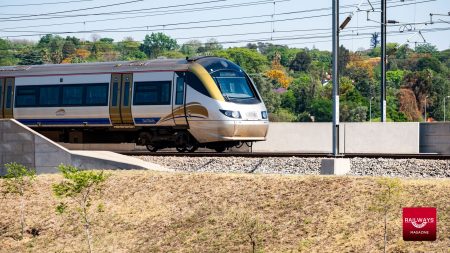
For the railway sector, the opportunity is relevant to companies and research partners working on lighter rolling stock components, alternative materials, improved manufacturing processes, modular design, recyclable components, repairable assemblies and digital lifecycle management.
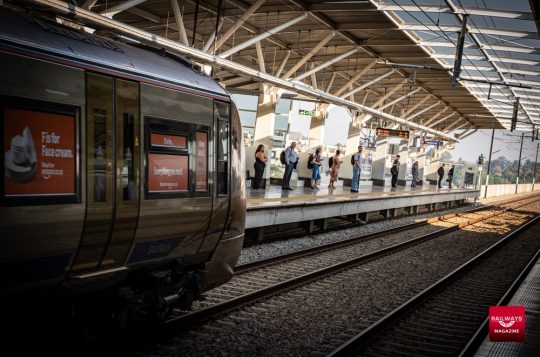
The call also has potential relevance for rail infrastructure and station-related components, given the inclusion of infrastructure as an eligible sector. Potential areas of application could include lightweight construction elements, recyclable infrastructure materials, modular station components, digital material tracking and lifecycle assessment tools.
Eligible projects must involve international cooperation and must be directed at researching or developing an innovative product, process or service with a commercialisation objective. Projects must have a civilian purpose and must include at least two independent legal entities from at least two participating Eureka call countries. No single organisation or country may be responsible for more than 70% of the project budget.
For South African applicants, the Department of Science, Technology and Innovation is offering grant funding of up to €150,000 per project, with each project subject to a financial negotiation process to determine the exact level of funding. Funding will be transferred in tranches in line with the project duration.
South African applicants are required to inform the national project coordinator of their intention to submit a proposal and share a project outline six weeks before submission. To be considered for national funding, applicants must also submit a national funding application form to the Department of Science, Technology and Innovation within seven days of the closing date of the call.
Funding is available to registered companies and SMEs as defined in South Africa. Science Councils and Higher Education Institutions are also eligible to participate where they are partners to SMEs. Projects are required to be SME-led, with priority given to SMEs and project teams that include black participants, women and young innovators or scientists.
Applications will be assessed against impact, excellence, implementation quality and overall perception. Evaluation criteria include market relevance, value creation, commercialisation plans, degree of innovation, technological maturity, risk, consortium quality, added value from international cooperation, project planning and cost structure.
For South Africa’s rail sector, the call could provide an entry point for local suppliers, technology developers, universities and research organisations to participate in international R&D consortia focused on resource efficiency, emissions reduction and circular manufacturing.
As rail operators and suppliers face growing pressure to improve energy efficiency, extend asset life and reduce lifecycle costs, lightweighting offers a practical innovation pathway across rolling stock, components and infrastructure. The emphasis on repairability, reuse and recyclability is particularly relevant to rail, where assets typically operate over long lifecycles and where maintenance, refurbishment and component replacement remain central to operational sustainability.