South Africa’s logistics and mobility reform programme has been placed at the centre of long-term, sustainable economic growth, with the Department of Transport tabling a R102 billion budget for the 2026/27 financial year.
Delivering the Department of Transport Budget Vote in Cape Town on 12 May 2026, Minister of Transport Barbara Creecy said the Seventh Administration is committed to building an economy that works for everyone.
“Consequently, logistics and mobility reform must be at the heart of our programme for long term, sustainable economic growth,” she said. “An effective and efficient transport, mobility and logistics system will unlock opportunity, restore competitiveness, reduce inequality and enable inclusive growth.”
The Minister noted that the geopolitical and economic environment is filled with rapidly shifting challenges. Dramatic fuel price increases are threatening the sustainability of households, road freight transport and the taxi industry, while trade routes and supply chains are being reconfigured.
Where South Africa was once regarded as the logistics hub of the Southern African region, Creecy said the country will face increasing competition from neighbours investing in new rail and port capabilities.
Quoting President Cyril Ramaphosa at the inaugural Transport Conference, she said: “We cannot afford complacency; instead, we must choose reform over stagnation. We must choose competitiveness over decline. We must choose inclusive growth over exclusion.”
Rail and Port Reform
Since the adoption of the National Rail Policy in 2022 and the Freight Logistics Roadmap in 2023, rail and port reform have been placed at the centre of the transport agenda.
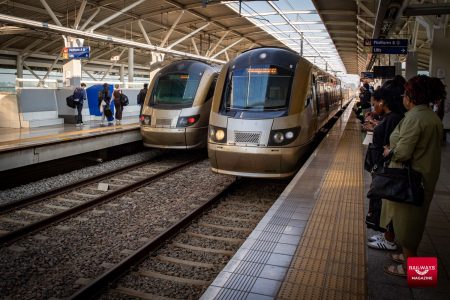
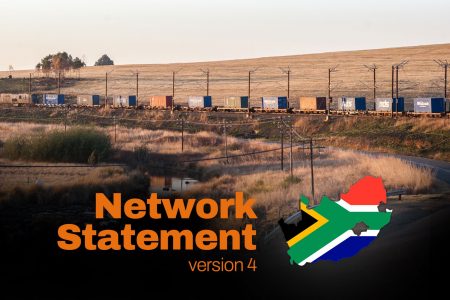
The Transnet Rail Infrastructure Manager (TRIM) was established in November 2024 and, a month later, published the First Network Statement together with the Rail Access Tariffs.
According to the Minister, the establishment of TRIM will allow Transnet to focus on the maintenance and revitalisation of rail infrastructure, while allowing third-party operators to increase the capacity and volumes of tradable goods and commodities.
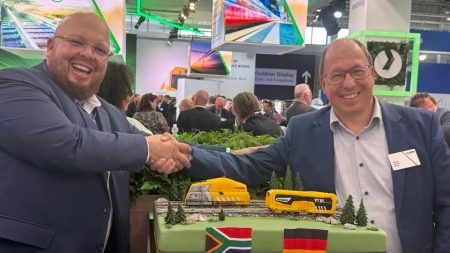
Creecy said TRIM would announce the names of the first 11 private Train Operating Companies, who aim to move up to 24 million tons of freight per annum starting 1 April next year. (Editor’s note: TRIM made the announcement at an event held on 13 May - TRIM Advances Rail Reform with TOCs Onboarding and Expanded Network Access)
“This will ensure more South African minerals, vehicles and agricultural produce reach international markets, securing jobs and earning much needed revenue for our fiscus,” she said.
In the new financial year, the Transport Economic Regulator is being formally established so that port and rail fees are independently determined to ensure a level playing field for all operators.
Private Sector Participation Pipeline
The Minister said significant strides have been made in unlocking investment and accelerating infrastructure delivery.
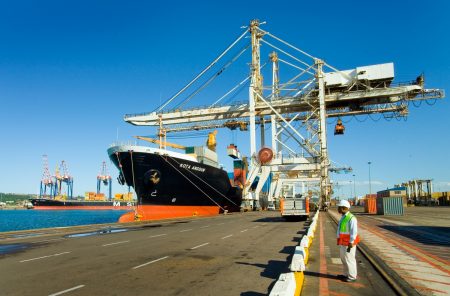
The Durban Container Terminal Pier 2 Concession has reached financial close and is expected to increase port handling capacity from 2.0 million to 2.8 million TEUs a year.
She said this milestone establishes a bankable model for future public-private sector participation.
A robust pipeline of Private Sector Participation projects is expected to advance to market this year, including the Ngqura Manganese Export Corridor, Richards Bay Dry Bulk Terminal and the Container Corridor between Gauteng and eThekwini.
Through the Budget Facility for Infrastructure, R16.8 billion in public investment has already been approved and is in execution across the coal and iron ore lines and port infrastructure. Applications for a further R23.6 billion are being developed.
Improved rail and port infrastructure are already increasing throughput on key export corridors, ensuring improved network reliability and achieving gains in job creation and emissions reduction.
Road Freight, Border Congestion and Intermodal Logistics
Road transport, including trucking, buses, taxis and e-hailing services, remains a critical component of the intermodal logistics system. As a result, Creecy said the reform agenda cannot focus on rail alone.
Recent events have demonstrated the vulnerability of the road transport industry to international fuel price variations and availability. The National Treasury has provided short-term mitigation measures, while the Road Accident Fund portion of the fuel levy has come under public scrutiny.
The Department is reviewing the proposed Road Accident Bill to reduce contingent state liability by creating a no-fault system and a standardised injury compensation system. It is also researching options for a hybrid funding model that will include both private and public contributions to lessen the burden on the fiscus.
The Minister also described road safety as a national crisis, noting that South Africa lost over 11,418 lives on its roads last year.
Over the past few years, trade movements to the Port of Maputo have increased significantly, with freight traffic reaching 1,800 trucks a day crossing the border. These numbers have contributed to congestion at the Lebombo Border Post and on the N4.
The Cross-Border Road Transport Agency has been collaborating with the Border Management Agency, SARS, SANRAL and other law enforcement authorities to find a lasting solution to the congestion and delays.
Officials from South Africa and Mozambique have started co-locating at the Lebombo port of entry and within the Kilometre 7 facility. According to the Minister, this arrangement has resulted in a demonstrable reduction in processing times of freight vehicles.
By next year, the aim is to integrate digital systems so that the Kilometre 7 facility represents a critical reform intervention that will strengthen seamless trade with Mozambique and reinforce South Africa’s position as a reliable regional logistics and transport hub.
Road Infrastructure Investment
In the 2026/27 financial year, targeted investments in maintaining, rehabilitating, upgrading and expanding the road network remain key to the movement of people and goods.
SANRAL is expected to receive almost R31 billion this year. These funds will be used for capital expenditure on the non-toll network, Gauteng Freeway Improvement project operations, the N2 Wild Coast route, ongoing construction on major bridges, new road sections on national highways and the development of the Moloto Road corridor.
These projects are expected to improve safety, shorten travel distances, create over 35,000 job opportunities and support more than 2,000 small enterprises.
However, serious challenges remain at provincial and municipal levels, where finance and in house capacity for road maintenance are often inadequate. Since 2013, provincial governments have transferred 13, 000 kilometres of provincial roads to SANRAL for management and maintenance.
The Minister said this is not a sustainable long-term strategy and will ultimately impact SANRAL’s ability to maintain the National Road Network without introducing widespread tolling.
Next month, a joint MINMEC between Treasury and Transport will be hosted to find a mechanism to frontload the Provincial Road Maintenance Grant so that provinces can upgrade more of their priority roads sooner.
Passenger Rail Recovery
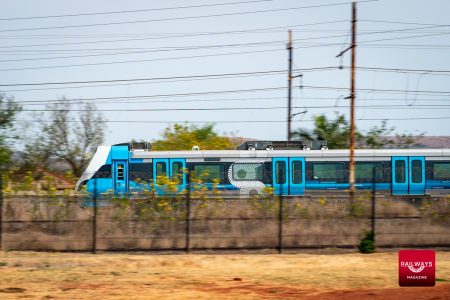
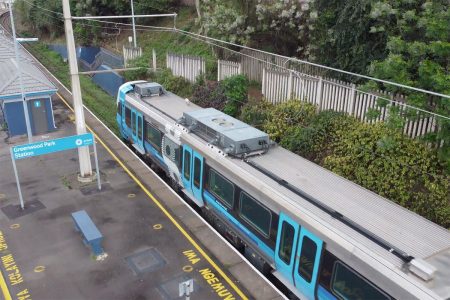
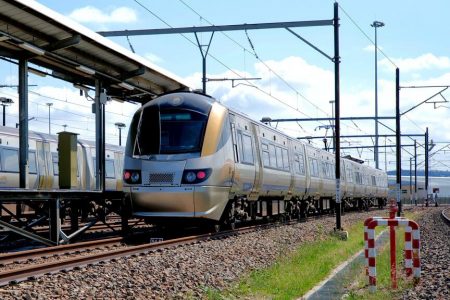
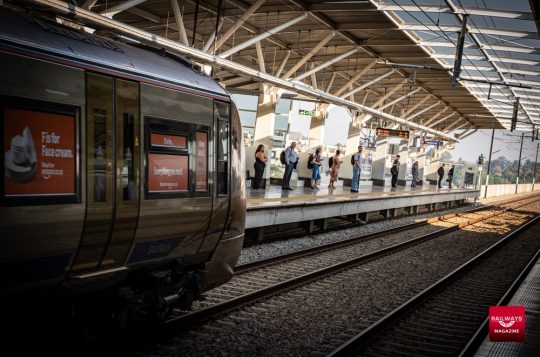
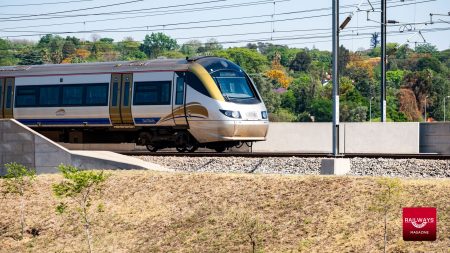
The revitalisation of the passenger rail system continues to go from strength to strength, with yearly passenger journeys surpassing 100 million at the end of March 2026.
According to the Minister, this sixfold increase over four years reflects deliberate and sustained investment in infrastructure, rolling stock, security and institutional reform.
In Gauteng, KwaZulu-Natal, and the Western Cape, train frequencies are being increased, security is being improved, vandalism is being reduced, and connectivity is being restored for communities previously excluded from reliable transport services.
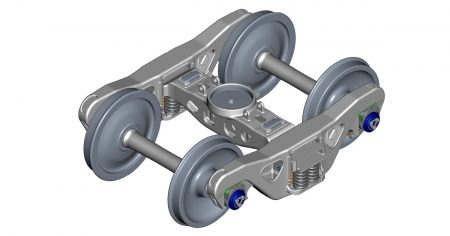
At the end of 2025, a Request for Information process for passenger rail was launched to gauge the appetite for investment in rapid regional rail, depot modernisation, rolling stock leasing, automated fare collection and optic fibre installation.
With current fiscal shortages, discussions are also underway with the National Treasury on frontloading mechanisms to conclude the restoration of outstanding priority lines.
Effective passenger rail systems must be integrated with other modes of transport to ensure safety and efficiency.
Taxi Industry and Public Transport Grants
The taxi industry remains a key part of the national transport landscape and is also one of the largest black-owned sectors in the country, with revenue estimated at between R60 billion and R100 billion annually, contributing about 1.4% to GDP.
This year, the Department will conclude the review of the Taxi Recapitalisation Grant.
Work is being done between the Department, taxi associations and financial institutions to de-risk the cost of new vehicles and provide affordable finance to taxi operators.
Formalisation of the taxi industry is an important factor in unlocking further value for the industry. SANTACO has piloted a cashless route in Gauteng, which the Minister described as a first step in regularising and de-risking the industry.
Together with provinces and municipalities, the Department is reviewing road-based Public Transport grants, including the Public Transport Network Grant and Public Transport Operations Grant budget. The goal is to enhance efficiency, reduce waste and ensure a more cost-effective solution for commuters.
Governance Across Transport Entities
The Department of Transport is responsible for oversight of twenty State owned public entities. Creecy said ensuring good governance and focus on legislative mandate is proving a difficult task.
The Department’s efforts are fourfold: ensuring newly appointed boards represent a strategic balance between accounting, legal, governance and industry specific technical skills; establishing the Entity oversight branch in the Department; dealing with irregular expenditure and allegations of financial mismanagement; and introducing a shareholder-led evaluation aimed at enhancing the assessment of boards by linking their performance to that of the entities they oversee.
The rationale is to ensure that board assessments are linked to the entity’s performance outcomes, audit results and their impact on service delivery under their mandates.
Creecy said 2026-2027 represents the midway point of the Seventh Administration.
“Our interventions and ambitious policy reforms are starting to bear fruit, and we remain committed to securing a future where the transport sector acts as an enabler of prosperity, and not a constraint; a future where affordable and safe public transport connects communities, one where transport infrastructure serves the needs of our people,” concluded Creecy.