YNF Engineering Showcases Rail Refurbishment Capability During Parliamentary Oversight Visit

At the heart of South Africa’s commuter rail recovery lies a simple but urgent question: can the country restore reliable, affordable rail transport while rebuilding local industrial capability at the same time?

This question was at the centre of an official oversight inspection by Parliament’s Portfolio Committee on Transport at YNF Engineering’s rail refurbishment facility in Isando on Wednesday, 29 April, as lawmakers sought firsthand insight into the Passenger Rail Agency of South Africa’s (PRASA) General Overhaul (GO) Programme.

YNF Engineering Showcases Rail Refurbishment Capability During Parliamentary Oversight Visit

The visit followed recent parliamentary engagements where PRASA was called to account over the progress, value and implementation of the GO Programme, a strategic initiative aimed at refurbishing and extending the lifespan of South Africa’s existing commuter rail fleet.

For YNF Engineering, the oversight visit provided an opportunity to demonstrate not only the company’s technical capability, but also the broader economic and industrial value embedded in rail refurbishment.

“We showcased our capacity, what we have delivered, the work currently underway and what we can do in the future,” said YNF Chief Executive Officer, Jade Orren.

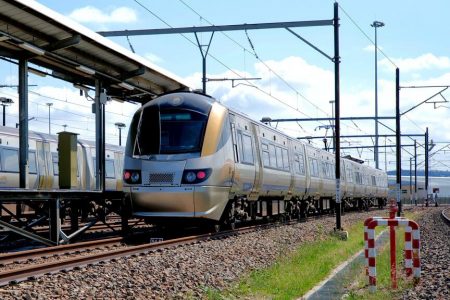
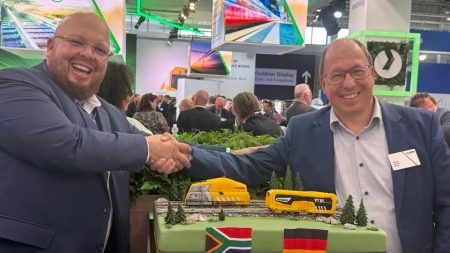
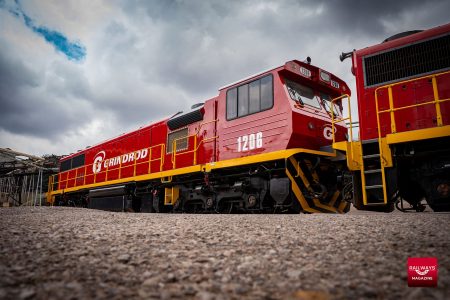
“We also demonstrated the jobs we create, the procurement ecosystem we help sustain, and challenged the narrative that these yellow trains cannot be used.”

YNF Engineering is a 100% black female-owned, BBBEE-compliant South African engineering company with three decades of operational experience in the rail and heavy engineering sector.

YNF Engineering Showcases Rail Refurbishment Capability During Parliamentary Oversight Visit

The company specialises in rolling stock refurbishment, rotating machine upgrades, perway maintenance, signalling and precision manufacturing, operating across three manufacturing sites.

The visit comes at a pivotal moment for South Africa’s commuter rail system.

With growing pressure on household incomes, worsening road congestion and rising transport costs, affordable rail mobility has once again become a national economic priority.

Parliamentarians said the oversight inspection was intended to compare public claims about the GO Programme with operational realities on the ground.

Committee member Donald Selamolela, who chaired the visit, said lawmakers wanted to independently verify what had been presented by PRASA in Parliament.

“We came here as part of our ongoing oversight to see how the transport system is functioning in the Republic. We wanted to test what had been presented to Parliament against what is happening on the ground,” Selamolela said.

“There has been an outcry about the GO Programme. PRASA gave us answers in Parliament, but we wanted to see for ourselves. We requested that we visit one contractor to understand what is actually happening.”

Following the inspection, Selamolela said the committee encountered evidence that contradicted public perceptions that the programme had failed.

“The narrative has been that the GO Programme is not working, trains are lying idle, and no refurbishment is taking place. What we have seen here tells a different story,” he said.

Central to discussions during the oversight visit was the economic viability of the refurbishment programme. Addressing questions around the cost of the GO contract, Orren explained that the pricing aligned fully with contractual terms and represented long-term value for PRASA and commuters.

“In addition, we explained to the committee how pricing for the GO contract worked and that the cost to Prasa was in line with the contract terms.”

When questioned by parliamentarians about the money spent on the contract by PRASA, Orren demonstrated that costs would have been recovered within the first three years of use.

He further explained that the assets has a 10-year lifespan, and if the trains are put in use, it would prove to be valuable for PRASA and the public.

PRASA Group Chief Executive Officer Hishaam Emeran said the oversight visit followed a detailed parliamentary presentation after which committee members requested to see operational progress firsthand.

“The members appreciated the presentation but immediately asked to see the work firsthand.”

He noted that the GO Programme forms part of PRASA’s broader strategy to preserve and modernise viable rail assets while restoring commuter rail services nationally.

“We are overhauling the existing fleet to extend its lifespan by another 10 to 12 years.”

“PRASA has a fleet of more than 4,000 coaches. While not all require general overhaul, it is critical that we preserve and modernise viable assets,” he added.

Beyond the technical refurbishment work, YNF’s presentation also highlighted the role of local manufacturing in supporting economic development, job creation and skills transfer within South Africa’s rail sector.

Members of Parliament praised the quality of the facility, its technical standards and its contribution to industrial skills development.

“We are highly impressed, highly motivated and inspired. We leave here knowing we have done an important service by seeing for ourselves what is actually happening,” the chairperson said.

The committee emphasised that affordable commuter rail is critical to easing household pressure, reducing road congestion and reconnecting workers, learners and communities to economic opportunity.

YNF demonstrated its capability and efficiency in this regard and remains a committed partner to South Africa’s rail ambitions.

Related News Articles