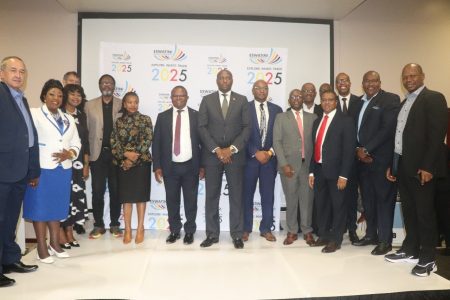
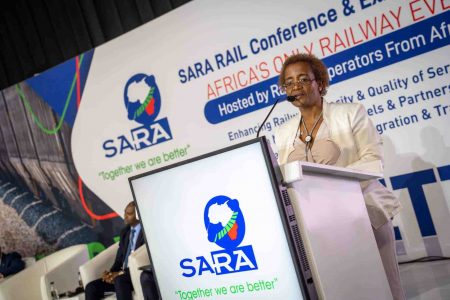
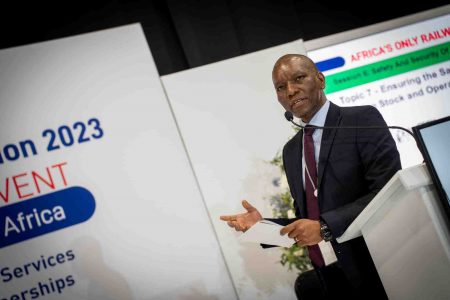
During the recent National Transport Conference, our Editor, Phillippa Dean, moderated the SADC Ministerial panel discussion on “Leadership and Governance for Transport as an Anchor for Inclusive Growth in Southern Africa.”
Transport is far more than infrastructure. Roads, railways, ports and airports connect economies, link communities to opportunity, and enable countries to participate meaningfully in regional and global trade.
Across Southern Africa, effective transport networks are central to economic development. They reduce the cost of doing business, support trade corridors, unlock rural and resource regions, and enable broader participation in economic activity.
This is not new.
Yet discussions continue to focus on how infrastructure can connect more effectively, lower the cost of doing business, strengthen competitiveness, and attract investment, often framed around private sector participation and PPPs. Implementation, however, remains slow.
Leadership provides the vision through policy, planning, and the enabling environment, while governance ensures that investments are transparent, coordinated, and aligned with long-term national and regional priorities.
Representing Eswatini, Hon. Thulani Mkhaliphi, Principal Secretary in the Ministry of Public Works and Transport, emphasised the importance of regional engagement and collaboration, noting that leadership is demonstrated by bringing countries together to plan collectively.
He stated that the country is taking its engagement with regional structures seriously, recognising its strategic position between South Africa and Mozambique. With Gauteng as a major economic centre, the natural flow of goods and people towards ports passes through Eswatini.
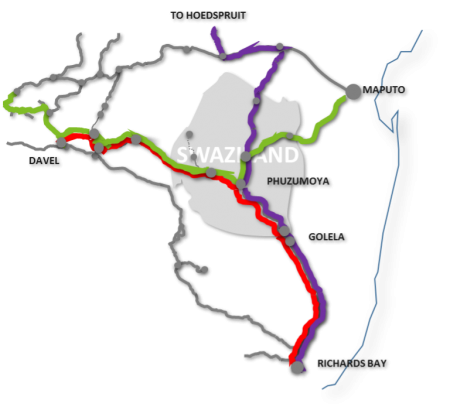
This positioning creates a need for stronger collaboration with neighbouring countries to develop infrastructure that accommodates these flows. Eswatini highlighted its role in linking Maputo with the ports of Durban and Richards Bay, identifying itself as a key connector within Southern Africa.
As part of its approach, Eswatini has undertaken an internal review to assess past shortcomings. This has led to a focus on strengthening planning instruments such as master plans, embracing public-private partnerships, improving inter-agency cooperation with neighbouring countries, and strengthening domestic institutions responsible for delivery, including railways, aviation, and road agencies.
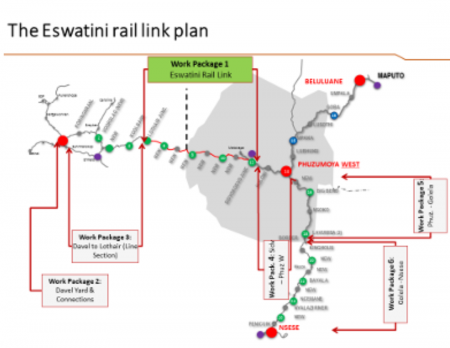
The country is approaching transport as a complete ecosystem. A key initiative is the development of an intermodal transport logistics port project, including the expansion of the airport and the construction of a new cargo terminal. The project is linked to the Mpaka railway station, where lines from Komatipoort and the Goba line connect and which also links to Richards Bay.
The intention is to develop Mpaka into a regional railway interchange station, with a connection to the cargo terminal. This would enable goods from South Africa and Mozambique to move through Eswatini into international markets. As an inland country, Eswatini is also focusing on the development of dry ports around the airport precinct to support this role, including handling goods originating from regions such as Mpumalanga.
Eswatini is positioning itself as a regional transit hub, providing a shorter link for commodities from South Africa, Botswana, and the Democratic Republic of Congo. However, this depends on addressing missing links in the network, particularly the Eswatini Rail Link project, which remains a key strategic priority.
The challenge of moving projects from planning to implementation was identified as a lack of execution. For large transboundary projects such as the Eswatini Rail Link, which is being implemented with South Africa and is valued at approximately R30 billion, progress has been affected by inconsistent leadership and frequent changes in project leadership structures. This has created uncertainty and weakened market confidence.
Consistency in leadership, clarity in agreements, and stronger implementation capacity were identified as critical requirements. Differences in public-private partnership frameworks across countries were also highlighted as a constraint, as inconsistent regulatory environments create challenges for financiers and slow project progress. Greater alignment and standardisation of frameworks across the region were identified as necessary to support implementation.
It was also noted that financing is not necessarily the primary constraint, as well-prepared projects are able to attract funding. The emphasis is therefore on planning quality and execution.
Coordination across agencies, countries, and operators was highlighted as essential to ensuring that transport systems function as an integrated whole. Eswatini emphasised the importance of complementarity across the region, rather than competition. This includes coordination in aviation through bilateral air service agreements, as well as alignment across rail infrastructure and access to seaports.
The approach is to open up infrastructure across the region for shared use, with appropriate cost recovery mechanisms, enabling more efficient utilisation of existing assets.
In closing, Hon. Thulani Mkhaliphi reaffirmed Eswatini’s readiness to provide the missing link in the regional network, supporting the efficient movement of commodities from countries including South Africa, Botswana, and the Democratic Republic of Congo to major ports such as Richards Bay and Maputo.
Written by Phillippa Dean