Transnet Freight Rail Sets Course for Recovery, Capacity Growth and Industry Collaboration

Transnet Freight Rail Sets Course for Recovery, Capacity Growth and Industry Collaboration

South Africa’s rail freight sector is entering a critical phase as Transnet Freight Rail (TFR) works to stabilise operations, rebuild volumes and prepare the network for a more competitive operating environment. Years of declining volumes, infrastructure constraints and operational disruption have shifted significant freight traffic to road, and the task now is not only to recover lost capacity but to position the railway for long-term growth.

During a recent Coffee with the Editor interview with Railways Africa, Transnet Freight Rail Chief Executive Officer Russell Baatjies discussed the operational initiatives currently under way across the network, the progress being made in restoring key export corridors and the broader structural changes that will reshape South Africa’s rail freight landscape in the coming years.

Central to this effort is the need to improve reliability, optimise the use of existing assets and prepare the system for the introduction of third-party train operating companies as part of the country’s rail reform programme.

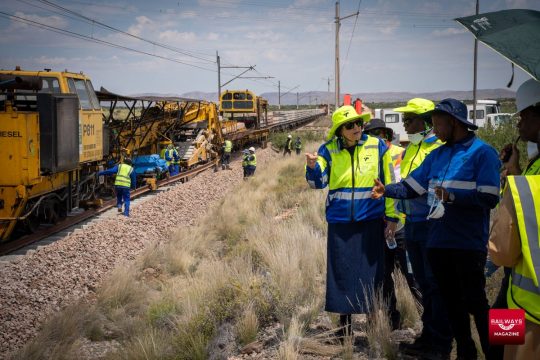
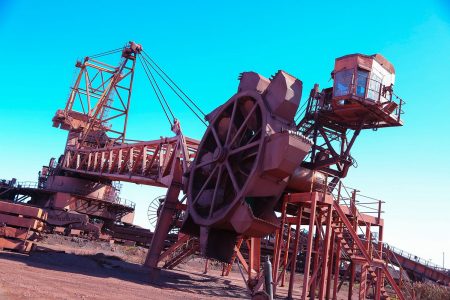
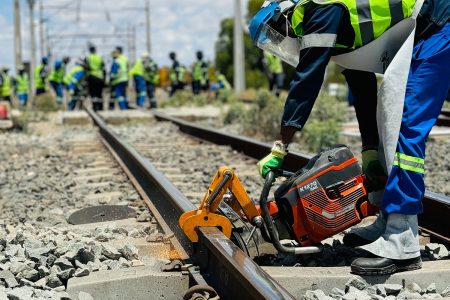
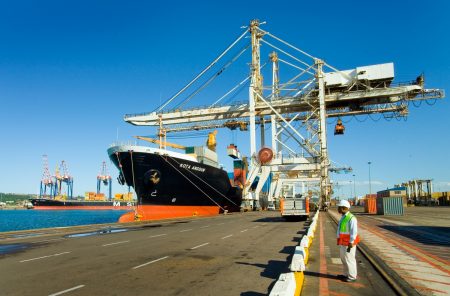
A large portion of the current operational focus remains on the major export corridors that support South Africa’s mining industry. The coal export line to Richards Bay and the iron ore corridor remain strategically important for the national economy, and both routes have required extensive recovery work following operational challenges in recent years. According to Baatjies, a series of targeted interventions are being implemented to stabilise these routes and improve overall network performance. Planned maintenance occupations by Transnet Rail Infrastructure Manager (TRIM) will address reliability issues on both corridors, with the expectation that once these works are completed, the network will be able to sustain higher throughput levels.

Operational adjustments are also taking place within key mineral flows. The manganese export corridor, for example, is expected to deliver record volumes, supported by strong international demand and operational improvements across the supply chain. Other commodities, including chrome and magnetite, are receiving increased attention within the Minerals Mining and Chrome portfolio, where efforts are under way to improve fleet utilisation and introduce operational changes such as longer train formations to increase overall volumes.

Despite these improvements, Transnet Freight Rail’s medium-term targets remain challenging. The original ambition was to move around 180 million tonnes of freight across the network. Under current operating conditions, however, that level will not be achieved in the short term due to infrastructure limitations, rolling stock constraints and the time required to restore operational stability across several corridors. Nevertheless, Baatjies emphasised that the focus is not limited to recovering previous volumes. The broader objective is to improve the railway to a level comparable with international best practice while gradually rebuilding the system’s capacity.

Government has set a national objective of moving approximately 250 million tonnes of freight by rail annually by 2030. Achieving that level will require sustained investment in infrastructure and rolling stock, as well as operational reforms across the network. While the existing locomotive fleet is considered sufficient to support operations in the near term, additional locomotives will ultimately be required if the network is to reach those longer-term targets.

Improving the utilisation of existing assets has become an immediate operational priority. TFR is currently undertaking a programme of depot optimisation aimed at ensuring that locomotives, wagons and operational personnel are deployed where they are most needed across the network.

By analysing operational patterns and freight flows, the organisation is identifying areas where resources exceed requirements and where capacity shortages exist, allowing equipment and personnel to be redeployed more effectively.

This focus on asset productivity is particularly important given the financial constraints facing the organisation. Rather than expanding the fleet prematurely, TFR is concentrating on extracting greater productivity from the locomotives and wagons already in service. In some cases, this may also involve making certain rolling stock available to other train operating companies through leasing arrangements. As rail reform progresses and additional operators enter the market, Transnet LeaseCo is expected to play an increasingly important role in facilitating such arrangements.

Another area of focus involves modernising maintenance practices. Historically, maintenance scheduling has largely been based on fixed time intervals, with components replaced according to predetermined schedules regardless of how intensively the equipment has actually been used. TFR is now examining ways to move towards a more data-driven maintenance model that incorporates both operational usage and asset condition.

The objective is to align maintenance interventions more closely with real operating conditions. For example, if a train that previously completed a route within twelve hours now takes twenty-four hours due to operational constraints, the number of mechanical cycles experienced by the equipment is effectively reduced. Continuing to replace components according to the original schedule results in unnecessary maintenance work and additional cost.

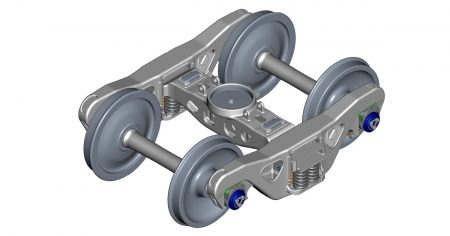
Alongside these changes, TFR is exploring the use of new technologies to improve inspection and monitoring processes. High-speed imaging systems used by several international railways are being evaluated as a potential tool for identifying rolling stock defects as trains move through inspection points on the network. These systems capture detailed images of passing trains and analyse them against reference conditions to detect irregularities such as wheel defects, structural damage or component misalignment before they develop into operational failures.

TFR has already begun engaging with the market to assess the availability of this technology in South Africa and to determine which solutions may be suitable for implementation. If adopted, these systems could significantly improve both maintenance efficiency and operational safety. A decision on potential deployment is expected during the second quarter of the year, after which implementation timelines will depend on procurement processes and equipment lead times.

The locomotive fleet itself is also undergoing gradual transformation. TFR currently operates just under 2,000 locomotives across the network, consisting of a mixture of older legacy units and newer models. Among the most recent additions are the Class 23E locomotives, which are delivering improved reliability on several corridors. To date, 71 of these locomotives have been deployed, although the total number is expected to increase to around 102 units.

The Class 23E locomotives are primarily assigned to the coal export corridor, where the objective has been to standardise traction on the alternating current section of the line between Richards Bay and Ermelo. Standardising locomotive types along a corridor simplifies maintenance requirements, improves crew training and contributes to more consistent operational performance. As additional Class 23E locomotives enter service, some of the older Class 22E units will be reassigned to other commodity flows, including chrome and magnetite operations.

TFR’s operational structure continues to revolve around commodity-focused business units responsible for coal, iron ore, manganese and the Minerals Mining and Chrome portfolio. Each of these units works closely with industry customers to optimise logistics performance and support export flows. Within the coal business unit, the commissioning of the new rail link serving Eskom’s Majuba Power Station has already delivered noticeable operational improvements. The direct connection to Majuba has reduced travel and turnaround times compared with previous routing arrangements. Early operational performance has been encouraging.

Beyond bulk export commodities, TFR also maintains a flexible business unit dedicated to general freight. This portfolio includes commodities such as cement, timber, grain, containers and chemicals. Although these segments account for smaller volumes than the major export flows, they remain strategically important for diversifying revenue streams and strengthening domestic logistics. Opportunities for growth are being explored in areas such as grain and container transport, with the TFR working closely with customers to identify cargo currently moving by road that could potentially shift back onto rail. Collaboration with Transnet Pipelines is also being examined as part of this strategy.

Efficiency improvements are also being pursued through the use of longer trains. South Africa already operates some of the longest freight trains in the world, with certain formations exceeding four kilometres in length. On the Eswatini corridor, testing has been conducted with trains consisting of up to 160 wagons. While early trials encountered technical challenges, most of these issues have now been resolved. Some infrastructure adjustments, including improvements to signalling visibility and vegetation management, are still required before these longer trains can operate consistently.

Operating longer trains introduces additional technical considerations. In certain terrain conditions, different sections of a train may encounter different gradients simultaneously, which requires careful management of locomotive power distribution and braking performance. Testing remains essential to ensure that these longer train consists operate safely and efficiently.

Alongside these larger adjustments, smaller incremental improvements are also being implemented. Some operations have already increased train lengths from eighty to eighty-four wagons, and although the increase may appear modest, the cumulative impact across the network is significant. On the chrome corridor to Richards Bay, train lengths have been increased from seventy-five to one hundred wagons, and early results indicate that these longer trains can deliver measurable efficiency gains. Another operational concept under evaluation involves combining two shorter trains into a single longer formation in order to make more efficient use of available network slots.

Regional cooperation forms an important part of Transnet Freight Rail’s long-term strategy. The corridor linking South Africa and Eswatini remains an important export route to Richards Bay, and discussions with Eswatini Railways are focused on increasing freight volumes along this route. Engagement with Botswana Railways is also continuing as both organisations examine ways to strengthen cross-border freight flows.

Freight volumes moving between South Africa and the Port of Maputo have the potential to expand significantly, particularly for commodities such as magnetite, chrome and coal. Infrastructure improvements and additional locomotives acquired by partners in Mozambique could support new operating models along the corridor. One possibility being explored involves hybrid operating patterns in which some trains terminate at Komatipoort while others continue through to Maputo, potentially increasing overall corridor capacity.

Beyond these operational initiatives, Baatjies also emphasised the need to rebuild elements of South Africa’s broader rail ecosystem. Many specialised maintenance machines used for track maintenance are ageing and will require replacement or refurbishment. Strengthening the supporting industries responsible for maintaining infrastructure and supplying specialised equipment will be an important part of rebuilding the sector.

Academic institutions should also play a greater role in this process. Closer collaboration between universities, research institutions and the rail industry could contribute new ideas and technological solutions to address the operational challenges facing the network.

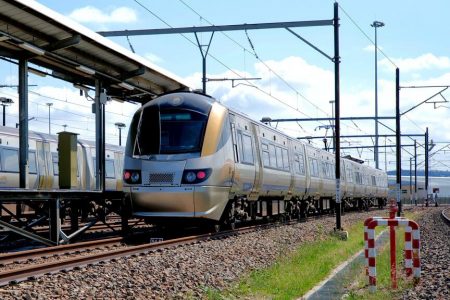
As South Africa’s rail reform programme is gradually moving towards implementation, 11 train operating companies have already been selected through the access process and are expected to begin operations around 2027. This will mark a significant shift for Transnet Freight Rail, which has historically operated as the primary freight operator on the national network.

Rather than viewing this change as a threat, Baatjies believes the arrival of additional operators could help increase total rail volumes across the system. Several potential operators have already approached TFR to explore cooperation opportunities, and where possible, the organisation intends to support initiatives that bring additional freight back onto the rail network.

Although challenges remain, there are growing indications that the sector is beginning to stabilise. Customer confidence is gradually improving as operational performance strengthens, and internal teams are increasingly adopting new technologies and digital tools to support decision-making.

For Transnet Freight Rail, the coming financial year may represent an important step in rebuilding freight volumes and restoring rail’s role as a central component of South Africa’s logistics system.

Transnet Freight Rail Sets Course for Recovery, Capacity Growth and Industry Collaboration

Why it Matters

  • Transnet Freight Rail (TFR) is prioritising operational stabilisation and recovery after several years of declining rail freight volumes and infrastructure disruption.
  • Restoring reliability on the coal export line to Richards Bay and the iron ore corridor is a central operational priority due to their importance to South Africa’s mining exports.
  • Planned maintenance occupations by the Transnet Rail Infrastructure Manager are intended to improve corridor reliability and enable higher throughput.
  • The manganese export corridor is expected to reach record volumes, supported by strong global demand and supply-chain improvements.
  • Operational initiatives include longer train formations, improved fleet utilisation and operational optimisation across mineral commodity flows such as chrome and magnetite.
  • TFR’s earlier target of 180 million tonnes of freight annually will not be achieved in the near term due to infrastructure constraints and operational recovery timelines.
  • The South African government has set a longer-term objective of 250 million tonnes of rail freight annually by 2030, requiring sustained infrastructure investment and operational reforms.
  • Immediate focus is on improving productivity of the existing locomotive and wagon fleet rather than expanding the fleet prematurely.
  • A depot optimisation programme is underway to redeploy locomotives, wagons and personnel based on freight flow analysis and network demand.
  • Rolling stock may increasingly be leased to other train operating companies via Transnet SOC Ltd structures such as Transnet LeaseCo as rail reform progresses.
  • Maintenance practices are shifting from time-based schedules to data-driven condition monitoring, aiming to reduce unnecessary maintenance and lower costs.
  • TFR is evaluating high-speed imaging inspection systems used internationally to detect rolling stock defects automatically during operations.
  • The locomotive fleet currently comprises just under 2,000 units, including newer Class 23E locomotives, with 71 already deployed and a target of about 102 units.
  • Standardising traction with Class 23E locomotives on the coal corridor is expected to simplify maintenance and improve operational reliability.
  • The Majuba Power Station rail link has improved turnaround times for coal logistics within the coal business unit.
  • Beyond bulk exports, TFR is targeting growth in general freight segments including cement, grain, timber, containers and chemicals to diversify revenue.
  • Longer train operations are expanding, with tests of up to 160-wagon trains on the Eswatini corridor, though infrastructure adjustments remain necessary.
  • Incremental increases in train length across several corridors are already delivering measurable efficiency gains.
  • Regional corridor development with Eswatini, Botswana and Mozambique is being pursued to expand cross-border freight volumes.
  • The Maputo corridor presents potential growth opportunities for commodities such as magnetite, chrome and coal.
  • South Africa’s rail reform programme has selected 11 third-party train operating companies, expected to begin operations around 2027, marking a major structural shift in the sector.
  • TFR leadership views additional operators as an opportunity to increase overall rail volumes rather than compete for existing traffic.
  • Rebuilding the broader rail ecosystem will require investment in specialised maintenance equipment, supply chains and academic collaboration with universities and research institutions.
  • Early indicators suggest operational stabilisation and improving customer confidence, though full recovery will require sustained investment and structural reform.


Footnote

Written by Phillippa Dean

Related News Articles