During the recent National Transport Conference, our Editor, Phillippa Dean, moderated the SADC Ministerial panel discussion on “Leadership and Governance for Transport as an Anchor for Inclusive Growth in Southern Africa.”
Transport is far more than infrastructure. Roads, railways, ports and airports connect economies, link communities to opportunity, and enable countries to participate meaningfully in regional and global trade.
Across Southern Africa, effective transport networks are central to economic development. They reduce the cost of doing business, support trade corridors, unlock rural and resource regions, and enable broader participation in economic activity.
This is not new.
Yet discussions continue to focus on how infrastructure can connect more effectively, lower the cost of doing business, strengthen competitiveness, and attract investment, often framed around private sector participation and PPPs. Implementation, however, remains slow.
Leadership provides the vision through policy, planning, and the enabling environment, while governance ensures that investments are transparent, coordinated, and aligned with long-term national and regional priorities.
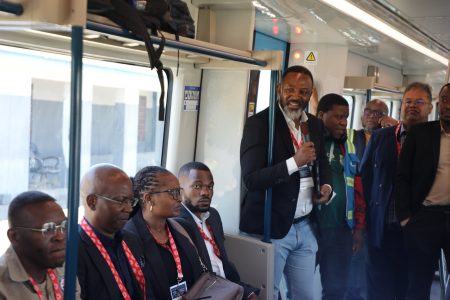
Mozambique’s State Secretary and Deputy Minister of Transport, Chinguane Mabote, emphasised that leadership and direction are critical to ensuring that the right policies are developed and implemented in a timely manner. He cited the N4 corridor as an example, where the concept of a one-stop border post was proposed in 1997 but only came to fruition at the end of last year.
This reflects a broader challenge, with the implementation of regional projects affected by weak institutional coordination across countries.
Leadership, therefore, must be present at all levels. This includes presidential leadership, as demonstrated through coordination between Mozambique and South Africa, but also extends to implementers responsible for translating strategic and political direction into technical and operational delivery.
A key point raised was that institutions must avoid internalised thinking, and that policymakers should not adopt a private sector mindset in a way that creates conflicts of interest. The position is that one cannot be both player and referee at the same time.
The private sector is expected to play a central role in the development process, supported by a clear and predictable regulatory framework. Mozambique’s approach is to create a conducive environment for private sector participation while maintaining appropriate governance structures.
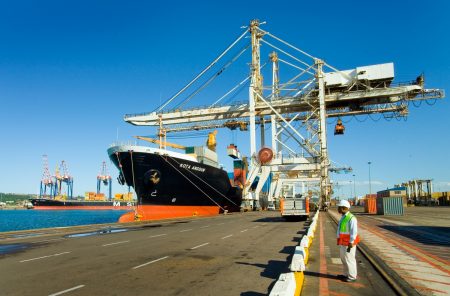
Mozambique’s geographic position places it along key regional corridors, namely the Maputo, Beira and Nacala corridors. These serve as trunk infrastructure linking the country to the region and beyond. However, managing these corridors presents challenges in ensuring efficiency across ports and the broader logistics value chain.
The country is working to balance national transport development priorities with its role as a regional logistics gateway. This includes consolidating existing infrastructure while advancing a strategy for an integrated transport system.
This integrated approach is intended not only to attract investment in infrastructure but also to enable Mozambique to benchmark against and align with neighbouring countries.
More than 50% of cargo handled through Mozambique’s ports originates from regional corridors in neighbouring countries, reinforcing the need for coordination and alignment. Mozambique’s approach is therefore to ensure that national planning does not exclude or isolate regional partners within the broader logistics value chain.
In terms of inclusive growth, Mozambique highlighted its focus on rural transport. A Rural Transport Strategy was established in 2009, followed by the launch of the Promote Transport Programme in 2021.
The programme aims to rehabilitate and maintain approximately 2,500 kilometres of roads, primarily in the northern provinces, supported by €124 million in financing from the European Union.
The objective is to link production areas with markets while supporting value-adding activities. This includes creating opportunities for employment and entrepreneurship among local communities along transport corridors. The approach also incorporates mixed transport systems suited to local road conditions, ensuring that smaller businesses and rural initiatives can connect to main corridor networks as feeder systems.
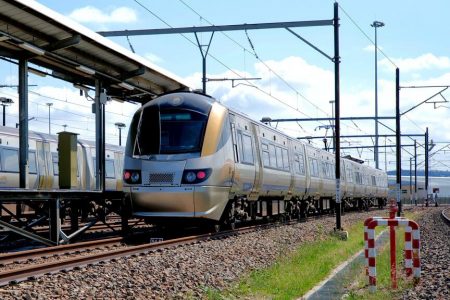
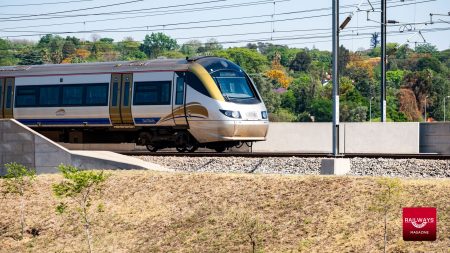
Mozambique is also advancing a north–south rail corridor project aimed at linking the three primary corridors and addressing gaps in connectivity, particularly in smaller and previously underserved areas. This initiative is intended to ensure that development extends beyond the major corridors to include local communities.
The private sector is expected to play a catalytic role in this development, with Mozambique actively inviting investment, including in rolling stock and infrastructure. Incentives have been put in place to attract both local entrepreneurs and larger international companies.
Climate resilience was also identified as a significant challenge. Mozambique has been severely affected by climate-related events, including heavy rains in the southern region, which have caused flooding, damaged infrastructure, and disrupted transport and logistics systems. This impact extends beyond Mozambique, affecting the broader region.
In response, there is a shift towards incorporating resilience into infrastructure planning. This includes designing and constructing transport systems based on scientific considerations to ensure durability and long-term functionality. Addressing climate change requires both national and regional collaboration, drawing on expertise and knowledge from neighbouring countries and the private sector.
The private sector has been identified as a key partner in addressing these challenges. The government’s role is to facilitate and create an enabling environment, while the private sector contributes solutions, expertise, and investment.
The scale and complexity of climate-related challenges mean that the government cannot address them alone.
In closing, the Deputy Minister of Transport, Chinguane Mabote, noted that the future of transport in Africa would be shaped by decisions made in investment, governance, innovation, inclusion, and sustainability.
Logistical efficiency and regional connectivity were identified as decisive factors for economic growth, with an emphasis on complementarity rather than competition between countries.
Written by Phillippa Dean