Egypt Advances Localisation of Railway Component Manufacturing Through Expanded Cooperation With Austrian Industry
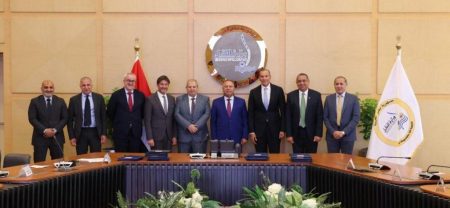
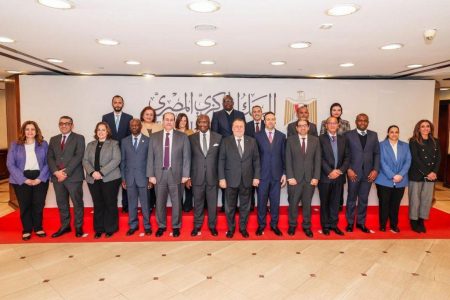
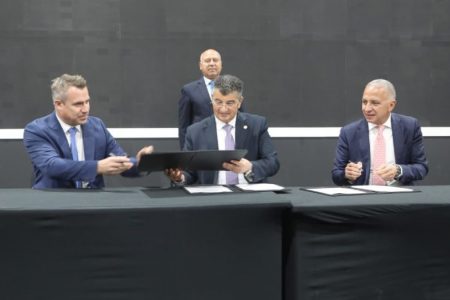
Within the framework of implementing directives issued by President Abdel Fattah El-Sisi to localise industrial production in Egypt, including transport-related industries, Deputy Prime Minister for Industrial Development and Minister of Industry and Transport Kamel Al-Wazir has held talks with Austria’s ambassador to Egypt, Georg Postinger, and delegations representing 10 Austrian companies active in railway components, systems and equipment manufacturing.
According to a statement issued by the Egyptian Ministry of Transport, the meeting focused on expanding industrial cooperation to localise the manufacture of railway components and transport systems in Egypt, both to meet domestic demand and to support exports. The objective is to position Egypt as a regional manufacturing and export hub serving African, Arab and Middle Eastern markets, in line with the national industrial localisation policy.
The meeting was attended by Deputy Minister of Transport for Railways and Electric Traction Reda Radwan, alongside senior officials from the Ministry of Transport, Egyptian National Railways and the National Authority for Tunnels.
At the outset of the meeting, Minister Al-Wazir welcomed the Austrian delegation and underlined the strength of Egyptian-Austrian relations. He stated that the Ministry of Industry and Transport is fully prepared to cooperate with international companies committed to localisation, particularly in the manufacture of transport equipment and components. He emphasised that Egypt is no longer positioned solely as an import market, but is progressing steadily towards domestic manufacturing and technology transfer across the transport sector.
Discussions with Plasser & Theurer, which specialises in railway construction, renewal and maintenance machinery, covered recent developments related to the 2025 contract for the supply of advanced track maintenance equipment. The contract includes the delivery of four tamping machines for metro lines, two turnout tamping machines, five ballast profiling machines, two rail bending machines and one rail welding machine. The talks also explored cooperation on establishing a local facility for spare parts production or machine assembly to serve the Egyptian market and export requirements. The company’s officials confirmed their readiness to expand cooperation, including through Plasser Egypt’s after-sales maintenance centre and the training of 30 Egyptian engineers in Austria.
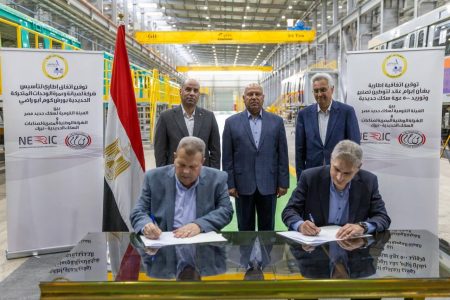
The Minister also reviewed progress with voestalpine, following the establishment of a joint company for the production of railway turnouts, voestalpine Egypt for Railway Turnouts, in partnership with Egyptian National Railways. The partnership includes the modernisation and management of the Abbasiya workshops in Cairo, where the existing production line has been upgraded with advanced machinery. Current output averages 50 turnouts per month, with plans to scale production to 600 units annually to meet local demand and export requirements. Updates were also provided on the development of a new production line for turnouts used on the electric high-speed rail network, alongside technology transfer and workforce training under Austrian supervision.
Further discussions were held with Lion Industrial Materials regarding potential cooperation to establish a factory in Egypt for the manufacture of wheelsets and axles for freight, passenger and metro trains. The proposed partnership model was presented, with both sides agreeing to continue technical and commercial consultations.
The meeting also covered potential cooperation with other Austrian companies, including Frauscher Sensortechnik, Fronius International, Gabriel, Getzner Werkstoffe, Linsinger Maschinenbau Gesellschaft, and TÜV Rheinland InterTraffic, each within their respective fields of railway systems, sensing, welding technologies, vibration control, heavy machinery, and testing and certification services.
The Ministry of Transport emphasised the need to intensify technical meetings between the Austrian companies, the Ministry, Egyptian National Railways and the National Authority for Tunnels in the coming period to accelerate feasibility studies and advance localisation initiatives in line with Egypt’s transport sector requirements.