Indra is Driving a New Era of Mobility in Cairo with Its Passenger-Centric Account-Based Ticketing (ABT) Technology for the New Monorail
Why it Matters
The deployment of Indra’s account-based ticketing technology on the Cairo Monorail shows how major urban rail projects are increasingly being built around passenger experience, digital fare management and network integration. With the system designed to support up to 90,000 passengers per hour across both directions, fare collection and access control are central to how efficiently the infrastructure can operate at scale.
The project also reinforces Egypt’s position as one of Africa’s most active markets for urban rail and mass transit investment. With Indra already involved in ticketing and access control systems on Cairo Metro Lines 1 and 2, the monorail contract extends the role of digital mobility systems in supporting safer, more efficient and more flexible public transport across Greater Cairo.
Facts
- Under a contract signed with Alstom, responsible for the overall system integration, Indra has deployed the automatic ticketing and access control systems of the recently opened infrastructure, which is designed to transport up to 90,000 passengers per hour and facilitate safer, more efficient, and sustainable mobility for the 22 million inhabitants of the Egyptian metropolis.
- Its solution includes the advanced ABT management model to deliver more flexible fares to benefit users, while it can be further developed with innovations such as access by means of a credit card (EMV) and integration with other transport operators.
- Indra has successfully deployed its ticketing technology on Lines 1 and 2 of the Cairo Metro, as a result of which the contract will reinforce its presence in Egypt, a country with great potential for growth and transport infrastructure megaprojects.
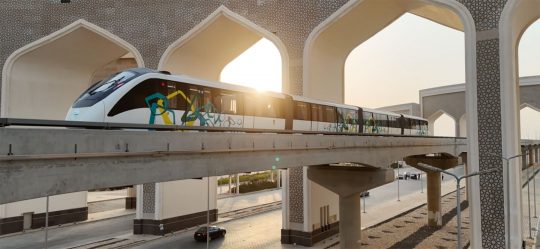
Indra Group’s ticketing technology is now operational on Cairo’s new monorail, which was recently opened for commercial service, where the company has deployed the automatic sales, validation, and access control systems for this new mobility infrastructure, one that is designed to usher in a new era of safe, efficient, and driverless transport in the East of Nile area.
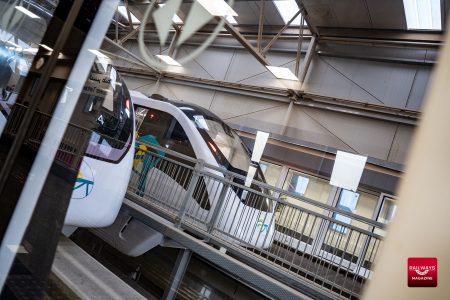
The Cairo Monorail is being delivered by a consortium led by Alstom, in partnership with Orascom Construction and The Arab Contractors, with Alstom responsible for the overall system integration, including the design, supply, and commissioning of the rolling stock, signalling, power systems, and turnkey railway infrastructure spanning approximately 96 kilometres across both the East and West of Nile lines, covering a total of 35 stations, with commercial service in operation on 16 out of 22 stations on the East of Nile line.
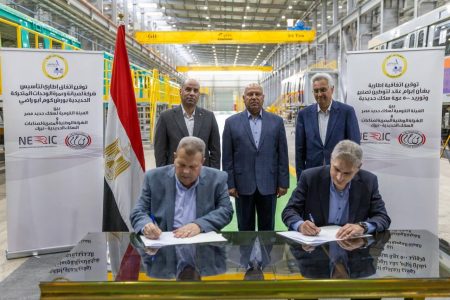
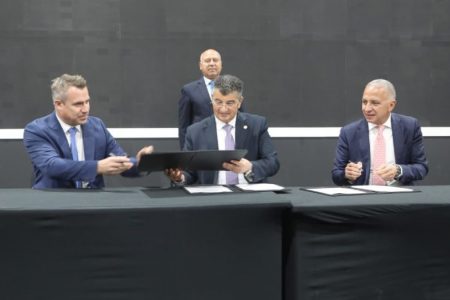
Under a contract signed with Alstom, Indra will deliver the ticketing technology, including its design, manufacture, installation, software development, and testing of the AFC (Automatic Fare Collection) system for the 35 stations on the two monorail lines (East of Nile (EON) and West of Nile (WON)), including over 400 automatic access fare gates and more than 100 automatic vending machines, over 60 portable inspection units, and the equipment for the 35 ticket offices.
Indra’s contactless technology will in turn facilitate the transport of up to 45,000 people per hour in each direction (90,000 in total), contributing to a more sustainable, safer, and more accessible form of mobility for the more than 22 million people living in the metropolitan area of the Egyptian capital known as “Greater Cairo”, the largest urban area in Africa and one of the world’s biggest metropolises.
Indra’s state-of-the-art systems have been designed and developed with an aesthetic and usability similar to that of a touchscreen mobile device and provide users with easy access to information such as maps, schedules, and multimedia content. The solution also incorporates an advanced central system and back-office technology to integrate and manage operations and sales across the network, providing the operator with full control, secure access to information, and flexibility when it comes to adapting to passengers’ needs and usage habits.
In this regard, the infrastructure of the sales system includes advanced features such as Account-Based Ticketing (ABT), a highly innovative and efficient technology that delivers more flexible fares, automatically applies the fare that is most advantageous to the user, and significantly improves the public transport user experience. QR codes also facilitate access to the transport network.
Moreover, positioning Indra with a view to future implementations, the solution can be integrated with access solutions by means of a bank card (EMV), mobile apps, and a web portal permitting bank payments, as well as integration with other transport operators further ahead, in keeping with the latest international mobility trends.
“We’re proud to be contributing our technology to the new Cairo Monorail, an infrastructure that is key to Egypt’s mobility. This project demonstrates our ability to deploy advanced and innovative ticketing systems that are capable of meeting the current and future needs of public transport in the largest cities in the world,” declared Raúl Ripio, General Manager of Mobility at Indra.
It comes in the wake of the work Indra has previously performed in Egypt, where the company has deployed the ticketing and access control systems for Lines 1 and 2 of the Cairo Metro, thereby strengthening its position in one of the markets with the greatest potential for growth in terms of mobility and transport infrastructure in the region.