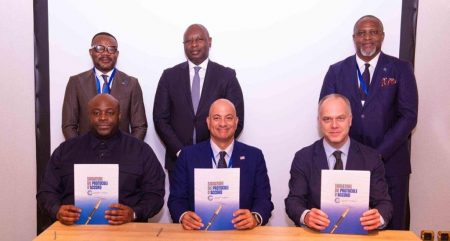
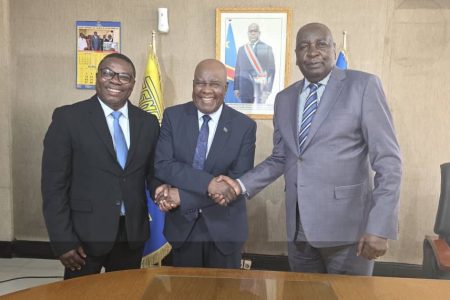
DRC Launches Lobito Corridor Programme to Accelerate Mineral Trade

DRC Launches Lobito Corridor Programme to Accelerate Mineral Trade

Why it Matters

  • The Democratic Republic of the Congo has launched the Lobito Corridor Programme, funded by the European Union under its Global Gateway strategy and implemented by TradeMark Africa, to strengthen trade systems along a key mineral export route.
  • The programme focuses on customs reform, regulatory coordination, and institutional capacity, aimed at improving efficiency, predictability, and transparency for exporters and logistics operators.
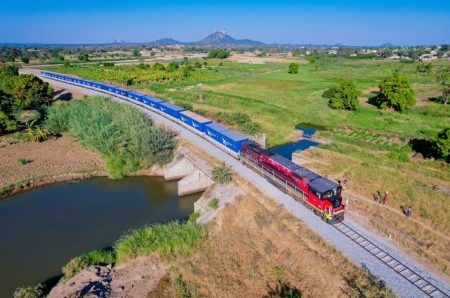
  • The corridor links the Copperbelt to the Atlantic Port of Lobito via the Benguela railway (1,300 km), providing one of the shortest and most strategic rail routes for mineral exports to global markets.
  • The initiative is strategically aligned with rising global demand for critical minerals, with the DRC producing around 70% of the world’s cobalt, positioning it as central to energy transition supply chains.
  • A phased implementation starting in Kolwezi will prioritise digitalisation, simplified documentation, and inter-agency coordination, with expected outcomes including reduced processing times, lower trade costs, and stronger regional integration between Angola, the DRC, and Zambia.
DRC Launches Lobito Corridor Programme to Accelerate Mineral Trade

The Government of the Democratic Republic of the Congo has launched the Lobito Corridor Programme, an initiative funded by the European Union under its Global Gateway strategy and implemented by TradeMark Africa. The programme seeks to strengthen trade systems along one of Central Africa’s emerging export routes for critical minerals.

The programme will support improvements in customs procedures, regulatory coordination and institutional capacity governing the movement of minerals and other goods along the corridor. These reforms are intended to improve predictability for exporters and logistics operators, and to strengthen the country’s position in global mineral supply chains.

The launch comes as global demand for minerals used in the energy transition continues to rise. The Democratic Republic of the Congo produces around 70% of the world’s cobalt, according to the International Energy Agency’s Critical Minerals Market Review (2023) and the U.S. Geological Survey’s Mineral Commodity Summary (2025). The country, therefore, sits at the centre of supply chains for electric vehicles, batteries and renewable energy technologies. Efficient transport corridors are increasingly essential to move these minerals reliably from production zones to international markets.

DRC Launches Lobito Corridor Programme to Accelerate Mineral Trade

The Lobito Corridor connects Central Africa’s mining regions to global markets through the Atlantic Port of Lobito. Anchored by the Benguela railway, which stretches more than 1,300 kilometres from the Angolan coast to the border with the Democratic Republic of Congo, the corridor provides one of the shortest rail connections between the Copperbelt and an ocean port, according to assessments by the African Development Bank (2023) and the European Commission’s Global Gateway initiative.

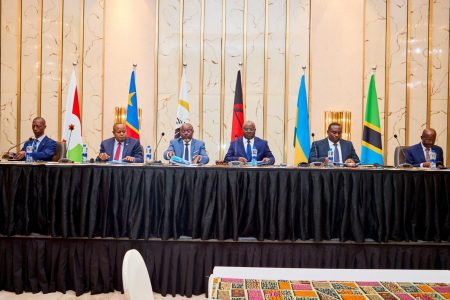
Speaking at the launch in Kolwezi, Ms Marie Ngandu, Deputy Coordinator of CEPCOR (Support and Monitoring Unit for Regional Programmes and Transport Corridor Activities), representing the Deputy Prime Minister in charge of Transport, said the programme responds to the practical needs of exporters and that improving corridor efficiency remains central to the country’s economic ambitions. “The Lobito Corridor represents an important route for the DRC’s mineral exports. This programme supports our efforts to improve institutional coordination, reduce administrative complexity and ensure that trade procedures operate predictably and transparently. Strengthened transport and regulatory systems will help connect our producers and industries more effectively to regional and global markets.”

H.E. Kazembe Swana Mathieu, Minister of Budget, Planning, Public Service, Labour and Social Welfare, representing the Provincial Government of Lualaba, highlighted the importance of corridor reforms for the country’s mining heartland. “Lualaba sits at the heart of the Democratic Republic of the Congo’s mining economy. Strengthening corridor systems will help ensure that minerals produced in the province reach international markets efficiently while supporting local economic development and job creation.”

Joana Numelia Mendes, Director of Trade Facilitation and Customs at the Lobito Corridor Transit Transport Facilitation Authority (LCFTTA), said improved coordination along the corridor will be essential for facilitating cross-border trade and transit. “The Lobito Corridor Transit Transport Facilitation Authority works to ensure that transport, customs and logistics systems operate efficiently across borders. Strengthening coordination among corridor institutions will help reduce bottlenecks and support the smooth movement of goods from production zones to international markets.”

William Lindberg, Head of Section for Infrastructure, Energy, Digitalisation and Private Sector, representing the European Union Delegation to the Democratic Republic of the Congo, said the initiative reflects the EU’s commitment to sustainable trade and infrastructure partnerships. “Through the Global Gateway strategy, the European Union is investing in sustainable infrastructure and trade systems that connect African economies to regional and global markets while supporting economic development and value creation.”

Aimé Nzoyihera, Country Director for TradeMark Africa in the DRC, said: “DRC holds a strategic position in global mineral supply chains. Strengthening trade systems along the Lobito Corridor will help ensure that minerals and other exports move more efficiently, transparently and competitively to international markets. Trade corridors work when infrastructure, institutions and procedures function together. By improving coordination and simplifying processes, this programme makes the corridor more predictable for businesses and more efficient for governments, benefiting the entire region.”

The programme adopts a phased approach, beginning in Kolwezi- an operational hub for mineral export processes where traceability, certification and export clearance are concentrated. Initial reforms will focus on strengthening inter-agency co-ordination, simplifying documentation requirements and expanding the use of digital clearance systems. As rail infrastructure upgrades progress and corridor traffic grows, the programme will extend to support broader logistics and regulatory improvements along the route.

The initiative is expected to reduce processing times for mineral consignments, lower trade costs, and increase transparency in export procedures. Over time, partners expect the corridor to become a more reliable and competitive route to global markets, reinforcing economic ties between Angola, the DRC and Zambia.

The programme forms part of the EU’s Global Gateway strategy, launched in 2021 to mobilise up to €300bn in sustainable infrastructure investments between 2021 and 2027, including transport corridors linking African resource regions to international markets.

Related News Articles