The development of the Lobito Corridor is entering a decisive phase, moving from strategic planning and political alignment into coordinated implementation. With firm commitments now in place from corridor countries and international partners, focus has shifted to execution, including the alignment of financing, sequencing of investments, harmonisation of standards, and the establishment of durable governance mechanisms.
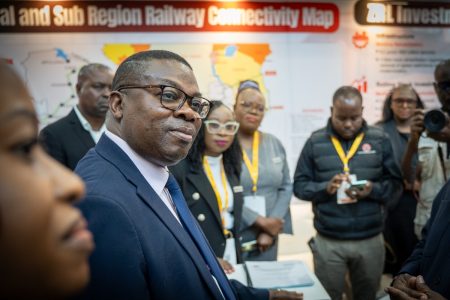
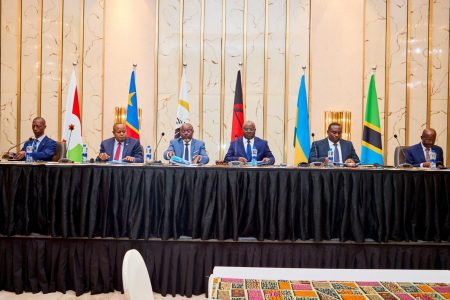
Against this backdrop, the Government of the Republic of Angola, in partnership with the World Bank, is hosting the Inaugural Coordination Meeting on the Lobito Corridor from 3 to 6 February 2026.
The meeting is focused on the Lobito Corridor as a 1,300-kilometre integrated railway and infrastructure system linking the mineral-rich regions of the Democratic Republic of the Congo and Zambia to Angola’s Port of Lobito on the Atlantic Ocean. The corridor is increasingly recognised as a strategic enabler of critical raw material supply chains, regional industrialisation, and improved access to global markets, while supporting broader trade, logistics, and value-addition activities across Southern and Central Africa.
The Inaugural Coordination Meeting seeks to formally launch a regional coordination architecture to accelerate corridor development, align national implementation timelines, and ensure coherence across public and private investments. It also aims to strengthen collaboration among the governments of Angola, Zambia, and the Democratic Republic of the Congo, together with international partners including the European Union, the United States, and the African Development Bank.
Discussions will also advance work on targeted infrastructure upgrades, including rail extensions and port enhancements, intended to reduce transport and logistics costs, improve cross-border connectivity, facilitate trade, and support growth in mining, agriculture, agro-industry, transport, and logistics. For Zambia, these investments are considered integral to boosting exports, attracting private investment, and supporting sustainable growth and job creation.
The meeting is expected to establish a framework for ongoing coordination with the potential to mobilise significant public and private financing, including funding from development partners and private financiers. It is also expected to reinforce regional and international partnerships, building on prior commitments such as the 2024 memorandum of understanding involving the United States, the European Union, the African Development Bank, and corridor countries.
Further discussions will address inclusive and equitable corridor-linked development, including consideration of social and community impacts in connected regions. The meeting is also expected to serve as a platform for subsequent engagements, including the Angola–EU Lobito Corridor Business Forum planned for later this year.
For Zambia, the Lobito Corridor is a strategic national priority, offering strengthened export diversification, reduced logistics costs, and more efficient access to the Atlantic. By expanding trade options and reducing dependence on longer and higher-cost routes, the corridor is expected to enhance economic resilience and support macroeconomic stability over the medium to long term.
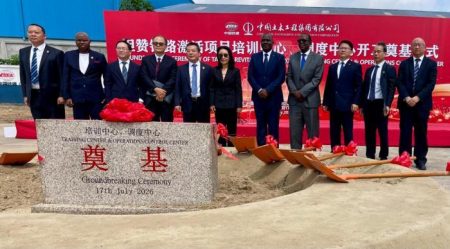
As the Zambian segment of the corridor moves into its construction phase, opportunities are expected to arise for private sector participation across construction, engineering, rail and port services, logistics, energy supply, and related support industries. Over the longer term, a fully operational corridor is expected to generate sustained opportunities in freight handling, mineral processing, agri-logistics, industrial parks, trade finance, and cross-border services, supporting regional integration and long-term economic growth.