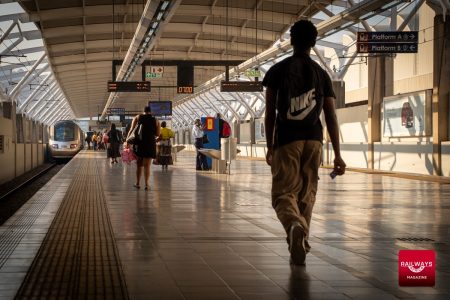
Gauteng’s transport strategy recognises that its extensive Metrorail network provides the scale required to move high volumes of passengers and support a more integrated provincial transport system. Better connections between Metrorail, Gautrain, buses, BRT services, minibus taxis, walking and cycling could improve accessibility while strengthening the role of rail within the province’s mobility network.
Implementation will remain constrained by the scale of infrastructure recovery required. Although passenger journeys are increasing, volumes remain far below pre-COVID-19 levels, while much of the available funding is expected to be directed towards maintenance and rehabilitation rather than network expansion.
The Gauteng Provincial Government has outlined plans to reinforce rail as the backbone of the province’s public transport system, with a focus on improving passenger rail services, strengthening institutional capacity and preparing for the devolution of rail functions from the national government.
These plans are revealed in a draft five-year transport implementation plan for Gauteng, which proposes making rail the backbone of the province’s integrated public transport system, with expanded network integration, commuter rail reforms and transit-oriented development forming key pillars of the strategy.
The plan is available for a 30-day public comment period from 21 July to 21 August 2026.
The Draft Integrated Implementation Plan (IIP) for 2026-2030, prepared by the Transport Authority for Gauteng (TAG), identifies rail as the preferred mode for high-volume passenger transport and outlines measures to better integrate commuter rail, the Gautrain, buses, bus rapid transit (BRT), minibus taxis and non-motorised transport into a single coordinated system.
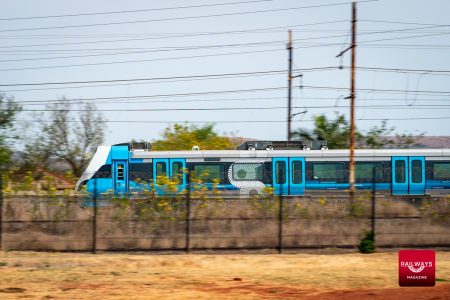
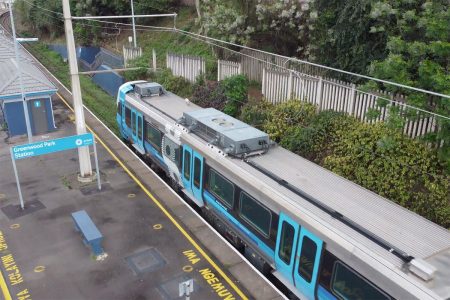
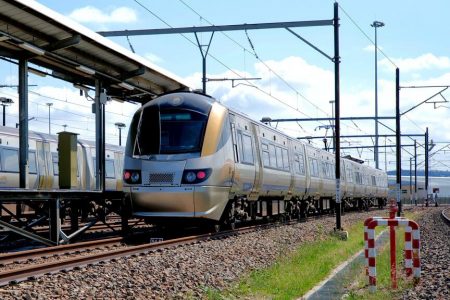
The Passenger Rail Agency of South Africa (PRASA)’s Metrorail network currently operates more than 100 stations and approximately 1000 kilometres of railway track across Gauteng, compared with Gautrain’s 10 stations and roughly 80 kilometres of track.
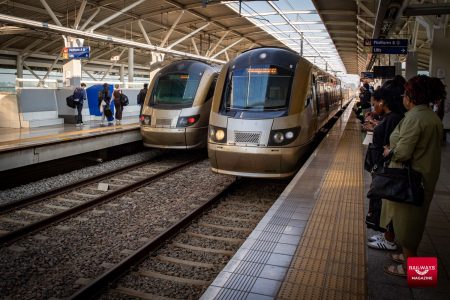
Metrorail has 17 operational rail corridors and five major railway lines connecting Johannesburg, Pretoria, Soweto, Ekurhuleni and surrounding areas. By comparison, the Gautrain network has three services linking Johannesburg, Pretoria and OR Tambo International Airport.
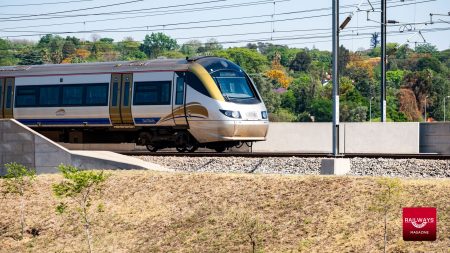
The Metrorail system is more than ten times larger than Gautrain in both network length and station numbers, with the two systems physically integrated at Pretoria, Rhodesfield and Johannesburg Park stations, allowing passengers to transfer between services.
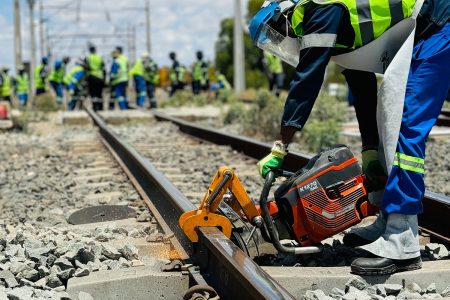
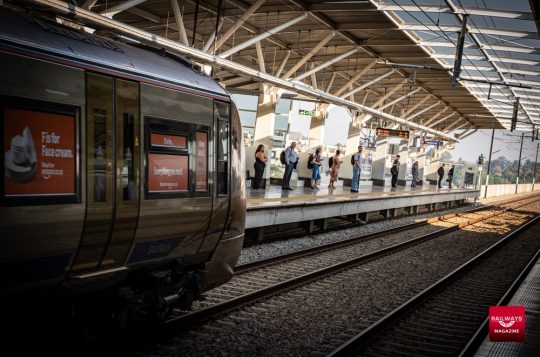
The plan says PRASA has adopted station design standards that promote transfers between rail, buses, minibus taxis, walking and cycling infrastructure, while station upgrades increasingly incorporate universal accessibility features and transit-oriented development opportunities. However, it notes that many station facilities were severely vandalised during the COVID-19 lockdown and are still being restored through PRASA’s recovery programme.
The plan further states that transport interchanges should be designed to provide seamless transfers between rail, buses, taxis and non-motorised transport through co-located facilities, integrated ticketing, unified passenger information systems and improved accessibility.
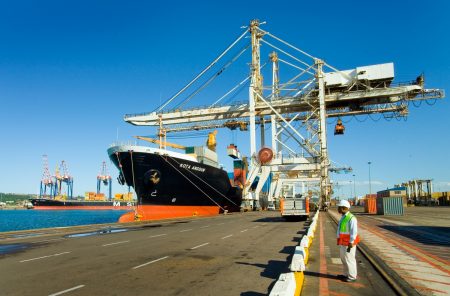
Rail also features prominently in the province’s freight strategy. The report says Gauteng should shift suitable freight from roads to rail to reduce road damage, improve logistics efficiency and protect critical transport infrastructure.
According to the report, PRASA has adopted station design standards that encourage seamless transfers between rail, buses, bus rapid transit (BRT), minibus taxis, pedestrians and cyclists. The stations are also being upgraded to improve accessibility for passengers with disabilities and to support transit-oriented development around rail hubs. However, the report says many rail facilities were extensively vandalised during the COVID-19 period and continue to undergo reconstruction as part of PRASA’s recovery programme.
The plan proposes the development of a provincial strategy for the devolution of commuter rail responsibilities from the national government, including a feasibility study and business case to assess the transfer of the commuter rail function. TAG also plans to review passenger demand forecasts to guide future extensions of both the Gautrain and PRASA rail networks.
The report estimates R17.02 billion will be allocated to Transnet Rail and Infrastructure Manager (TRIM) projects over the next five years as part of a broader transport infrastructure programme.
Transnet’s operating budget for roads and rail in Gauteng is projected at R18.98 billion between 2026 and 2030, while its capital budget for roads and rail is estimated at R9.94 billion over the same period.
PRASA is expected to spend R1.61 billion in Gauteng between 2026 and 2030, with annual allocations rising sharply to R1.11 billion in 2027 before declining in subsequent years.
Overall, the draft transport plan estimates that Gauteng’s transport sector will have access to R148.94 billion in combined funding between 2026 and 2030. However, it cautions that most rail and transport expenditure will continue to be directed towards maintenance and rehabilitation rather than expansion, potentially limiting the pace of network growth.
The report notes that Gauteng’s rail network is gradually recovering. PRASA’s commuter rail system transported 51.9 million passenger journeys in 2023/24, up from 31.4 million in 2022/23 and 15.1 million in 2021/22. Despite the improvement, passenger volumes remain far below the more than 500 million annual passenger journeys recorded before the COVID-19 pandemic, underscoring the scale of the recovery still required.
Gautrain remains one of the province’s largest transport investments. The report allocates the Gautrain Management Agency (GMA) a project-related budget of R10.74 billion between 2026 and 2030, with annual funding rising from R2.02 billion in 2026 to R2.28 billion by 2030.
Written by Chamwe Kaira for Railways Africa