South Africa's 2026 MTBPS Details Transnet Rail Funding Requests, PRASA Recovery and Gautrain Allocation
The two Transnet corridor projects are progressing through the Budget Facility for Infrastructure assessment process, with combined capital costs of R31.718 billion and funding requests of R14.662 billion. At the same time, National Treasury has identified delays in restructuring the Transnet Rail Infrastructure Manager, even as revised access rules have been published for private train operating companies preparing for operations from 2027.
The MTBPS distinguishes between funding under consideration and approved investment. Gautrain has received R2.5 billion in approved funding, with financial close expected in 2026/27, while PRASA is targeting 232 million annual passenger journeys by 2028/29 following an increase to 101 million in 2025/26. National Treasury also continues to identify Transnet's financial position, infrastructure maintenance requirements and reliance on government guarantees as fiscal risks.
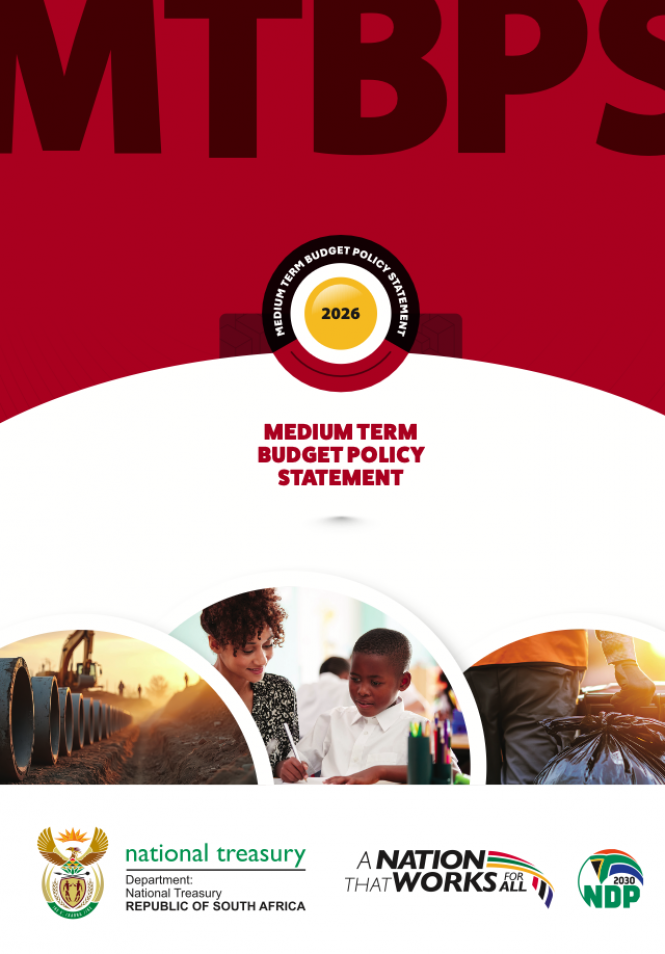
- National Treasury's 2026 Medium Term Budget Policy Statement, published on 21 October 2026, lists two Transnet railway projects under consideration for Budget Facility for Infrastructure funding and confirms R2.5 billion for the Post-2026 Gautrain Rapid Rail Link System.
- The Cape Corridor Rail Infrastructure Reinstatement Programme has an estimated capital cost of R18.089 billion and a funding request of R8.663 billion.
- The Central Corridor Infrastructure Project has an estimated capital cost of R13.629 billion and a funding request of R5.999 billion.
- The Gautrain allocation comprises R1.699 billion for 2027/28 and R800.740 million for 2028/29.
- Passenger rail journeys increased from approximately 39 million in 2023/24 to 101 million in 2025/26, and the Passenger Rail Agency of South Africa is targeting 232 million in 2028/29.
- National Treasury reports that the Budget Facility for Infrastructure has approved 41 projects since 2021, with R96.1 billion in direct fiscal allocations.
South Africa's National Treasury has identified two Transnet railway infrastructure projects with a combined capital cost of R31.718 billion for consideration under the Budget Facility for Infrastructure (BFI), while confirming R2.5 billion in approved funding for the Post-2026 Gautrain Rapid Rail Link System.
The developments are detailed in the 2026 Medium Term Budget Policy Statement (MTBPS), published on 21 October, which also reports progress and delays in freight rail reform, revised access arrangements for private train operating companies, and continued recovery in passenger rail operations.
The statement confirms that the two Transnet projects are among 12 infrastructure proposals still under consideration through the BFI. Their combined funding request amounts to R14.662 billion, with funding decisions subject to further assessment.
Transnet Corridor Infrastructure Projects Under Funding Consideration
Two Transnet railway projects are included in the BFI pipeline of projects under consideration from the second quarter of 2026/27.
The Cape Corridor Rail Infrastructure Reinstatement Programme has an estimated capital cost of R18.089 billion and a BFI funding request of R8.663 billion.
The Central Corridor Infrastructure Project has an estimated capital cost of R13.629 billion, with R5.999 billion requested through the BFI.
Both projects remain under assessment. National Treasury states that projects in the BFI pipeline must undergo validation of their quality and readiness before funding decisions are confirmed.
During the first two submission windows of 2026/27, 17 projects were accepted into the BFI pipeline. Two were approved for funding, three were returned to their sponsors for further development, and the remaining 12 were under consideration.
Projects successfully completing the assessment process may be considered for funding from the contingency reserve.
The BFI is intended to match assessed infrastructure projects to appropriate funding, financing and delivery mechanisms, including direct fiscal allocations, blended finance, instruments that incorporate private funding and public-private partnerships.
Transnet Restructuring and Private Rail Access
The MTBPS reports progress in the institutional separation of the Transnet National Ports Authority and the Transnet Rail Infrastructure Manager from Transnet, as part of reforms intended to introduce competition and improve efficiency in the freight transport sector.
National Treasury states that ensuring institutional separation of the Rail Infrastructure Manager from Transnet will provide access to the rail network for new train operators.
The Transnet Rail Infrastructure Manager has published revised rules for private rail operators following industry feedback, with new train operating companies preparing for operations from 2027.
However, National Treasury also identifies delays in the restructuring of the rail infrastructure manager, stating that this work must be completed alongside private-sector participation reforms.
The broader reform programme is being implemented through Operation Vulindlela, which continues to address structural barriers in energy, transport, water and tourism.
In its discussion of economic reform, National Treasury identifies freight rail restructuring as one of three areas where implementation needs to accelerate, alongside electricity distribution reform and water sector reforms.
Transnet Financial Position Remains a Fiscal Risk
Although Transnet's operating performance has improved, National Treasury continues to classify the company as a material medium-term fiscal exposure.
The fiscal risk statement in Annexure A identifies Transnet's weak financial position, substantial financing and investment requirements, and continued reliance on government guarantees as areas of concern.
According to Treasury, improved operating performance and progress in rail and port reforms increased revenue and earnings over the past year.
However, ageing infrastructure, maintenance backlogs, high debt and rising debt-service costs continue to constrain the company's financial position.
The principal residual risk identified by National Treasury is that improvements in operational and financial performance may be insufficient to strengthen Transnet's balance sheet and enable the company to finance substantial infrastructure requirements sustainably.
The statement identifies continued operational recovery, implementation of logistics reforms and greater private-sector participation as measures expected to strengthen Transnet's financial position and reduce government exposure over time.
Across government, the guarantee portfolio declined from R982.4 billion in March 2026 to R960.6 billion in June 2026.
National Treasury nevertheless reports that the principal residual fiscal risks remain concentrated in Transnet and Eskom, with financial and refinancing pressures creating the possibility that existing government guarantees could be called upon.
PRASA Passenger Journeys Increase to 101 Million
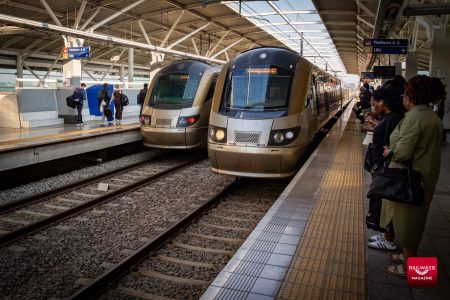
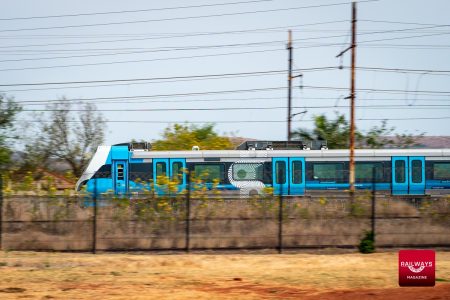
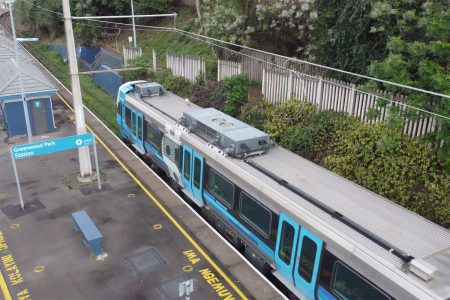
The 2026 MTBPS reports that passenger rail journeys increased from approximately 39 million in 2023/24 to 101 million in 2025/26.
National Treasury attributes the improvement largely to signalling modernisation, strategic rolling stock replacement and other infrastructure rollouts.
The Passenger Rail Agency of South Africa (PRASA) is targeting 232 million passenger journeys in 2028/29.
The statement identifies passenger rail recovery as part of the progress being achieved through structural reforms in South Africa's transport sector.
Passenger rail improvements are also referenced in National Treasury's broader assessment of infrastructure modernisation and replacement, alongside reforms intended to improve the performance and competitiveness of freight transport.
Gautrain Receives R2.5 Billion in Approved Funding
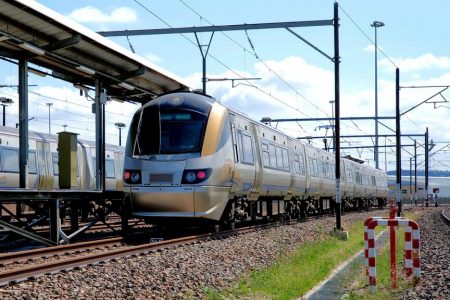
The Post-2026 Gautrain Rapid Rail Link System is one of two projects approved for BFI funding during the first quarter of 2026/27.
The project has received an approved allocation of R2.5 billion, comprising R1.699 billion for 2027/28 and R800.740 million for 2028/29.
National Treasury identifies Gautrain among the advanced public-private partnership projects progressing through procurement.
According to the MTBPS, the Post-2026 Gautrain Rapid Rail Link System is expected to reach financial close during 2026/27.
The project is listed alongside the redevelopment of six ports of entry by the Department of Home Affairs and Border Management Authority as part of the government's advanced PPP programme.
The Gautrain allocation is also reflected in the medium-term adjustments to infrastructure spending presented in Annexure C of the statement.
Public Transport Reform and Road–Rail Integration
National Treasury reports that a new public transport roadmap is being developed following reductions to the public transport network grant in the 2026 Budget.
The roadmap is intended to sequence reforms, improve alignment between road and rail transport, and clarify regulatory and contracting arrangements for subsidised services.
The measure forms part of the expenditure priorities for community development, which include public transport and basic services.
Infrastructure Financing and Delivery
The MTBPS places railway investment within a wider programme of public infrastructure reform intended to improve project preparation, attract private financing and accelerate delivery.
National Treasury reports that payments for capital assets are expected to be the fastest-growing component of expenditure over the medium term, increasing by an average of 5.3 per cent over the 2026/27 to 2029/30 period.
The Budget Facility for Infrastructure has approved 41 projects since 2021, with R96.1 billion in direct fiscal allocations.
The statement notes that although current budget estimates reflect shorter-term construction expenditure, the productivity and growth benefits of these projects are expected to materialise largely after 2029/30 as projects are completed.
Government has also introduced a quarterly infrastructure bond auction programme, following an inaugural R11.8 billion infrastructure bond issuance in November 2025. The quarterly programme commenced in July 2026.
National Treasury identifies infrastructure bonds as a mechanism for mobilising long-term financing for public infrastructure.
The MTBPS further projects that public entities will record combined cash deficits over the medium term, partly reflecting investment in road, rail and water infrastructure.
In its economic outlook, Treasury states that private-sector investment is expected to recover gradually as reforms progress, including the opening of electricity generation and transmission to private participation and the conclusion of port and rail concessions.
The statement's economic scenarios also model the effects of more extensive reforms under Operation Vulindlela Phase II. Under the domestic upside scenario, improvements in rail and port operations form part of a broader package of structural reforms projected to lift the level of real GDP by 3.1 per cent relative to the baseline by 2034.
Written by Phillippa Dean