The 11 approved operators are working towards financial close and the rolling stock needed to begin operating on the Transnet network from April 2027. Creecy said the fourth iteration of the network statement, which she called “the menu and the price for private sector operators”, aims to give them that certainty.
She said the operators are expected to add a further 24 million tonnes of freight during 2027, supporting the government’s target of moving 250 million tonnes by rail by the end of the current political term.

- South Africa’s Minister of Transport, Barbara Creecy, said 11 private rail operators have been approved to access the Transnet rail network from April 2027.
- She said the fourth iteration of the network statement has been published, describing it as “the menu and the price for private sector operators”.
- Creecy expects the operators to add a further 24 million tonnes of freight during 2027, towards the target of 250 million tonnes by the end of the current political term.
- Private sector participation projects at the Ngqura Manganese Export Corridor, Richards Bay Dry Bulk Terminal and Gauteng–Durban Container Corridor will go to market this financial year, with two already in the market.
- Annual passenger journeys on the commuter rail network passed 100 million by the end of March 2026, with 35 priority lines back in service and 360 stations revitalised.
- The outcome of the passenger rail request for information issued in 2025 is to be published by the end of October 2026.
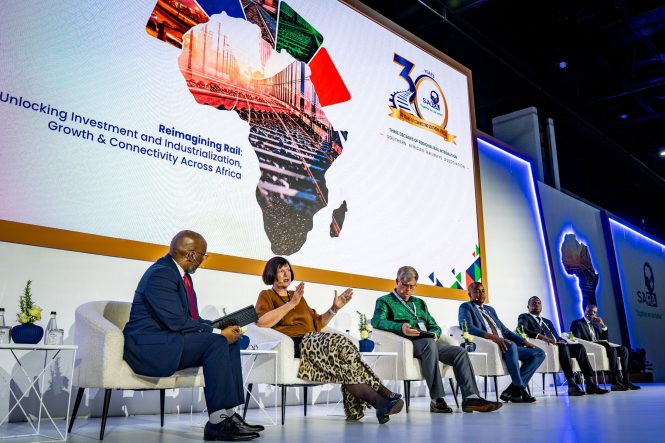
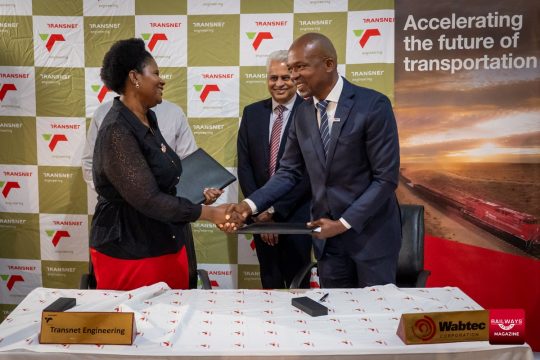
Eleven private rail operators have been approved to access South Africa’s Transnet railway network from April 2027, with the government expecting them to add 24 million tonnes to the country’s annual rail freight volumes. Minister of Transport Barbara Creecy announced the development during her opening address at the 15th Southern African Railways Association (SARA) Conference and Exhibition, where she outlined progress in freight rail reform, passenger rail recovery and regional railway investment.
The additional freight is expected to contribute towards the government’s target of moving 250 million tonnes by rail by the end of the current political term. Creecy said the fourth iteration of the rail network statement had been published to give the approved operators greater certainty as they work towards financial close and acquire the rolling stock needed to begin operations.
She described the network statement as “the menu and the price for private sector operators”, referring to its role in setting out the commercial terms for access to Transnet’s infrastructure.
The government is also advancing three private sector participation projects involving the Ngqura Manganese Export Corridor, Richards Bay Dry Bulk Terminal and Gauteng–Durban Container Corridor. Creecy said all three would be taken to market during the current financial year, with two already in the market at the time of her address.
The developments form part of South Africa’s rail reform programme, guided by the White Paper on National Rail Policy of 2022 and the National Freight Logistics Roadmap of 2023. The government’s objective is to re-establish rail as the backbone of the country’s freight logistics and passenger transport systems, reducing dependence on road transport.
Opening the Network to Private Operators
The establishment of the Transnet Rail Infrastructure Manager (TRIM) in November 2024 was an important step in the reform process. Within a month, TRIM had published the first network statement, establishing a dedicated institutional structure to support third-party access to Transnet’s railway infrastructure.
The government is now moving to formally institutionalise the Transport Economic Regulator. Creecy said the regulator would be responsible for creating a fair, transparent and competitive operating environment in which railway operators could compete on equal terms.
Its role would also include promoting efficiency, investment and innovation across the sector.
For the 11 approved private operators, the immediate priorities are to secure financing and acquire the rolling stock required to begin operating on the network. Creecy expressed confidence that they would be able to contribute additional freight volumes during 2027, helping South Africa move towards its longer-term rail freight target.
Increasing rail utilisation also remains central to the government’s efforts to shift freight from road to rail. Creecy pointed to the benefits of reduced road congestion, improved safety, less wear on road surfaces and lower carbon dioxide emissions.
Passenger Rail Recovery and Signalling
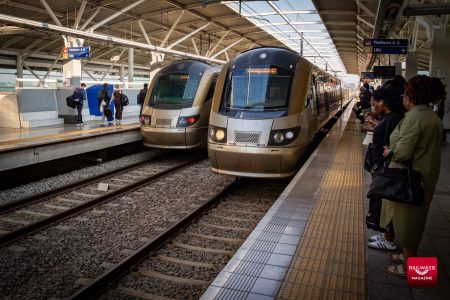
South Africa’s commuter rail recovery has also continued, with annual passenger journeys exceeding 100 million by the end of March 2026. Creecy reported that 35 priority railway lines had returned to service and 360 stations had been revitalised.
The next challenge is signalling. Having restored services on priority routes, the government is turning its attention to the signalling systems needed to increase the number of trains that can operate safely each hour.
Creecy described this as a complex and difficult undertaking, but one that is necessary to increase the frequency of passenger services.
The government is also examining opportunities for further investment in passenger rail. Creecy said the outcome of the passenger rail request for information (RFI), issued in 2025, was expected to be published by the end of October 2026.
She had already reviewed the draft report and expected its findings to encourage greater investor interest in the country’s passenger railway system.
Regional Corridors and Cross-Border Railway Development
Creecy also addressed the need for greater railway integration across Southern Africa, linking regional transport development to the changing global economic and geopolitical environment.
With established trade relationships changing and economic shocks placing pressure on African economies, she argued that countries needed to strengthen regional resilience and improve connectivity.
Africa’s Agenda 2063 and the African Free Trade Area, which Creecy said had 54 member countries to date, presented an opportunity to expand trade within the continent.
Intra-African trade currently accounts for 18% of Africa’s total trade, with the potential to more than double over the next 14 years. Supporting that growth would require an efficient, integrated freight logistics system, with rail carrying much of the additional traffic.
Across the Southern African Development Community (SADC), Creecy identified regulatory reform, private sector investment and cross-border infrastructure development as drivers of railway growth. These initiatives seek to address the fragmentation of national railway systems, operational capacity constraints and the region’s dependence on road freight.
Referring to an earlier presentation by the Africa Finance Corporation, she highlighted the Lobito Corridor, Nacala Logistics Corridor and TAZARA revitalisation, together with plans to revitalise the Limpopo Railway.
Creecy said these investments and initiatives were progressing from conceptualisation towards implementation, reflecting the growing emphasis on railway development across the region.
Greater rail utilisation could also improve the competitiveness of freight rail against trucking, particularly given elevated diesel prices. She argued that this advantage could extend to railway operations using diesel locomotives.
South Africa is pursuing its own cross-border railway initiatives through Transnet, which is working on corridor developments with Eswatini and Botswana while strengthening existing rail links with Mozambique.
South Africa’s Rail Manufacturing Role
Alongside infrastructure investment, Creecy reaffirmed South Africa’s commitment to becoming a continental hub for railway manufacturing, in line with the African Union’s 2016–2017 resolution.
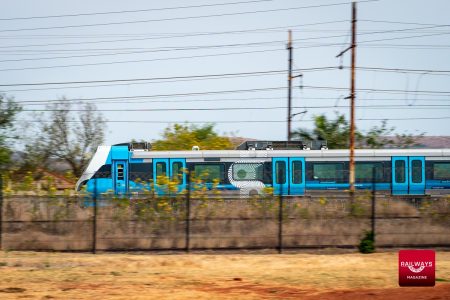
She said the government was implementing this mandate through sustained sector reform and targeted investment, pointing to the Gibela rail manufacturing plant at Dunnottar in Gauteng as an example of the country’s industrial capabilities.
The facility’s ongoing production and skills development activities were contributing to the growth of railway manufacturing capacity in Africa.
Creecy also confirmed that the Passenger Rail Agency of South Africa (PRASA) and Transnet were committed to supplying surplus rolling stock to other African countries seeking to expand their railway networks and increase operational capacity.
The commitment extends South Africa’s role in regional railway development beyond infrastructure connections to the supply of rolling stock, alongside its continuing investment in domestic rail manufacturing and skills development.