James Holley, CEO of Traxtion, and Reneilwe Mokoena, Investment Director at Harith General Partners, write that South Africa’s rail reform programme has opened the freight rail market to greater private investment and competition. The Transnet Rail Infrastructure Manager has finalised Rail Access Agreements with 11 private train operating companies, eight of them new entrants to the sector.
They point to Traxtion’s Project Vector, which involves R1.8 billion for 46 diesel-electric locomotives and R1.6 billion for approximately 920 wagons, with the first locomotives expected to enter service in the first half of 2027 and completion scheduled for 2028.
- Traxtion CEO James Holley and Harith General Partners Investment Director Reneilwe Mokoena argue that the next phase of South Africa’s freight rail reform is converting network access into investment and capacity.
- The Transnet Rail Infrastructure Manager has finalised Rail Access Agreements with 11 private train operating companies, eight of them new entrants.
- The authors say each additional million tonnes of train capacity requires approximately R1 billion in rolling-stock investment.
- Traxtion’s Project Vector involves R1.8 billion for 46 diesel-electric locomotives and R1.6 billion for approximately 920 wagons.
- The first Project Vector locomotives are expected to enter service in the first half of 2027, with the programme scheduled for completion in 2028.
- Once operational, Project Vector is expected to move around 4.5 million tonnes of freight annually, with 60 per cent local content and 78 per cent local procurement.
By James Holley, CEO of Traxtion and Reneilwe Mokoena, Investment Director at Harith General Partners
South Africa’s rail reform programme has opened the freight rail market to greater private investment and competition. The next step is ensuring that this opportunity translates into additional capacity, more reliable services and tangible economic benefits.
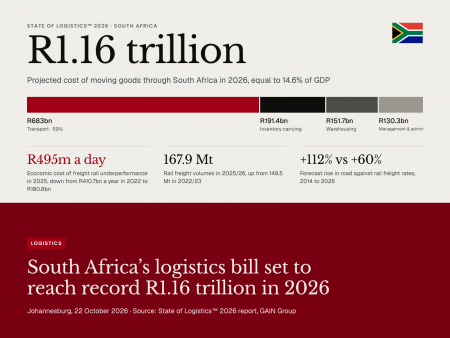
The stakes are high. According to the most recent State of the Logistics report, the cost of moving goods through the country is projected to reach a record R1.16 trillion in 2026, equivalent to 14.6 per cent of GDP, which is higher than all global peers. Improving rail performance can help reduce these costs and strengthen South Africa's economic competitiveness.
Opening the rail network to private train operating companies (TOCs) can address this, but rail reform’s success cannot be measured solely by the number of signed access agreements or new operators admitted to the network.
Government, private operators and investors each have a role to play in building a rail system that works more effectively for the economy. Progress will depend on aligning these contributions around a common objective: moving more freight reliably, efficiently and competitively.
Access is only valuable if it can be used
The Transnet Rail Infrastructure Manager (TRIM) has finalised Rail Access Agreements with 11 private train operating companies (TOCs), eight of them new entrants to the sector. As more companies apply for access to the rail network, the sector must distinguish between an interest in operating trains and the ability to deliver a viable service.
Freight rail requires significant investment in assets, skills and operations. An access allocation does not provide these resources or guarantee that an operator will be ready to use its allocated capacity within the required period. Capacity that is allocated but unused means freight volumes that never materialise, capable operators kept waiting and further economic growth forgone.
The answer is not to restrict competition or create unnecessary barriers for new entrants, but to ensure that allocations are awarded to entrants with the demonstrated capacity and readiness to deliver. South Africa needs transparent, evidence-based requirements that objectively assess an applicant’s ability and readiness to use the capacity it seeks. This should be supported by clear implementation milestones and reallocation mechanisms when necessary. The 24-month allocation cycle offers an opportunity to ensure network access is converted into effective freight services but failure to realise this opportunity risks delaying rail reform.
Capital needs a bankable operating environment
Each additional million tonnes of train capacity requires approximately R1 billion in rolling-stock investment. Securing capital at this scale depends on investors and lenders having confidence that efficient rail operations can generate predictable, long-term cash flows.
Two factors remain particularly important to the investment case. The first is the condition and reliability of the infrastructure. The second is the need for clear service-level commitments around the performance of TRIM. Years of underinvestment in rail infrastructure have left sections of the network operating below their design capacity, while restoring key corridors will require significant capital and time. Further, what matters is a clear and credible understanding of the service levels the network can realistically deliver as rehabilitation progresses.
Without these in place, operators cannot accurately forecast volumes, costs and returns, making it difficult for funders to assess risk and finance projects. In the absence of certainty over operating cashflows lenders require high levels of equity in the capital structure of train investments. This increases freight rail costs, constrains investment and prevents new entrants without access to substantial equity from entering the market.
The Network Statement is therefore critical to rail reform’s success, and it can be strengthened further through clear service-level commitments and reciprocal accountability. Operators must be accountable for delivering the services they commit to, while infrastructure managers must provide transparency on network performance on which operators depend. A framework built on clear obligations, constructive engagement and shared accountability will help create the certainty needed to attract investment and build a competitive freight rail market.
Investment is how reform becomes real
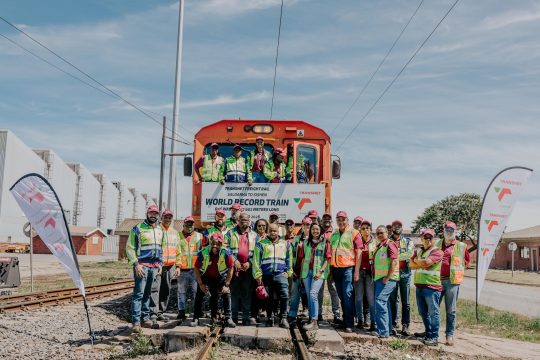
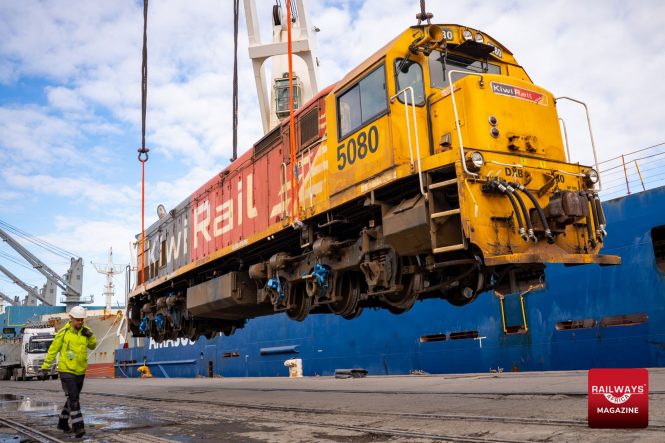
Traxtion’s Project Vector demonstrates the scale of private investment required to bring additional freight capacity into the market. The programme involves R1.8 billion for 46 diesel-electric locomotives and a further R1.6 billion for approximately 920 wagons. The first locomotives are expected to enter service in the first half of 2027, with the programme scheduled for completion in 2028
Once operational, Project Vector is expected to move around 4.5 million tonnes of freight annually, addressing approximately 5 per cent of South Africa’s freight logistics shortfall. The project is planned around 60 per cent local content and 78 per cent local procurement, with approximately R207 million expected to flow into the downstream locomotive industry and R1.6 billion into wagon manufacturing.
This investment puts assets into service, adds freight capacity and creates multi-year demand for local engineering, manufacturing, maintenance and technical skills. The project is expected to support 662 direct jobs at Traxtion, stimulate activity across the supply chain, reduce fuel consumption by around 15 per cent due to new engines, and cut carbon emissions by 40 to 60 per cent compared with road transport.
Project Vector is an example of what successful rail reform can achieve by transforming private investment into operational capacity, competitive logistics, and broader economic value, including job creation, though this is only possible if the network can make the investment financially viable.
Measure reform by what it delivers
The goal is not simply to increase the number of slots granted, but to move more freight efficiently by rail, strengthening South Africa’s competitiveness and creating a sustainable platform for development. Achieving this will require public and private stakeholders to work together to firstly implement a robust process of granting access to the national railway network and secondly ensuring private sector applicants deliver on the train capacity granted within committed timeframes.
Rail reform has opened the door to theoretical rail opportunity. The task now is to turn access into investment, investment into additional capacity, and capacity into measurable economic growth.
James Holley, CEO of Traxtion, and Reneilwe Mokoena, Investment Director at Harith General Partners