Railways Africa Q&A With European Union Agency for Railways Executive Director Oana Gherghinescu - Building Interoperability into Africa’s Corridors
The interview sets out the European Union Agency for Railways’ approach to cooperation with African railway institutions, which Gherghinescu describes as demand-led and built on a jointly defined work programme. She says ERA’s support covers technical choices, regulation, skills and implementation, with Sub-Saharan Africa among the priority regions of its international cooperation agreement with the European Commission’s Directorate-General for International Partnerships.
For railway operators, regulators and ministries, Gherghinescu applies four tests to signalling and train-control decisions: interoperability, future value, supplier diversity and controlled evolution. She also names the three elements she says made the greatest difference to railway safety in Europe: clear responsibility, independent oversight and a genuine safety culture.
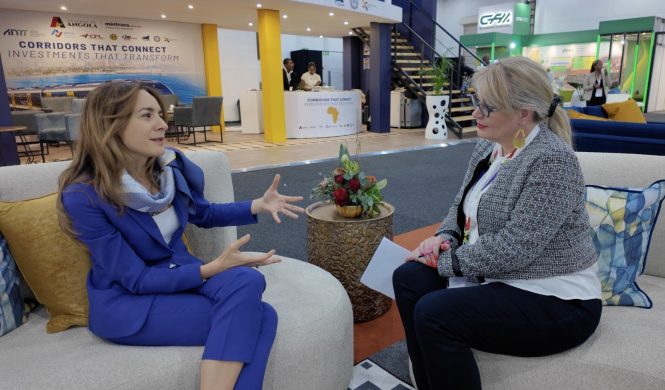
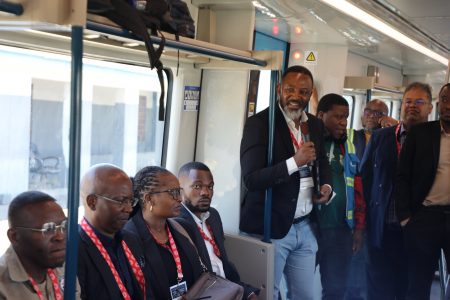
- Oana Gherghinescu, Executive Director of the European Union Agency for Railways (ERA), spoke to Railways Africa at the SARA Rail Conference 2026 on 21 October 2026.
- ERA issues vehicle authorisations and single safety certificates for operations in more than one Member State, working with national safety authorities.
- ERA is the system authority for the European Rail Traffic Management System (ERTMS), including its train-control component, ETCS.
- ERA has signed a €5 million international cooperation agreement with the European Commission’s Directorate-General for International Partnerships, with Sub-Saharan Africa among the priority regions.
- Gherghinescu names four tests for signalling and train-control investments: interoperability, future value, supplier diversity and controlled evolution.
- She says ERA’s engagement with Africa is demand-led and starts from a jointly defined, practical work programme.
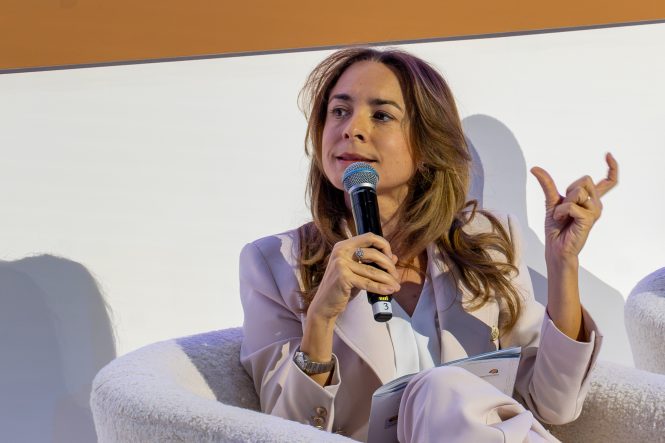
Q. Let's kick off with a broader introduction to the European Union Agency (ERA) for Railways. For those in our African railway audience who may not be familiar with ERA, tell us about the Agency, its mandate and the role it plays in Europe's railway industry.
A. The European Union Agency for Railways was created to help build a single European railway area: a railway system in which trains, vehicles and operators can work across national borders with a high and consistent level of safety. Our mission is to move Europe towards a sustainable and safe railway system without frontiers.
Europe needed such an agency because its railways were built nation by nation. Each country developed its own signalling systems, operating rules, technical requirements and approaches to safety. Many of those decisions were rational when taken individually. Together, however, they created complexity. A freight train crossing Europe could face changes of locomotive or driver, repeated checks and different technical systems. A train standing still is lost money, lost capacity and a missed opportunity for both customers and passengers.
ERA helps replace that patchwork with common ground. We develop the common technical and safety framework applied across the European Union. We issue vehicle authorisations and single safety certificates for operations in more than one Member State, working closely with national safety authorities. We are also the system authority for the European Rail Traffic Management System, ERTMS, including its train-control component, ETCS. We manage an open, common architecture that combines safety, capacity and interoperability and supports a competitive, multi-supplier market.
We do not operate trains or manage infrastructure. We work with those who do: the European Commission, national authorities, infrastructure managers, railway undertakings, manufacturers, maintainers and workers. After more than two decades of reducing fragmentation, our most useful contribution internationally is not to claim that Europe has every answer. It is to share what worked, what did not, and how partners can avoid expensive mistakes while designing solutions suited to their own operational reality.
SARA 2026 – Industry Perspectives
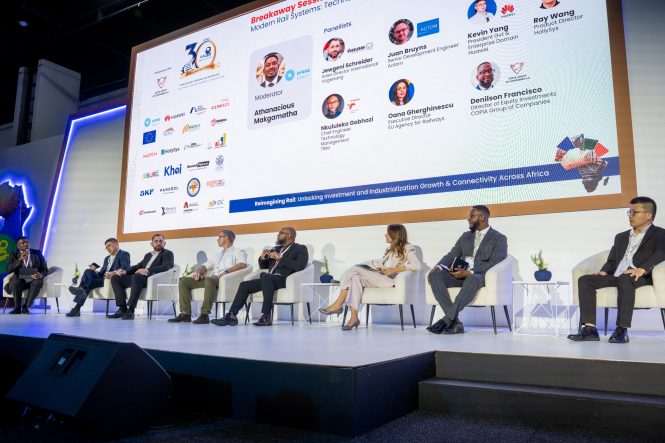
Q. You've joined us here at the Southern African Railways Association (SARA) annual conference and exhibition and participated in the panel discussion, "Modern Rail Systems: Technology Supporting Operational Efficiency".
What were your key takeaways from the discussion, and did anything particularly stand out to you in terms of the challenges or opportunities facing the African railway industry?
A. What struck me was the combination of ambition and realism. The discussion was not about technology for its own sake. It was about how rail can move greater volumes, improve corridor performance, connect mines and production centres to ports and markets, and support a more industrialised economy. Moving trains means moving economies.
A second takeaway is that technology is rarely the only bottleneck. Trust is equally important. Operators need confidence that a system is safe and workable. Investors need confidence that an asset will remain valuable. Neighbouring railways need confidence that their trains will continue to work across an interface or border. Suppliers need stable specifications. Staff need the skills and confidence to operate and maintain the system. Modern signalling, predictive maintenance, digital traffic management and better data can deliver a great deal, but only when they sit on open common standards, credible governance, cybersecurity and a strong safety culture.
The opportunity is especially significant because important choices are being made now, as corridors are renewed, expanded and opened to new operators. This is the moment to build interoperability into the system, even when implementation is phased. A railway is not competitive because one section performs brilliantly. It is competitive when the whole transport chain works predictably and safely from origin to destination. A freight corridor is only as strong as its weakest interface.
What stood out most is the possibility of combining heavy-haul strength with a broader network perspective. Freight and passenger needs are not identical, but they both benefit from safe train protection, reliable operational control, real-time visibility and capacity managed across the corridor. The strategic question is therefore not only which technology meets today's need, but which architecture allows both freight and passenger traffic to grow over the next thirty years.
Agenda 2063 – Learning from Europe's Experience
Q. Europe has spent decades addressing the challenges of operating across national railway networks. Africa, through the African Union's Agenda 2063, has its own ambitions for a more integrated continental railway network, facilitating the efficient movement of people and goods.
Looking at Africa's ambitions against Europe's experience, where do you think we have the greatest opportunity to accelerate regional integration, and what should we be doing differently?
A. The greatest opportunity lies in designing integration before fragmentation becomes embedded. Africa can agree on common ground while major parts of the future network are still being planned or modernised. Europe often had to harmonise after national systems, rules and investments were already locked in. That is possible, but it is slower and more expensive.
The practical place to start is with strategic corridors, especially those connecting mines, industrial centres, ports, cities and cross-border markets. Integration does not need to happen everywhere at once. But there is an important trap: if every corridor chooses its own incompatible standards, national islands are simply replaced by corridor islands. The essentials should therefore be agreed at regional or continental level and then applied corridor by corridor.
Those essentials include compatible technical requirements and train control; a clear approach to infrastructure and rolling-stock interfaces; mutual recognition or coordinated acceptance of vehicles, operators and relevant staff competences; smooth border procedures; common safety principles; and governance capable of keeping specifications stable while allowing controlled evolution. Implementation can come in phases, but the long-term network architecture should be visible from the start.
Europe's own lesson is to build for the network, not only for the individual line. Stable specifications create scale. Scale strengthens competition, reduces costs, supports skills and maintenance, and makes assets more attractive to investors.
Could Africa Leapfrog Railway Modernisation?
Q. I'd like to explore the possibility of Africa leapfrogging some of the challenges Europe encountered.
In telecommunications, much of Africa was able to bypass extensive fixed-line infrastructure and move directly into mobile technology.
Could something similar happen in rail? Given advances in modern signalling, digital systems and new technologies, could Africa take a fundamentally different approach to railway modernisation rather than following the same path Europe took?
A. Yes, in important respects it can. Africa does not need to repeat Europe's sequence of developing many separate national signalling systems and then spending decades migrating towards a common architecture. New lines and networks being modernised at scale can move directly towards digital train control, modern traffic management, reliable communications and data-driven maintenance.
The mobile-phone comparison is useful, with one crucial qualification. Mobile leapfrogging worked because different devices and networks could connect through common standards. Rail leapfrogging will work for the same reason.
Digitalisation without interoperability can produce newer, more sophisticated islands. The objective should be digital by design and interoperable by design.
There are tangible operational opportunities. Radio-based train control can reduce dependence on extensive lineside equipment. Better data can improve asset condition monitoring and maintenance planning. Digital traffic management can improve visibility and support corridor-level capacity decisions. Fewer vulnerable trackside components can also reduce maintenance and protection burdens. But the full solution must be assessed across its lifecycle: an attractive initial capital cost can become expensive if operations, maintenance, upgrades, supplier dependency or cybersecurity are neglected.
Leapfrogging therefore requires four disciplines: open specifications rather than proprietary lock-in; compatible choices across neighbouring networks; cybersecurity and safety assurance built in from the beginning; and investment in people, operating rules and maintenance capability alongside the technology. Technology can move quickly. Institutions, skills and trust must be ready to move with it.
Technology – Avoiding Tomorrow's Barriers
Q. ERA has played a central role in developing common European railway standards, including ERTMS and ETCS.
Africa has a combination of legacy networks, modernised infrastructure and entirely new railway developments.
As countries make decisions about new signalling and train control systems, how do we ensure that today's technology investments don't create tomorrow's interoperability problems? And what lessons has Europe learnt from implementing these standards across different national networks?
A. The choices belong to each country and railway, and they must reflect local operations, traffic mix and investment priorities. The European lesson is nevertheless clear: compatibility is easiest and least costly when it is designed in from the start. Railway assets remain in service for decades. A decision that looks local today may shape an entire corridor tomorrow.
I would apply four tests. First, interoperability: can the system work across networks, corridors and borders, and can vehicles move without accumulating multiple train-control systems? Second, future value: can the investment scale, adapt and retain value rather than becoming a stranded asset? Third, supplier diversity: are the specifications sufficiently open and complete to allow several suppliers to compete and equipment from different vendors to work together? Fourth, controlled evolution: is there a clear system authority and upgrade path that improves the technology without forcing the railway to start again from scratch?
ERTMS was developed around precisely these ambitions. ETCS provides train protection through a common architecture, while the wider ERTMS framework supports interoperability and coordinated evolution. It is relevant to passenger operations and freight, including the need for robust protection, operational control, visibility and corridor capacity. Combined with the right communications, rolling stock, traffic management and operating rules, it can support higher throughput while strengthening safety.
Europe's challenge was less the principle of the common standard than its deployment over many existing national systems, national rules, project-specific variants and different migration timelines. That created complexity, additional onboard equipment and costly interfaces. The lesson for networks modernising now is to define the target architecture, migration plan, governance, skills and cross-border interfaces together. Deploy in batches if necessary, but do not design in batches.
Railway Safety – What Has Made the Difference?
Q. Moving to railway safety, one of ERA's central responsibilities.
Europe has developed a common approach to safety management, safety certification and regulatory oversight across multiple countries and operators.
Looking at Europe's experience, what has made the greatest difference to improving railway safety? And are there particular approaches that could be relevant to African railway systems, especially where resources and institutional capacity may be constrained?
The greatest difference came from moving beyond the idea that safety is delivered by rules and inspections alone. Three elements reinforce one another: clear responsibility, independent oversight and a genuine safety culture.
Clear responsibility means that each railway undertaking and infrastructure manager owns the risks created by its operations and manages them through an effective safety management system. The regulator verifies that the system works and intervenes where necessary, but does not manage safety on the company's behalf. Independent supervision and accident investigation then provide accountability and learning. Investigations should identify causes and systemic weaknesses so that the whole sector improves, rather than stopping at the search for an individual culprit.
The third element is culture. Safety depends on people at every level having the confidence to report concerns, errors and near misses, and on managers acting on that information. In the language I used recently, rail has its own version of Ubuntu: I am safe because we are safe. Drivers depend on operators, operators on maintainers, and all of them on infrastructure managers, regulators and leaders who create the right environment.
Technology provides an essential safety net. Modern train protection can supervise speed and intervene before a train passes a danger point or exceeds safe limits. But technology does not replace competent people, disciplined operations or maintenance. Where resources are constrained, risk-based supervision helps focus limited capacity on the highest risks, while regional cooperation allows authorities to share data, expertise and lessons rather than each learning alone. The most transferable improvement is therefore not necessarily the most expensive one: make responsibilities explicit, manage risk systematically, encourage reporting and use evidence to target action.
Regulation – Achieving Cooperation Across Borders
Q. Something that interests me is how Europe has managed to develop common rules while individual countries retain responsibility for their national railway systems.
In Africa, where regulatory frameworks and institutional capabilities differ significantly, how do you create that level of cooperation?
Does it require a strong regional institution, or can individual regulators and railway authorities achieve this through closer collaboration? It makes me think of the bilateral air services (BASA) agreements found in the aviation sector.
Europe's experience suggests that both levels are needed. Bilateral and operational cooperation are indispensable because they solve concrete border problems and build trust. Europe also began with bilateral arrangements at borders and multilateral agreements for international traffic and wagon exchange. But bilateral solutions alone left different technical rules, approvals and procedures in place. They managed interfaces without fully removing the underlying fragmentation.
The next step was to agree common essential requirements at European level while keeping national authorities responsible for supervision on their own networks. Today, common technical and safety requirements apply across the European Union. Where an operator or vehicle works in several Member States, ERA can issue one safety certificate or vehicle authorisation in cooperation with the relevant national authorities. The practical principle is one assessment recognised across the intended area of operation, rather than the same checks repeated at each border.
For Africa, I would not frame the choice as regional institution versus national regulator. A regional framework establishes the common destination: essential technical and safety principles, recognition arrangements, interfaces and governance. National regulators apply and supervise that framework in their own systems. Bilateral agreements remain useful, particularly for specific borders and corridors, but they should progressively implement the shared framework rather than create a separate rulebook for every pair of countries.
A strong regional institution does not need to replace national sovereignty. Its value is to convene, maintain common specifications, organise peer learning, provide continuity and help resolve differences before they become barriers. SARA's thirty years of bringing railways together provide a strong foundation. The pace and legal form will belong to countries in the region, but the direction should be explicit from the outset: every cooperative step should make cross-border operation simpler, not add another layer of complexity.
ERA's Growing Engagement with Africa
Q. ERA has already begun engaging with South African and regional railway institutions, and you've indicated an interest in deepening that cooperation.
You've also recently signed a €5 million international cooperation agreement with the European Commission's Directorate-General for International Partnerships, supporting engagement with regions including Sub-Saharan Africa.
What does this new phase of international engagement make possible, and what opportunities could it create for African railway institutions in areas such as technical cooperation, regulation and skills development?
A. This new phase allows us to move from useful but occasional exchanges towards structured, practical and lasting cooperation. With the support of the European Commission's Directorate-General for International Partnerships, ERA can dedicate expertise and resources to international partnerships, with Sub-Saharan Africa among the priority regions.
The approach is firmly demand-led. We are not arriving with a European model to copy.
Europe itself is still learning and improving. We can offer the practical experience of building interoperability across many national systems, creating common safety methods, managing ERTMS specifications, assessing vehicles and operators, and supporting regulatory cooperation. African partners bring their own expertise, particularly in heavy-haul operations, resilience, long-distance corridors and operating under demanding conditions. The value lies in co-creating solutions around clearly identified needs.
The cooperation can be concrete in four areas. On technical choices, ERA can support option assessment, interoperability requirements, signalling and train-control architecture, migration planning and lifecycle considerations. On regulation, we can share approaches to safety oversight, certification, vehicle authorisation, market opening and cooperation between national authorities. On skills, we can organise targeted training, expert exchanges, workshops and study visits so that capability remains and grows in the region. On implementation, we can help connect ministries, regulators, infrastructure managers, operators and technical experts around corridor-level challenges.
This also fits the wider Team Europe and Global Gateway ambition: sustainable, safe, high-quality connections that support trade, industrial development and mobility over the long term. We intend to work closely with SARA and its members, the EU Delegation, DG INTPA, DG MOVE and relevant European and African partners. The starting point must be a jointly defined, practical work programme, not a catalogue of European solutions looking for a problem.
Looking Ahead – An African Perspective
Q. ERA has made it clear that its engagement with Africa is not about introducing a European model, but about listening to the region's priorities and sharing experience.
As you engage with SARA and its members, what are you hoping to learn from the African railway industry, and how will those priorities influence the type of cooperation ERA develops with the region?
A. Quite a lot. Southern Africa operates some of the world's most demanding heavy-haul railways, moving very long and heavy trains over great distances. That experience matters to Europe as we seek to strengthen rail freight, capacity and operational efficiency. I want to understand the technical solutions, operating discipline and maintenance practices behind that performance, as well as the constraints practitioners face on the ground.
I also want to learn from the region's experience with resilience: sustaining operations under resource, infrastructure and security pressures; protecting assets; prioritising maintenance; and making practical decisions where the ideal solution is not immediately available. There is equally important learning around network opening, new operators and private investment. Europe has experience in market opening, but the balance between fair access, safety, investment and operational performance remains a live issue on both continents.
Those priorities should directly shape our cooperation. If the pressing need is corridor interoperability, we should work with infrastructure managers, operators, regulators and governments on the interfaces and target architecture. If it is safety capability, the focus may be safety management systems, risk-based supervision, investigation and safety culture. If it is signalling, the work should cover not only technology selection, but migration, open specifications, lifecycle cost, skills and cross-border compatibility. If it is institutional capacity, we should build programmes with the organisations that will own and apply the knowledge.
The principle is simple: listen first, define the problem together, bring the right expertise, and leave stronger local and regional capability behind. A good partnership is not measured by how much one side teaches the other. It is measured by whether both sides become better able to deliver safe, interoperable and competitive railways. That is why SARA's motto is such a fitting conclusion: together, we are better.