South Africa’s Draft Energy Efficiency Strategy Proposes Rail Freight Shift and Commuter Integration
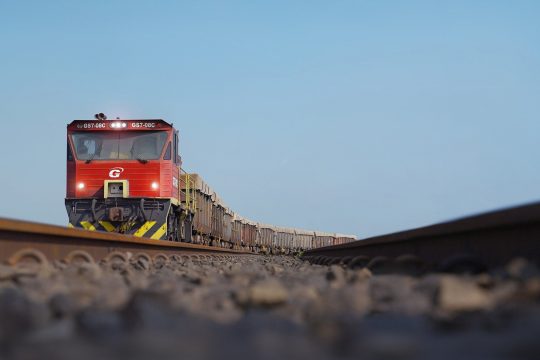
For freight, the draft links a greater rail share to investment in rail-road interfaces and standardised container systems on high-volume corridors. Its energy-saving estimate applies to those corridors and underpins the proposed modal-shift programme.
For passenger rail, the proposals connect service quality with bus integration, ticketing, affordability and access to stations by walking or cycling. The draft places funding and coordination arrangements within the action plan that would implement them.
- South Africa’s draft National Energy Efficiency Strategy 2025–2035 was gazetted for public comment on 30 October 2026.
- The draft was published under Notice 4221 in Government Gazette 55638 for consultation.
- Proposed freight measures include rail-road interface facilities, standardised container systems and modal-shift incentives on high-volume corridors.
- The draft puts the energy saving from rail at 40–60% compared with road transport on those corridors.
- Indicative 2035 energy-intensity targets, against 2024, are 14% lower for passenger transport and 12% lower for freight, across modes.
- The transport model estimates 43.3 petajoules of annual demand avoided in 2035 against the projection without new efficiency measures.
South Africa’s Department of Electricity and Energy has published a draft National Energy Efficiency Strategy for consultation that proposes rail-road transfer facilities, standardised container systems and incentives to move more freight by rail. The draft also calls for better passenger rail services and closer integration of commuter rail and bus networks.
The National Energy Efficiency Strategy (NEES) 2025–2035 was gazetted on 30 October 2026 under Notice 4221 in Government Gazette 55638. Its proposals would require Cabinet adoption and a costed National Energy Efficiency Action Plan (NEEAP) to set implementation responsibilities, schedules and financing.
Freight Corridors and Passenger Connections
The proposed freight programme would focus on high-volume corridors, including long-distance and bulk-commodity movements. The draft estimates that rail can offer energy savings of 40–60% compared with road transport on these corridors and identifies investment in the interfaces between the two modes as part of increasing rail’s freight share.
For passengers, it proposes a public-transit acceleration programme supported by origin-destination surveys, route optimisation and unified ticketing. The programme would address fragmented bus and commuter rail systems, service quality, access in underserved areas and affordability. A quantitative passenger modal-shift target would be set through the NEEAP.
The draft also proposes guidance for local authorities on transit-oriented development, income-adjusted fares or transit subsidies for low-income users, and safe walking and cycling connections. It calls for the NEEAP to address dedicated multi-year funding and coordination across government, linked to spatial planning and urban development.
Transport Targets and Modelled Savings
The draft sets indicative 2035 transport energy-intensity targets, relative to 2024, of a 14% reduction in megajoules per passenger-kilometre and a 12% reduction in megajoules per tonne-kilometre for freight. These apply to passenger and freight transport across modes.
Its transport model projects annual energy demand of 921.4 petajoules (PJ) in 2035 without new efficiency measures, compared with a 2024 baseline of 782.0 PJ. With the proposed measures, projected demand is 878.1 PJ. The difference is 43.3 PJ of annual demand avoided in 2035, while demand would still be 12.3% above the 2024 baseline.
That potential saving combines greater public-transport use, increased rail freight and wider transport electrification. The draft expects most transport savings to come from a higher public-transport share for passengers, followed by freight shifts to rail and the associated use of electricity. It cautions that the quality and completeness of energy data create uncertainty in the projections.
Adoption, Funding and Delivery
The draft’s indicative sequence places Cabinet adoption, the designation of lead agencies and a dedicated energy-efficiency budget line in 2026/27. It places adoption of the costed NEEAP in 2027/28, with reviews every five years. Comments are invited within 60 days of publication in the Government Gazette.
The Department of Electricity and Energy would coordinate the strategy. The action plan would assign primary and supporting institutional responsibilities and determine a funding approach. The proposed financing framework combines public funding with measures intended to attract commercial, institutional and international capital, including partial risk guarantees and public-private partnerships. Its proposed monitoring framework includes public-transport modal share and annual public reporting on progress.