Democratic Republic of Congo Accedes to the Luxembourg Rail Protocol Moving SADC Forward

Why it Matters

The DRC’s accession to the Luxembourg Rail Protocol gives rail financiers, operators and manufacturers a stronger legal framework for investing in rolling stock that can move across borders. For a region where rail infrastructure is being upgraded but rolling stock capacity remains a constraint, the Protocol can help reduce financing risk and support larger-scale investment in locomotives and wagons.

The development is particularly relevant to the Lobito Corridor and wider SADC rail network, where improved cross-border legal certainty could support more efficient freight movement between the Copperbelt, Angola’s Port of Lobito and other regional trade routes. It also reinforces the growing policy momentum behind rail as a strategic logistics solution for Southern and Central Africa.


Key Facts

  • The Democratic Republic of Congo has formally acceded to the Luxembourg Rail Protocol to the Cape Town Convention.
  • The Protocol has been in force since 8 March 2024 and supports private-sector finance for railway rolling stock.
  • The DRC is now the second SADC contracting state, following South Africa’s ratification in May 2025.
  • African parties to the Protocol now include Gabon, South Africa and the DRC, while Mozambique has signed.
  • The Protocol applies to locomotives, wagons and other rail equipment.
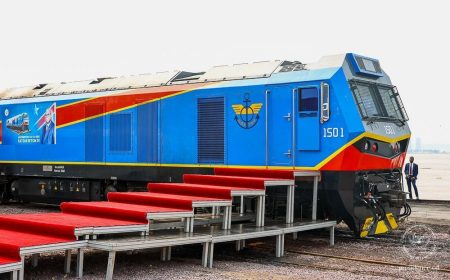
  • The accession is significant for the DRC’s role in the Lobito Corridor, which links the Copperbelt to Angola’s Port of Lobito.
  • The Lobito Corridor railway is 1,739 kilometres long.
  • The Rail Working Group says the move could help unlock rail investment across Southern and Central Africa.
  • ECIC has committed to reducing risk premiums when the Luxembourg Rail Protocol applies.
  • Traxtion says the DRC’s accession strengthens the business case for investment at scale into trains operating on upgraded regional railway infrastructure.


Democratic Republic of Congo Accedes to the Luxembourg Rail Protocol Moving SADC Forward
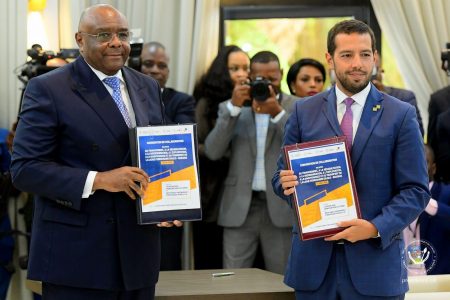
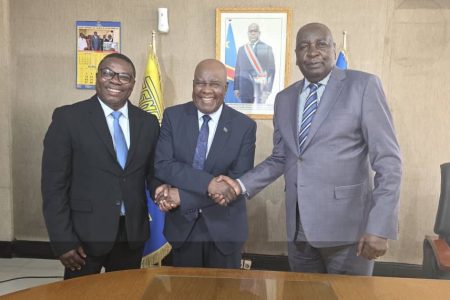
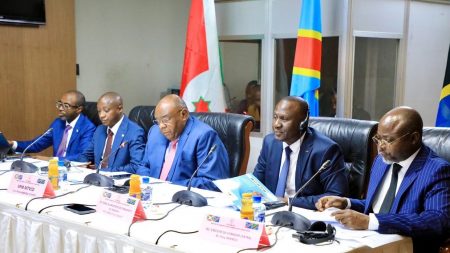
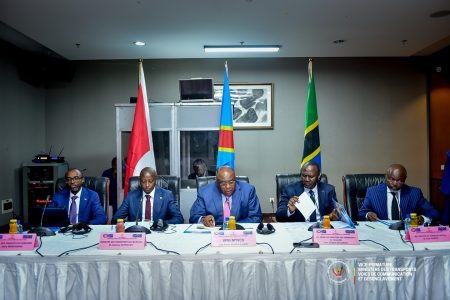
L to R: M.Teddy Kamembo Milambo, Director – Head of the Legal and Litigation Department, Secretary-General for Foreign Affairs Democratic Republic of Congo; M. Gérard Tumba Kaniki, Deputy Chief of Staff to the Prime Minister Democratic Republic of Congo; Professor Anna Veneziano, Dep. Secretary General UNIDROIT

The Rail Working Group (RWG) has welcomed the formal accession of the Democratic Republic of Congo (DRC) to the Luxembourg Rail Protocol to the Cape Town Convention, a significant milestone for rail finance across Southern and Central Africa.

The Luxembourg Rail Protocol, adopted in 2007 under the auspices of UNIDROIT and in force since 8 March 2024, establishes an internationally recognised legal framework for security interests in railway rolling stock, making it easier and cheaper for the private sector to finance locomotives, wagons and other rail equipment. The DRC joins Gabon – one of the Protocol’s founding contracting states – and South Africa, which ratified in May 2025, as African parties to the treaty. Mozambique has signed, and a growing number of African states, including Namibia, Zimbabwe, Eswatini, Kenya and Ethiopia, are actively considering adoption.

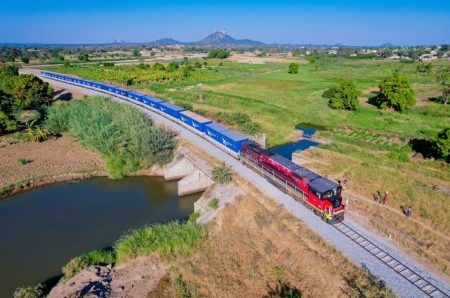
The DRC’s accession carries particular strategic weight given the country’s extensive rail network and its central role in the Lobito Corridor, the 1,739-kilometre railway linking the mineral-rich Copperbelt to Angola’s Port of Lobito, one of the continent’s most strategically important logistics routes.

Her Excellency Madame Judith Suminwa Tuluka, Prime Minister and Chief of Government of the Democratic Republic of Congo, said: “We are delighted that DRC has acceded to the Luxembourg Rail Protocol and is now the second SADC contracting state. As our neighbours also move forward with accession, we look forward to seamless, cost effective, private finance for rolling stock moving around the SADC network”.

RWG chairman, Howard Rosen, added: “This is an exciting step forward both for the SADC region and Africa generally, reinforcing the Protocol’s role as a practical tool for unlocking rail investment across the continent. It will also create new business opportunities for Southern African manufacturers, operators and financiers, especially in the light of the recent commitment by the South African export credit agency (ECIC) to reduce its risk premiums when the Luxembourg Rail Protocol applies.”

Jamie Holley, CEO of leading African freight logistics operator and rolling stock lessor, Traxtion, said: “The large investments into uplifting the condition of the railways serving the DRC from the ports of Lobito and Dar es Salaam make the DRC an important railway country. The DRC’s accession to the Luxembourg Protocol will lift the business case for the investment at scale into trains to operate on this upgraded railway infrastructure. Together this has the ability to transform the region’s logistics landscape.”

Related News Articles