The report frames access to employment as a joint question of transport and land use. For urban rail and transit planners, its recommendations pair long-term mass transit investment with feeder services, the integration of informal operators and housing within reasonable commuting distance of jobs.
For corridor development, the report links rail and logistics investment to local business conditions and cross-border coordination, and it asks planners to weigh the towns that depend on stopping traffic alongside those expected to gain.
- The World Bank Group announced Sub-Saharan Africa’s Urban Awakening on 29 October 2026, drawing rail and corridor examples into a wider jobs agenda for the region’s cities and towns.
- The report projects 748 million additional urban residents in Sub-Saharan Africa between 2025 and 2050.
- Nairobi Railway City is described as a roughly 425-acre station and surrounding-area redevelopment, launched in December 2022 and slated for completion by 2030.
- Addis Ababa’s light rail opened in 2015 and Dar es Salaam’s bus rapid transit began operating in 2016, according to the report.
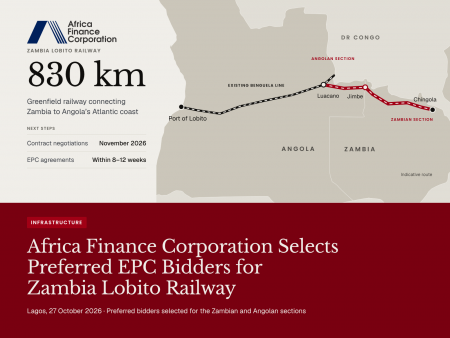
- The Lobito Corridor links Angola, the Democratic Republic of Congo and Zambia, with about 1,300 km of rail from Dilolo to the port.
- Faster corridors can reduce stop-based trade in some towns, the report cautions.
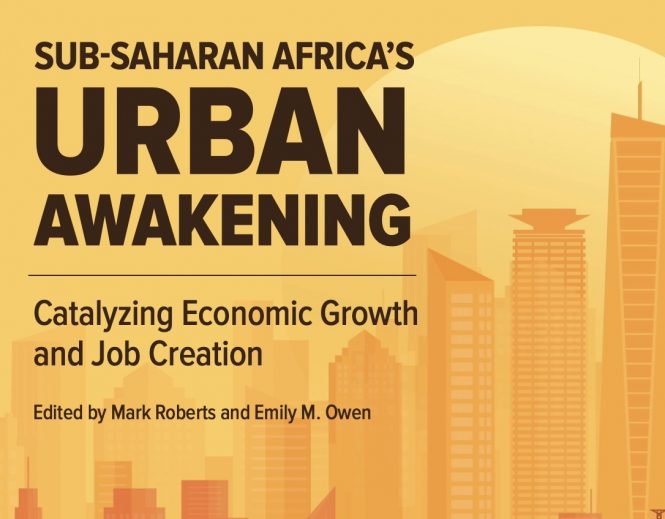
The World Bank Group has published Sub-Saharan Africa’s Urban Awakening: Catalyzing Economic Growth and Job Creation, a report that places railway land redevelopment, mass public transport and rail corridors within a wider case for creating jobs in the region’s cities and towns. The Bank announced the report on 29 October 2026. Edited by Mark Roberts and Emily M. Owen, it projects that Sub-Saharan Africa will add 748 million urban residents between 2025 and 2050.
Rail enters the report mainly through examples. Nairobi Railway City, which the report says was launched in December 2022 and is slated for completion by 2030, is described as Kenya Railways’ redevelopment of Nairobi Central Railway Station and its surroundings into a multimodal, transit-oriented urban development covering roughly 425 acres. Land assembly relies mainly on repurposing a large tract of underused public land held by Kenya Railways in the city centre, combined with the clearance of encroachments, the relocation of existing uses and the incorporation or acquisition of a smaller number of adjacent parcels.
The report adds that many cities lack comparable central holdings, and that it may then be easier to target greenfield sites that could become central as cities expand. It also recommends adapting existing structures where possible, particularly buildings of architectural, historical or cultural value.
On the journey to work, the report calls for investment in formal mass public transport, especially in larger cities. It cites Addis Ababa’s light rail system, which it says opened in 2015 and was the first modern urban rail system in Sub-Saharan Africa outside South Africa, and Dar es Salaam’s bus rapid transit system, which began operating in 2016. Fewer than 10 cities in the region currently have operational bus rapid transit, according to the report, and such systems take years to design, approve and build. To improve mobility sooner, it recommends working with the private informal operators that dominate motorised transport in many cities.
Lagos is used as the example. The report says the city’s transport reforms aim to integrate informal minibuses into the wider network rather than eliminate them, with a bus reform that has reorganised routes into a hierarchy of bus rapid transit corridors, standard routes and first- and last-mile feeder services, allowing smaller vehicles to connect neighbourhoods to mass transit corridors. It also records a trade-off: research on new public bus routes found that commuters benefited from lower fares, while increased competition reduced the fares earned by informal minibus operators.
Housing and land-use rules form part of the same accessibility question. The report recommends reviewing excessively stringent building-height limits and floor-area ratios, particularly around development sites and transport corridors, so that more housing is available within reasonable commuting distance of employment.
Beyond the larger cities, the report recommends directing scarce infrastructure spending and reform capacity to clusters of towns with strong economic potential along existing or planned corridors. Routes linking production areas to cities, border crossings and ports are treated as priorities for coordinated investment, while towns with weaker prospects still need education, skills, services and connections to larger labour markets.
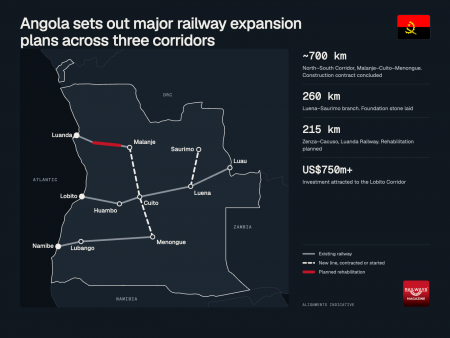
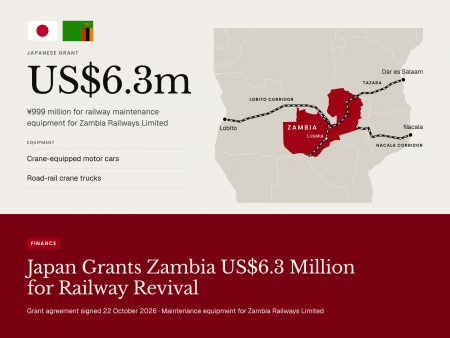
The Lobito Corridor is presented as an integrated development case. The report says it links Angola, the Democratic Republic of Congo and Zambia through the Atlantic port of Lobito and the Benguela rail system, with about 1,300 kilometres of rail already connecting Dilolo, in the south of the Democratic Republic of Congo, to the port. Its agenda pairs rail rehabilitation and logistics upgrades with cross-border coordination and trade facilitation, citing the July 2022 30-year concession with the Lobito Atlantic Railway consortium and the January 2023 agreement among the three countries establishing the Lobito Corridor Transit Transport Facilitation Agency, and adds support for firms in corridor provinces. The aim, according to the report, is for the corridor to act as an economic platform for investment and job creation in corridor towns, rather than only a route for moving goods.
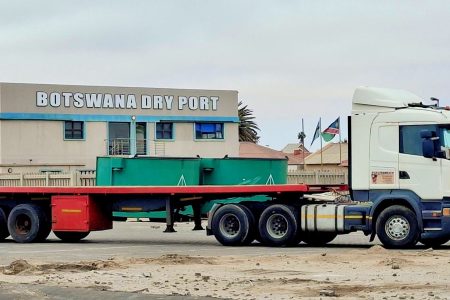
The report cautions that corridor gains are not automatic. By prioritising speed and efficiency, corridors can reduce stopping and allow traffic to pass through, limiting a town’s ability to capture demand, and faster border clearance can shrink stop-based livelihoods. It points to the Dakar–Bamako Corridor, where faster travel diminished the role of some intermediate towns. Logistics platforms, dry ports and trade zones can help towns retain value-adding activities when they are well planned and implemented.
On funding, the report says that large urban development and mass transport projects are likely, in the short to medium term, to rely heavily on central government funding, donor finance channelled through central government and private investment. It recommends strengthening cities’ own revenues and creditworthiness alongside these arrangements, including practical improvements to property-tax systems, and treats the funding of operations and maintenance as part of the longer-term fiscal task.
Download Report