Lobito's US$753 million financial close has given African rail a working template for bankability, and the Zambia–Lobito Railway and Kinshasa's MetroKin are both aiming for close in 2027 on the same foundations. Lenders, insurers and investment agencies now agree on what a project needs before it reaches them, which gives governments and sponsors a clear checklist for the pipeline behind these schemes.
- Lobito Atlantic Railway reached financial close in June 2026 on a US$753 million financing from DFC and DBSA.
- Africa Finance Corporation reduces rail bankability to three conditions: interoperability within a workable regulatory framework, volumes and cost.
- The approximately 830km Zambia–Lobito Railway from Chingola to Luacano is targeting financial close in 2027, with preferred EPC bidders selected.
- Kinshasa's MetroKin, whose first phase is a 25km link from the central station to N'Djili International Airport, is aiming for financial close in the first quarter of 2027.
- ECIC offers a discount of up to 20% on its risk premium for rolling stock financings where the Luxembourg Rail Protocol is in force in the debtor or lessee's state.
- The EU pairs European Investment Bank loans with early grants so that a project's commercial viability is assessed before the loan is signed.
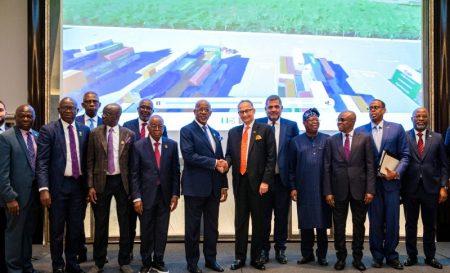
Insights from the panel discussion "From Vision to Bankability: Building Africa's Pipeline of Investable Rail Projects" at the SARA Rail Conference and Exhibition in Sandton.
Governments identify the infrastructure gaps and set out the plan for closing them. That part is comparatively quick. Funding the plan is where projects stall, and it is what separates a bankable railway from a pipe dream. The Lobito corridor is the clearest recent test of what lenders need to see, and the projects following it show the same conditions repeating, from a greenfield link in the Copperbelt to an urban line in Kinshasa.
What the Lobito close shows
Lobito Atlantic Railway closed a US$753 million financing made up of a US$553 million 15-year senior secured loan from the US International Development Finance Corporation (DFC) and a US$200 million facility from the Development Bank of Southern Africa (DBSA). The agreements were signed in December 2025 and financial close followed in June 2026. Africa Finance Corporation (AFC) acted as co-financial adviser with Eaglestone, helping to put the consortium together and to structure the financing. DFC expects the investment to lift the railway's capacity tenfold to 4.6 million tonnes.
AFC describes Lobito as a brownfield project with a strong concession, on a line the Angolan government had already rehabilitated. Even so, it took a long time to get the funding in place. AFC says the project reached lenders faster than a conventional scheme because Angola rebuilds its lines first and then concessions them to commercial operators, and it is applying the same model to other lines. The lessons AFC draws are practical. Rail has to be built to specification and for local climate conditions if it is to operate sustainably for decades. The state has to prepare the asset before inviting private operators. And the regulatory position has changed: five years ago it was hard for the private sector to take ownership and management positions in African rail, and the reforms now under way at Transnet and in Angola have opened that door.
AFC reduces bankability to three conditions: interoperability within a workable regulatory framework, volumes and cost. Without volumes, it says, rail suffers, so a corridor needs industries behind it and not only mineral exports. When all three are in place, a bankable project starts to take shape.
DBSA's reasons for lending point the same way. The first was regional integration. The minerals are in the DRC, a landlocked country, and the most efficient route to international markets runs through Angola, so the project served the case for connecting resource-rich countries to the coast. The second was the sponsors, who had the resources to fund pre-development work at the right time and cost, and the experience of moving minerals from the continent to international markets. That gave both lenders, DBSA and DFC, confidence that they were backing the right partners and would see the returns they were looking for.
DBSA, which has operated since 1983 and widened its mandate beyond South African municipalities to the SADC region and then sub-Saharan Africa, says its involvement tends to draw in other development lenders and commercial banks. Partners sometimes bring it projects because they want it in the deal. That position does not replace due diligence. DBSA still assesses whether a project is technically sound and commercially viable before it commits, whoever else is already interested.
Volumes come before the first sleeper
The Zambia–Lobito Railway shows the volumes argument in practice. AFC is lead sponsor and developer of the approximately 830km line from Chingola in Zambia's Copperbelt to Luacano in Angola, where it will join the Benguela Railway and give the Copperbelt a shorter route to the Atlantic through the Port of Lobito. AFC says the project benefits from the earlier transaction because it connects to the existing line and does not have to build all the way to the port.
AFC is not financing the whole corridor. The Benguela line already links with the DRC's rail operator, and AFC's investment is the greenfield section into Zambia. Its experience is that traffic originating in both directions is worth more than a larger one-way flow, and that a dry port is one of the things that makes two-way traffic possible, so it is looking at one as part of the corridor. Smaller projects have been designed around the line, including an agro-processing hub that AFC is discussing with one of the largest trading groups to co-manage, and tank farms for petroleum products. It also needs somewhere to hold empty bulk containers. AFC says it cannot deliver all of this itself and is looking for partners to take smaller roles in the value chain. That is the economic activity along a corridor that it wants to see.
The railway itself has not yet reached financial close. AFC is targeting 2027, with preferred EPC bidders selected.
Lenders look at the network, not the line
The European Union says it left the African rail sector largely to others about twenty years ago and is now returning, with an approach built around African integration and not single lines carrying raw materials to the nearest port for export to Europe. It says it supports the African Union and SARA in that aim, and that it judges bankability by looking at the network as a whole. A line assessed on its own profitability misses wider returns such as decarbonisation.
The EU describes its toolkit as broad. It includes loans through the European Investment Bank, EU grants and technical assistance from the European Union Agency for Railways, which also works on setting universal standards so that bankability is not undermined by fragmented systems. Its Global Gateway programme leverages European technology and manufacturing, including companies producing in South Africa. The EU says it is interested in South Africa's North–South corridor, describes itself as South Africa's biggest investment partner and export market, and says it will be guided by African priorities and the African way of doing things.
Its method on risk is to pair loans with grants paid early. Technical analysis, the choice of technology, traffic forecasts and wider socioeconomic benefits are assessed before the loan is signed, so that commercial viability is secured before a project starts and not discovered halfway through. The EU says the cost of capital in Africa is higher because of perceived risk, and that grants help bring it down. It also says it does not want to be complicit in debt traps, citing its past role in debt relief, and notes that rail benefits arrive decades after the investment. Its warning is that projects built on promises of local production or other benefits to come later can leave the expected returns unmet, and that more time should go into analysis than into hope.
Risk cover for rolling stock
Rolling stock is the other half of the financing question. Rail financing is long term, so a great deal can change over the life of a loan, and lenders need cover against political and commercial risk. South Africa's Export Credit Insurance Corporation (ECIC) insures exports and investment into other countries against that risk, and says most financial institutions lending to rail projects need to be covered.
The Luxembourg Rail Protocol provides a harmonised international legal framework for recognising and enforcing security interests in railway rolling stock, with an international register of assets. Because assets are easier to identify and recover, the risk on the insurer's side falls. ECIC applies a discount of up to 20% to its risk premium on rolling stock financings where the Protocol is in force in the debtor or lessee's state, subject to local content rules and other underwriting conditions. Since the announcement, ECIC says it has projects in its pipeline that it is underwriting. Its clients are South African financial institutions, which can claim the discount only where the host country is a signatory, and ECIC says the discount is also meant to encourage uptake of rail projects across the continent.
ECIC also requires African content before it extends cover, which means goods and services from South Africa. It has started tracking how many jobs each insured project keeps or creates in South Africa and in the host country.
Urban rail has to clear the same bar
Kinshasa's MetroKin shows how long a bankable case can take even with an obvious demand story. AFC is co-developer, investor and mandated lead arranger, and made an initial US$3 million investment to complete development work. Financial close was first planned for as early as the fourth quarter of 2024. AFC now says the key commercial agreements on the government side were signed in the week before the session, after a difficult run to the finish line, and it hopes to reach financial close in the first quarter of 2027.
The first phase is a 25km connection from the central station to N'Djili International Airport. AFC says that journey can take four to six hours in afternoon traffic and would fall to under 18 minutes by train. People already pay about US$50 to sit in that traffic, AFC says, against a planned fare of US$11 for regular commuters and US$20 for the first train.
Where bankability breaks down
The Gauteng Growth and Development Agency promotes foreign investment into Gauteng and supports companies based there that want to invest across the continent. Gauteng is the manufacturing base for wagons and rolling stock serving the whole Southern African region, and the agency has formed a close working relationship with SARA. It argues that the continent should be treated as one integrated opportunity for investment and trade, and that money is not the main constraint on rail investment. The rules companies face are, particularly across borders. Rail operators have told it of delays in releasing payments across borders and of locomotives having to be changed at borders, which holds up produce.
The agency works as a facilitator between investors and decision makers. It has developed an AfCFTA roadmap that divides the continent into five regions and targets investment into each corridor. A strategy for West Africa, with a base in Ghana, was completed a year ago, and one for East Africa, centred on Kenya, Rwanda and Uganda, is being finalised. It works with development finance institutions, including DBSA, to make projects investment ready and not only bankable.
At home it runs a one-stop shop where South African regulatory bodies sit together, so an investor with a problem does not have to move from office to office. It also works with municipalities to reduce red tape, because investments land within a municipality. It reports multi-billion rand investments from rail companies in Gauteng that also serve the African market, partnerships in Zambia, Namibia and Angola to help South African firms expand, and work with Transnet and others on a freight terminal and logistics hub in Tshwane, with DBSA and the IDC central to those conversations. The hub follows earlier work on the Maputo corridor and is intended to support a route for automotive cargo to the coast that relieves congestion at the port of Durban.
Engineering firms are making the same case from the other side. COPIA, an Angolan engineering group whose earlier work includes hydropower projects supplying the Southern African power pool, has identified rail as the biggest area for its work over the next forty years and is positioning itself for the Moçâmedes (Namibe) corridor in southern Angola. Angola has put the corridor out to concession. COPIA says Lobito is connecting with the DRC and Zambia, whereas the Namibe corridor sits inside Angola and crosses mineral-rich country in the south, as well as fishing. It says the corridor crosses five provinces and serves about 6.3 million people.
COPIA's wider point is that banks and politicians need to listen to engineers earlier. In oil and gas, it says, financiers and politicians ask engineers for the plan, how to build and how to control quality and assurance better, and then bring the money. Rail, in its view, too often treats itself as a business that moves cargo from point A to point B and does not connect with other industries, and few engineers come to stands at conferences like this one.
Jobs and the wider return
The room raised the employment case as well. UNICEF is supporting a programme to help young women move into jobs and livelihoods in the rail sector, and said the benefit goes beyond bricks and mortar. ECIC's African content and job tracking is one way financing already ties to employment. The Gauteng agency encourages foreign investors to set up apprenticeship programmes, working with the Department of Employment and Labour, so that young people come through the pipeline with an affinity for the rail sector.
The common thread
None of these projects reached the lenders by good intentions alone. Each was assembled from sponsors who could fund early work, cargo that would fill the line in both directions, a regulatory framework that allowed private operation, legal and insurance cover for the equipment, and preparation money spent before the loan was signed. Where those are missing, the obstacle is usually a rule, a border or a delay in payment and not the money itself, which is why the agencies and lenders in the room kept returning to regulation and preparation. A project that is missing several of these will wait, however sound the vision.
Written by Phillippa Dean