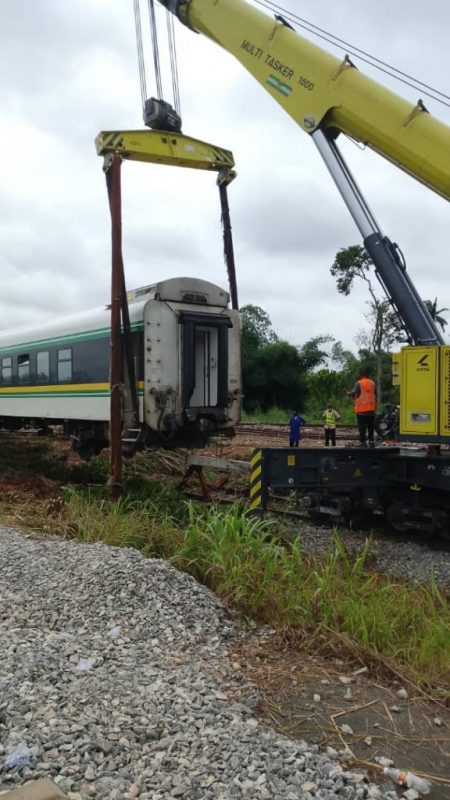
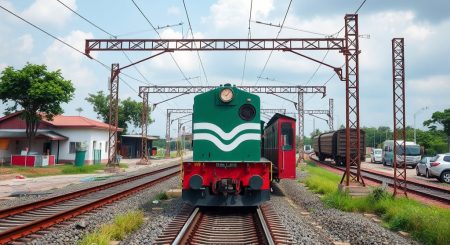
The reported 90% completion of the Kaduna–Kano railway represents further progress towards extending standard gauge passenger services from Abuja through Kaduna and Zaria to Kano. However, unresolved land acquisition and compensation claims within Kaduna metropolis remain an obstacle to completing the connection between Jaji and the existing Abuja–Kaduna railway. Resolving these issues is necessary to achieve the uninterrupted passenger operations envisaged by the Federal Government.
The inspection also provides an update on the technical condition of the infrastructure, including track alignment, drainage, embankment protection and soil stabilisation. The reported progress on the inspected 145-kilometre section, together with the December 2026 completion target for the Kano–Kazaure–Daura–Katsina sections, identifies the remaining construction and delivery milestones. These developments form part of the government's plans to improve passenger connectivity and provide an alternative to road transport in north-western Nigeria.
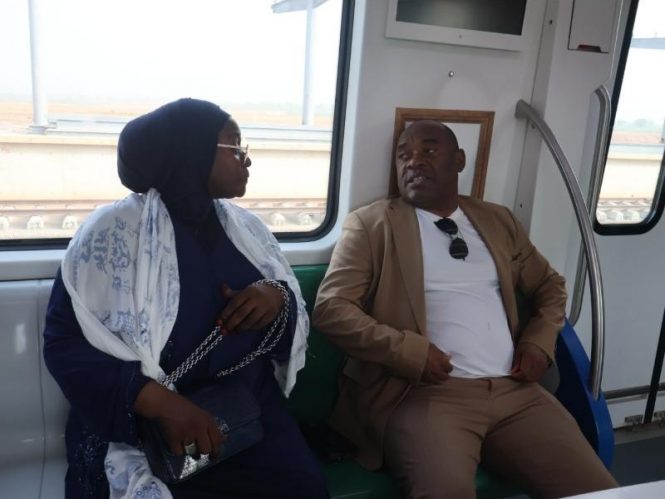
- The Kaduna–Kano standard gauge railway project has reached approximately 90% completion, according to Permanent Secretary Engr. Funso Adebiyi.
- The inspection on 23 October 2026 included a train journey between Jaji and Kano to assess construction progress and infrastructure quality.
- Approximately 145 kilometres of the broader 200-kilometre Kaduna–Kano route were inspected, with around 10 kilometres of work reported as outstanding on that stretch.
- Unresolved land acquisition and compensation claims in Kaduna metropolis remain an obstacle to completing the connection between Jaji and the existing Abuja–Kaduna railway.
- The inspection assessed track alignment, drainage, concrete works, soil stabilisation and embankment protection, including sections with elevation differences of six metres or more.
- Railway sections extending from Kano through Kazaure and Daura to Katsina were targeted for completion by December 2026, according to Adebiyi.
Nigeria’s Kaduna–Zaria–Kano standard gauge railway project has reached approximately 90% completion, according to the Permanent Secretary of the Federal Ministry of Transportation, Engr. Funso Adebiyi.
Adebiyi provided the update during an inspection of the project on 23 October 2026, which included a train journey from Jaji to Kano to assess construction progress and the quality of completed works.
He reported that the railway alignment, drainage, stone-pitching, soil stabilisation and embankment protection works had largely met the required specifications. He drew particular attention to sections with elevation differences of six metres or more, explaining that these conditions required appropriate soil stabilisation, compaction and embankment protection to ensure the railway's safety and durability.
Adebiyi also expressed satisfaction with the train movement between Jaji and Kano during the inspection.
However, he identified unresolved land acquisition and compensation claims within Kaduna metropolis as the principal obstacle to completing the remaining connection between Jaji and the existing Abuja–Kaduna railway corridor.
He said the Federal Government was addressing these matters and that they would receive immediate attention following the inspection team's return to Abuja.
Providing further details on construction progress, Adebiyi said the inspected section covered approximately 145 kilometres of the broader 200-kilometre Kaduna–Kano route, with around 10 kilometres of work remaining on that stretch.
He expressed confidence that the outstanding works could be completed, allowing uninterrupted passenger rail services from Abuja through Kaduna and Zaria to Kano.
Adebiyi also reported that the railway sections extending from Kano through Kazaure and Daura to Katsina were targeted for completion by December 2026. He said work was continuing around the clock to meet that deadline.
The Director of Rail Transport Services at the Federal Ministry of Transportation, Engr. Habiba Buhari, explained that the inspection was intended to assess the technical quality of the infrastructure ahead of finalisation and test runs.
She said the team examined track geometry, alignment, drainage facilities, concrete works and other components affecting passenger safety and comfort.
Buhari expressed satisfaction with the inspected works and said the train journey had also provided an opportunity to assess passenger comfort. She added that the inspection enabled further engagement with stakeholders as the project approached completion.
The Federal Government intends the Kaduna–Kano railway to improve passenger connectivity between major commercial centres in north-western Nigeria and other parts of the country, support economic activity along the corridor and provide an alternative to road transport.