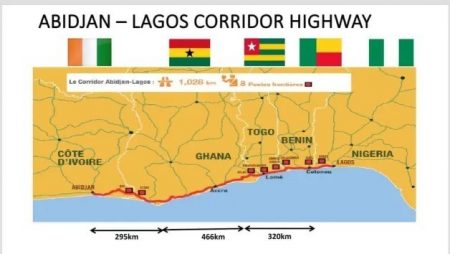
The Abidjan-Lagos Corridor Management Authority (ALCoMA) has appointed Beninese finance expert Wilfried Lauriano do Rego as chair of its Board of Directors for a two-year term, as work continues to operationalise the authority and mobilise financing for the planned Abidjan-Lagos Highway.
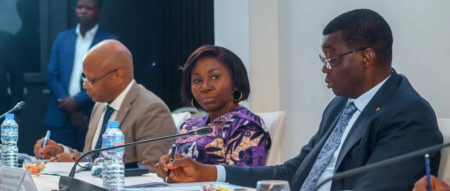
The appointment was made during the Board’s inaugural meeting in Lagos, Nigeria, on 11 and 12 June 2026. The meeting defined actions intended to guide the corridor’s medium- and long-term development and provide strategic direction in line with objectives adopted by the heads of state of the five participating countries.
Do Rego’s appointment follows the Intergovernmental Agreement, which provides for alphabetical rotation of the chairmanship among member states, beginning with Benin. Jacques Ayadji, also from Benin, assumes the position of vice-chairperson.
The planned 1,081 km Abidjan-Lagos Corridor is estimated to cost $15 billion and involves the construction of a six-lane supranational highway connecting Côte d’Ivoire, Ghana, Togo, Benin and Nigeria. The project also incorporates trade and transport facilitation, value-chain development and logistics components.
The ECOWAS Commission, African Development Bank Group, ECOWAS Bank for Investment and Development (EBID) and West African Development Bank are working with other partners on financing for the project.
As part of ALCoMA’s start-up phase, the Board established two interim subcommittees. The Interim Human Resources and Remuneration Committee will oversee competitive recruitment for the authority’s chief executive officer and legal and corporate secretary, as well as reviewing remuneration and benefits structures.
An Interim Finance Committee will support financing mobilisation for the highway and oversee finance-related activities, including corridor risks and revenues.
The Board also approved the African Development Bank Group as a non-voting member. The Bank has financed the project’s technical studies with support from the European Union and has been designated by the Ministerial Steering Committee as lead arranger for the investment required to build and operate the highway, working with ALCoMA, EBID and the ECOWAS Commission.
A joint African Development Bank-ECOWAS-EBID Project Management Office was also approved following a recommendation from the Bank.
The Board called for development partners, including the European Union and World Bank, to support construction of the highway and ALCoMA’s operations, with a preference for assistance to be channelled through the authority’s coordination mechanism.
An African Development Bank and ECOWAS investment identification mission to the five corridor countries has already been completed, with the participating countries providing letters reaffirming their commitment to the investment phase.
The African Development Bank is also discussing the mobilisation of $500 million in catalytic capital from the African Development Fund’s ADF-17 Regional Operations envelope. Other potential resources include performance-based African Development Fund allocations for Benin, Côte d’Ivoire, Ghana and Togo, together with African Development Bank window resources for Benin, Côte d’Ivoire and Nigeria.
Additional financing instruments under consideration include viability-gap financing, partial risk and credit guarantees for local-currency bonds, non-sovereign operations and climate finance through the Global Center on Adaptation partnership.
The Board adopted a roadmap for operationalising ALCoMA, with immediate priorities including recruitment of the chief executive officer, legal and corporate secretary and key directors.
Editor’s note: The Abidjan-Lagos Corridor project covered in this article is primarily a road infrastructure project, not a railway project. Railways Africa is reporting on its development because the corridor has a wider multimodal transport function. Under the ECOWAS corridor framework, provision is envisaged for a right-of-way capable of accommodating both the six-lane highway and a future railway line, while project studies also address connections with existing and future rail and port infrastructure across the region.