For shippers and investors on southern Africa's corridors, the operators identified where transit time is being spent: border opening hours, changes of locomotive and crew, trains split between networks that take different train lengths, and brake and signalling systems that differ from one railway to the next. LAR measures each train's cycle in 32 steps and links a 30% cut in cycle time to 30% more volume from the same investment.
The operators also set out measures in use or in progress: through-running with the same locomotives and wagons on the Phalaborwa–Maputo flow, longer opening hours under discussion at the Angola–DRC border, air-brake-compatible hired rolling stock in Zimbabwe, and new cross-border links including Lion's Den–Kafue and Nacala Logistics' planned extension to Chipata in Zambia.
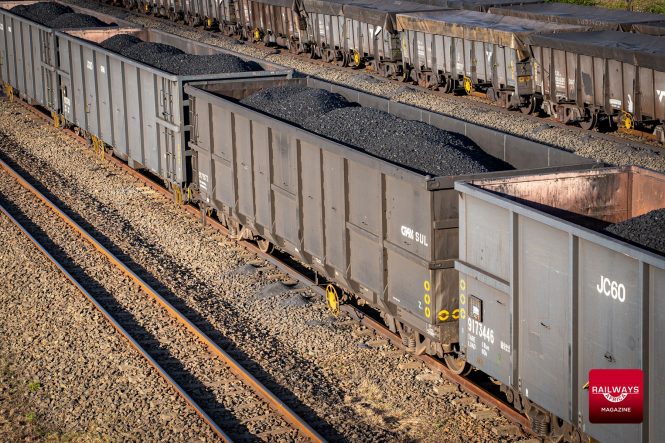
Ask southern Africa's rail operators how to get more out of their corridors and the expected answer is more track: new lines, new links to the coast, new routes into the Copperbelt. At the Southern African Railways Association (SARA) conference in October, the operators on the CEOs' Think Tank on optimising SARA corridors gave a different answer. Much of the capacity they need is already in the system, they argued, but it is being lost in the time trains spend standing still at the points where one network, one border or one set of rules meets the next.
The panel brought together Botswana Railways, Portos e Caminhos de Ferro de Moçambique (CFM), Nacala Logistics, the National Railways of Zimbabwe (NRZ), Lobito Atlantic Railway (LAR), the Benguela Railway (CFB) and COPIA Group of Companies, a service provider that also uses the corridors as a customer.
Customers Buy Pit to Port
The starting point was the customer. A mine, a farm or a factory wants its goods at the port on time and in good condition, and has no interest in hearing that the delay happened in Botswana, Zimbabwe or South Africa. Seen this way, a railway is an economic and industrial enabler rather than a line on a map. A 100km line inside one country achieves little on its own. Carried through Mmamabula–Lephalale to Richards Bay or Maputo, or north into Zambia and the DRC, it becomes a value-chain corridor.
CFM made the same point from the port end. Much of the coal and mineral traffic moving through its ports arrives in transit from neighbours such as South Africa and Zimbabwe, so its ambition to be the region's best option is not one it can achieve alone. It depends on investment, policy and regulation being aligned along the whole chain, from the mine to the transporter to the port, because a gap anywhere breaks it. Road keeps a complementary role, particularly for mines without a rail connection, but in CFM's view traffic that belongs on rail should move by rail and take pressure off congested roads.
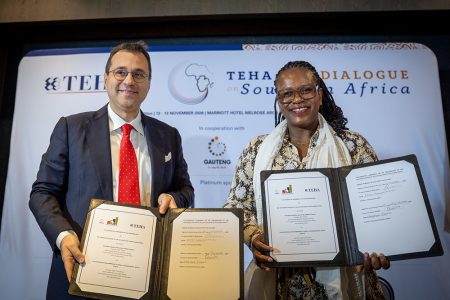
Zimbabwe sees itself in a similar position. Sitting at the centre of the Southern African Development Community (SADC), it carries much of the region's transit traffic, and NRZ described the Lion's Den–Kafue corridor as the missing link from Zimbabwe into Zambia and on to the DRC, with an exit to the sea through Machipanda and the Port of Beira, which handles containers and fuel. The memorandum of understanding signed in April marked the shift, in NRZ's words, from documentation to implementation, with the feasibility studies already done.
Cycle Time Is Capacity
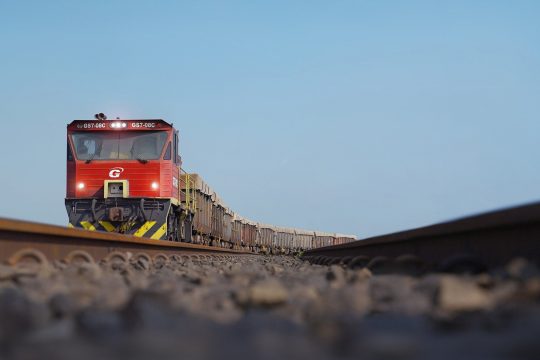
LAR, which runs the Lobito Corridor from the Port of Lobito to the DRC border at Luau and operates its trains on to Kolwezi, set out the clearest framework. Safety, it said, is not an objective but the right to operate. Capacity, meaning infrastructure, speed, crossing loops, locomotives and drivers, is one pillar. The other is productivity, getting more trains and more volume out of the assets already bought. Its central measure is turnaround time, and the arithmetic is straightforward. Cut the cycle time by 30% and the same investment carries 30% more.
LAR is working on four fronts. The first is the use of its wagons and locomotives around the corridor. The second is reliability and resilience, built on preventive maintenance of rolling stock and track and on recovering quickly from exceptional events. After serious flooding in Angola in April, it said traffic restarted within 10 days. The third is people, with the training and leadership needed to get the best from the equipment. The fourth is data. LAR breaks each train's cycle into 32 steps so that it can see exactly where trains lose time and track the average turnaround week by week.
Borders Are a Capacity Question
Borders came up in almost every answer, though not always as the main problem. LAR's containerised trains cross between Angola and the DRC door to door, with one administrative check on each side and a change of locomotive and crew, and the crossing is completed within a day. The constraint is the border's opening hours, which limit it to two or three trains a day as volumes rise. LAR said longer hours are being discussed with the facilitation agency and the transport ministers of Angola and the DRC, and expects an agreement soon.
COPIA's experience as a customer pointed the other way. On a consignment from Namibia to South Africa, the transport itself ran without delay, but the border crossing was where most of the time was lost. In its view, corridors cannot be integrated from origin to destination until those administrative procedures are put right.
When the Trains Do Not Match
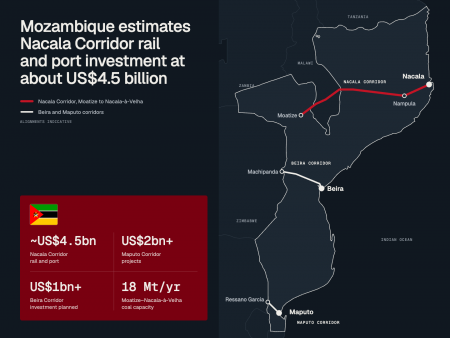
Nacala Logistics, which runs Mozambique's northern corridor from the Port of Nacala through Malawi to Moatize, together with Malawi's network as far as Mchinji on the Zambian border, put the principle plainly: rolling stock is meant to be running, not standing in yards and ports. With a memorandum of understanding in place with Zambia Railways Limited and plans to take freight trains on to Chipata in Zambia's Eastern Province, the interfaces between networks are a practical question for it.
Europe, where trains cross several countries without changing locomotive, train set or crew, is the long-term model, but the region cannot move straight there. Customs, immigration and legal frameworks need streamlining, and so do the technical basics of axle loads, speeds and train control. Nacala Logistics runs its coal line with positive train control (PTC), with no signals beside the track and all signalling carried on board, a system other networks in the region do not use. Running across borders would mean making its coaches and wagons interoperable, changing locomotives at first and training drivers for different operating rules, all within a comprehensive framework.
CFM pointed to the Phalaborwa–Maputo flow as proof that through-running works: trains run straight to the terminal without stopping, with the same locomotives and the same type of wagons throughout. The harder question is train length. If one network can run 100 wagons and the next cannot, the train has to be split, and that time is lost. Locomotive choice matters for the same reason, and CFM said that as it enters Zimbabwe, both railways need to agree on the locomotives they will use, which in turn shapes their long-term investment.
NRZ described a more basic mismatch. Most of its capacity has run on vacuum brakes, while the region has moved to air brakes, so any locomotives and wagons it hires, or that customers bring in, must be able to work into the networks of CFM, Transnet Freight Rail, Zambia and Botswana without becoming a bottleneck. Wagons also have to suit the traffic, whether fuel, coal or minerals, and locomotives have to be big enough to haul full loads to port without splitting them.
Bridging the Fleet Gap
NRZ is pursuing the purchase of 10 locomotives and 315 wagons, but procurement takes up to 24 months. In the meantime it has invited its customers, the largest of them miners, to bring in their own capacity, including leasing wagons, and has hired locomotives from South Africa.
COPIA added a longer-term point. Having spent six months travelling Angola's southern Namibe corridor and visiting Namibia and Mozambique, they argued that the region's corridors now need to modernise, including a gradual move away from fossil fuels towards electric locomotives as part of the energy transition.
Passengers on a Freight Corridor
On the Lobito Corridor the work is divided. LAR manages the infrastructure and carries bulk freight, while CFB runs passenger services and small consignments along the 1,289km route. CFB carried around 1.6 million passengers in 2025 on four segmented services, from Lobito, Huambo, Kuito and Luau, together with a suburban service between Lobito and Benguela that averages 3,000 passengers a day.
Its challenge is keeping trains to timetable and carriages in good condition on State-subsidised fares that do not keep pace with rolling-stock maintenance. The variable rental payments CFB receives from the concession help it sustain services. Branch lines are also planned on the corridor, from Luena to Saurimo and from Luacano to Jimbe.
An Agenda for SARA
Botswana Railways, which interfaces with South Africa, Zimbabwe, Namibia and Zambia and wants Botswana to become a regional logistics hub, put the challenge to SARA directly: harmonise standards, from track engineering and maintenance to customs and immigration, while respecting the sovereignty of member states. It is also working on an Atlantic outlet through Walvis Bay to relieve Durban and Richards Bay, and on links through Zambia into the DRC in line with the African Union's Agenda 2063. The ports connect the region to the world, it said, but its members also need connections with each other.
Nacala Logistics went further, calling for a regional transport plan covering rail, road, sea and air, possibly coordinated by SARA with the SADC governments. Between them, the operators set out a practical agenda: measure cycle time from end to end, keep borders open for longer, agree common standards for brakes, axle loads, train lengths and train control, and extend through-running wherever networks can share locomotives and wagons.