For boards, shareholders and lenders weighing railway recovery programmes, the region’s operators set out a working order: restore the track the equipment depends on, put governance in place to check delivery, and secure the customers who will fill the new capacity. CFM, which bought 350 wagons and 14 locomotives alongside its line-doubling works, and PRASA, which started with governance and now runs services on 35 of its 40 corridors at 92% on-time performance, are the examples the region points to.
The recovering railways judge themselves on outcomes: corridors restored, tonnes moved, trains on time, locomotive availability and audit results. PRASA links its move to unqualified audit opinions to its case for continued government subsidy, and CFB intends to use its concession income and state subsidy to renew passenger rolling stock.
Southern Africa’s railways are not short of strategies. Rehabilitation programmes, fleet renewals, concessions and corridor plans are in place across the region, and most of them are sound on paper. Where they stall is in the order in which things are done, who is held to account for each step, and how success is measured once the money has been spent.
Fix what the equipment runs on first
New locomotives are usually the most visible sign that a railway is being restored, which is why they tend to come first.
During the recent Southern African Railways Association (SARA) conference and exhibition, Zambia Railways Limited (ZRL) argued that this is the wrong end to start from. Its track is more than 100 years old and limits average operating speeds to about 20km/h. A locomotive crawling at 10km/h over 800km risks burning out its traction motors, and modern signalling cannot compensate for track that cannot carry the speeds the equipment was bought for.
ZRL’s priority is track investment first, with locomotives second. The much harder problem is bankability. Railway projects pay back slowly, and the railway says it is finding it difficult to bring its investment plans to a standard that lenders will finance.
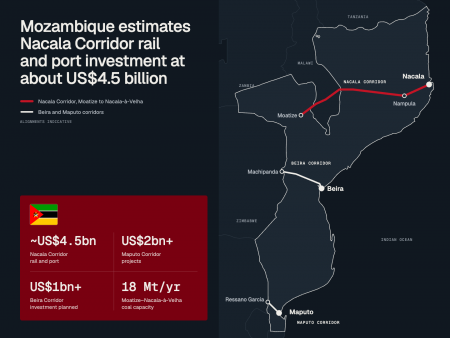
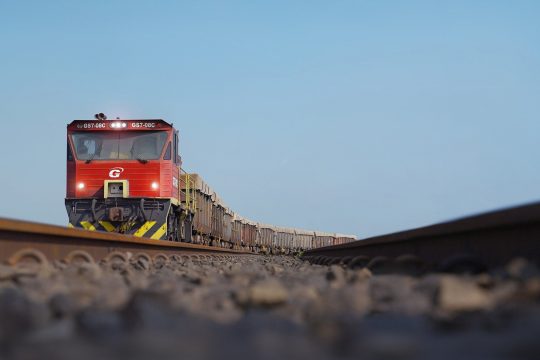
Mozambique’s Portos e Caminhos de Ferro de Moçambique (CFM) shows the other side of the coin, with equipment bought alongside the infrastructure that lets it work. It has brought 350 new wagons into service this year and purchased 14 locomotives, ten for mainline work and four for passenger and shunting duties, with two higher-powered units to follow. CFM says its longest train now runs with two locomotives instead of three. It has also finished the first 42km of a line-doubling programme, more commonly known as the Ressano Garcia line. CFM is targeting a further 26km next year and is seeking bank financing for the remainder.
Governance comes before the timetable
The Passenger Rail Agency of South Africa (PRASA) began its recovery with governance, not rolling stock. After the lockdown-era theft and vandalism left much of the passenger network unusable, its board worked through a fixed order. It established governance structures from board to operating level, put stable leadership in place, assessed the real condition of the organisation and then adopted a phased recovery plan.
Board members went to site to confirm that what was reported matched what was on the ground, and a plan, do, check, act , cycle fed corrective action back into the programme.
PRASA has reported that services are running on 35 of its 40 corridors, passenger utilisation is up 35% on last year and on-time performance is 92%. Rental income from underused property, including student and low-cost housing at rail nodes, has approached R1 billion.
Audit outcomes have moved from nine years of disclaimers to a qualified opinion and then to unqualified opinions for two years running. PRASA links this record to its case for continued government subsidy, which it says is not automatic.
Capacity has to become revenue
Recapitalisation is a means and not a result. National Railways of Zimbabwe says the cargo is there, across mining, manufacturing and agriculture, but it lacks the locomotives, wagons and track condition to carry it, and some freight has moved to road. Its shareholder, the Mutapa Investment Fund, intends to recapitalise it. The railway’s own test is whether that money produces operating cash flow and lasting enterprise value, which means winning back freight customers and acting as a regional logistics provider rather than a conventional state-owned railway.
Angola’s Benguela Railway (CFB) shows an operating model that tracks purpose. Since 2024, bulk freight and infrastructure management sit with Lobito Atlantic Railway, while CFB keeps passengers and smaller consignments. CFB says it is now profitable. It receives variable revenue from the concessionaire alongside a state subsidy for its social role, and it intends to use that income to renew passenger rolling stock.
Alignment and safety are structural
Botswana Railways identifies alignment, execution capability and trust as its main constraints. Government, staff, partners and investors want different things, and a strategy cannot move faster than the agreement behind it. The railway says trust returns through consistent delivery of commitments, and that boards cannot be bypassed in the line to the shareholder.
South Africa’s Railway Safety Regulator makes the parallel point about safety. Treated as a compliance step added after the plan is written, it undermines the plan. The regulator wants safety built into strategy design and business continuity, so that a programme survives disruption of the kind seen in 2020.
Corridors need shared standards
No national programme can fix what stops at a border. Operators and boards from the region point to harmonised axle loads, signalling and border procedures, and to the heavy skew of transport budgets towards roads. CFM is writing service-level agreements with neighbouring administrations so that train movements and capacity expectations match across the line. Landlocked Malawi depends on rail through Mozambique and Zambia, which makes cross-border alignment a condition of the whole corridor working.
What the measure should be
The recoveries that are working share one feature, which is that they judge themselves on outcomes. They count corridors restored, tonnes moved, trains on time, locomotive availability and audit results, not projects launched. The practical lesson for any railway starting a programme is to settle the sequence first. That means the infrastructure the equipment depends on, the governance that will check the work, the customers who will fill the capacity and the safety and regional arrangements around it.
This article draws on insights shared by railway operator board chairpersons during the session “From Strategy to Results: Advancing Rail Performance Across SARA Networks” at the Southern African Railways Association (SARA) Rail Conference 2026.
Written by Phillippa Dean