The World Bank links governance in public procurement to infrastructure costs, citing a preference for direct contracting over competitive tendering, land speculation, and fraud around titling, valuation and compensation payments as factors in the SGR cost difference.
For public procurers, the report recommends rolling out e-GP, prioritising competitive bidding and publishing project data in real time through PIMIS. It says that reducing expenditure leakage to half its current level has the potential to contribute to substantial fiscal savings, including on major planned infrastructure.
- The World Bank’s Kenya Economic Update of November 2026 puts Mombasa–Nairobi SGR construction at US$7.6 million per kilometre.
- The comparators are Dar es Salaam–Dodoma at US$5.7 million per kilometre and Djibouti–Addis Ababa at US$5.3 million per kilometre.
- All three lines are single track; the Tanzanian and Ethiopian lines are electrified and the Kenyan line is diesel-powered.
- The report estimates Kenya could have saved up to US$900 million on initial construction at the Tanzanian cost per kilometre.
- The World Bank considers at least 30% of that potential saving attributable to governance challenges.
- Construction periods, altitude gains and land acquisition costs differ across the three lines, and the report says higher Kenyan land costs contribute to but do not fully explain the gap.
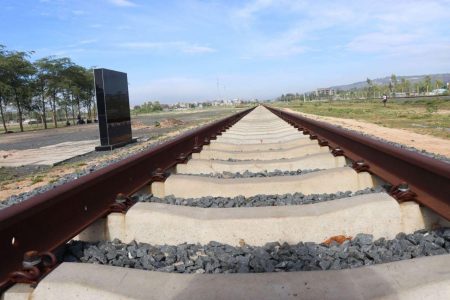
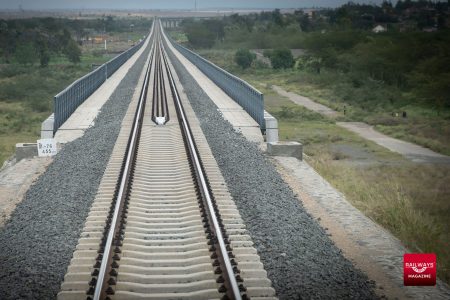
Kenya could have saved up to US$900 million on the initial construction of the Mombasa–Nairobi standard gauge railway (SGR) had it matched the cost per kilometre of Tanzania’s Dar es Salaam–Dodoma line, according to the World Bank’s Kenya Economic Update of November 2026.
The report puts the diesel-powered Mombasa–Nairobi line at US$7.6 million per kilometre, against US$5.7 million for the electrified Dar es Salaam–Dodoma railway and US$5.3 million for the electrified Djibouti–Addis Ababa line. The comparison appears in the update’s special focus on governance constraints to economic growth and job creation.
The World Bank considers at least 30% of the potential saving attributable to governance challenges rather than topographic or technical differences. It lists a preference for direct contracting over competitive tendering, land speculation, and fraud around titling, valuation and compensation payments. The report adds that a 2026 TI Kenya report, using the Infrastructure Corruption Risk Assessment Tool, highlighted the project as particularly vulnerable to corruption.
The report qualifies the comparison. All three railways are single track, but they were built in different periods: 2011–2016 for Djibouti–Addis Ababa, 2014–2017 for Mombasa–Nairobi and 2017–2024 for Dar es Salaam–Dodoma. Approximate altitude gains are 2,300 metres, 1,600 metres and 1,060 metres respectively, and the Ethiopian line had to overcome much more mountainous topography.
The Tanzanian line was built later and to a higher specification, including electrification, while the Kenyan line was not electrified. The World Bank says land acquisition costs are significantly higher in Kenya, which contributes to but does not fully explain the higher cost.
The railway comparison sits within the update’s review of public procurement.
Full report