The introduction of dedicated vehicle carriers expands Kenya Railways' freight offering beyond the container traffic transported on the inaugural train. The movement of 21 vehicles alongside 34 container-carrying flatbed wagons demonstrates the service's initial operating arrangement, while the corporation's target of 700 vehicles per month establishes its stated objective for the new operation.
For vehicle importers, manufacturers and individual customers, the service provides an alternative to long-distance road transport between Mombasa and Nairobi. Kenya Railways identifies reduced vehicle mileage, road congestion and road wear as intended benefits, supported by services covering insurance, vehicle securing and customs processing.
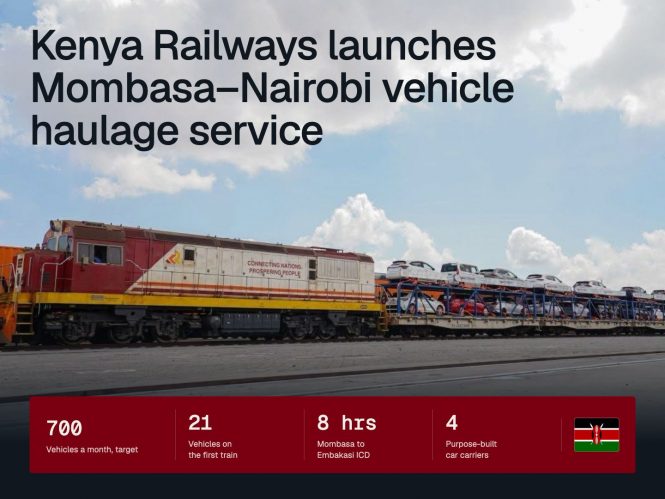
Kenya Railways has introduced its first vehicle haulage service between Mombasa and Nairobi, with the inaugural train transporting 21 vehicles from the Port of Mombasa to the Inland Container Depot (ICD) at Embakasi on 29 October 2026.
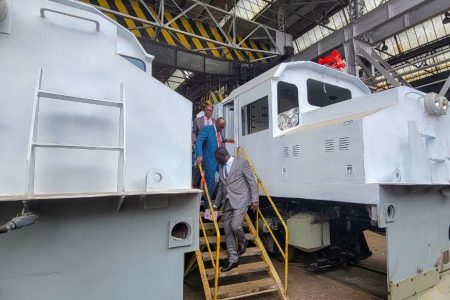
The train completed the journey within eight hours, carrying the vehicles on four specially fabricated vehicle carriers. It also included 34 flatbed wagons transporting shipping containers.
The service forms part of Kenya Railways’ efforts to diversify its freight operations, providing vehicle importers, manufacturers and individual motorists with an alternative to transporting vehicles by road.
Kenya Railways Managing Director Philip J. Mainga said the corporation is targeting 700 vehicles per month through the new service.
According to Mainga, the service is intended to reduce vehicle mileage, road wear and tear, and congestion associated with long-distance road transport. Kenya Railways also expects it to provide a safer and more efficient transport option for customers.
The specially fabricated carriers can accommodate various vehicle makes, including Toyota, Nissan, Honda, Suzuki, Volkswagen, Mazda and Daihatsu.
Additional services offered include insurance, vehicle lashing and securing, and customs processing.
The service is available to vehicle importers, manufacturers and members of the public.