The disappearance of 394 wagons, including 281 belonging to Kenya Railways, raises serious questions about cross-border rolling-stock controls, asset management and accountability during the transition from manual records to the Translogic digital platform.
The inquiry also exposes wider operational pressures at Uganda Railways, including limited locomotive availability, major rehabilitation funding gaps and outstanding counterpart funding for the Kampala–Malaba Metre Gauge Railway rehabilitation project.
Uganda Railways Corporation (URC) Managing Director Benon Kajuna recorded a statement with Parliament Police after the corporation failed to provide documentary evidence of efforts to recover 394 railway wagons that became untraceable during the Rift Valley Railways concession.
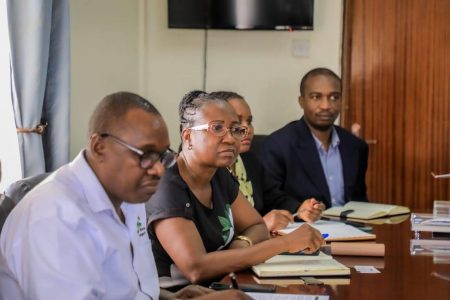
Kajuna and other URC officials appeared before Parliament’s Committee on Physical Infrastructure on 23 July 2026 to respond to concerns raised in the Auditor General’s report. The committee examined the missing wagons alongside broader issues involving railway safety, obsolete assets, infrastructure and the corporation’s financial position.
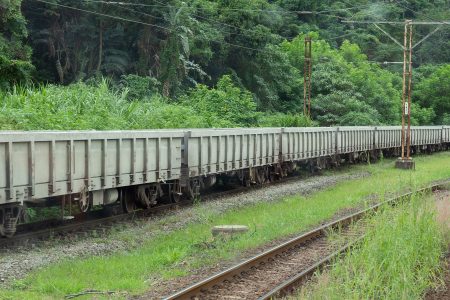
Of the 394 wagons, 113 belonged to Uganda Railways and 281 to Kenya Railways. URC officials attributed their disappearance to the migration from a manual wagon-management system to the Translogic digital platform. Wagons that could not immediately be located during the transition were reportedly assigned to a virtual station at Nyahururu in central Kenya, after which they became untraceable.
Under the tripartite agreement governing rolling-stock movements between Uganda, Kenya and Tanzania, Ugandan wagons may remain in Kenya for up to 14 days, while Kenyan wagons may remain in Uganda for seven days before penalties apply. A wagon that remains unaccounted for for more than 90 days is regarded as lost, with the responsible railway authority expected to compensate the owner based on the cost of a new wagon.
Committee members questioned URC’s internal controls, its failure to provide a complete inventory of rolling stock and whether any of the missing wagons could have been disposed of as scrap. They also raised concerns about the corporation’s limited train operations, delayed disposal of obsolete assets and its ability to achieve financial sustainability.
The committee directed URC to submit evidence of the measures taken to trace and recover the wagons, including operational records, locations and border documentation. The sitting was suspended to allow officials to retrieve the required information, but the corporation was unable to provide sufficient details.
URC also outlined proposals to install automated boom barriers, warning systems and other safety infrastructure at major railway crossings. The corporation reported a cumulative funding deficit of Shs250.5 billion, locomotive availability of between 40 and 50 per cent, and an annual funding gap of Shs89 billion for rehabilitation, rolling-stock acquisition and operations.
It further requested parliamentary support for the release of Shs99 billion in outstanding counterpart funding for the Resettlement Action Plan associated with the African Development Bank-funded Kampala–Malaba Metre Gauge Railway Line Rehabilitation Project.
The committee will review URC’s submissions before presenting its recommendations to Parliament.