Kenya Railways Reports Start of SGR Phase 2 Works in Accessible Sections as Ugandan Delegation Visits

Kenya Railways Reports Start of SGR Phase 2 Works in Accessible Sections as Ugandan Delegation Visits

The update provides a clearer distinction between sections of Kenya’s SGR Phase 2 programme where construction access has been secured and areas that remain dependent on land acquisition. Kenya Railways has stated that works are confined to land already released, while gazettement, valuation and acquisition continue elsewhere.

The Ugandan delegation’s visit also highlights the operational relationship between Kenya’s SGR and MGR networks and the wider Northern Corridor. Freight transfer at Naivasha, rehabilitation of metre-gauge assets, the Malaba connection and proposed integration with Lake Victoria transport all remain central to the regional rail interface between Kenya and Uganda.

Kenya Railways Reports Start of SGR Phase 2 Works in Accessible Sections as Ugandan Delegation Visits

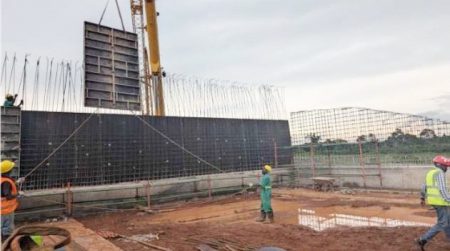
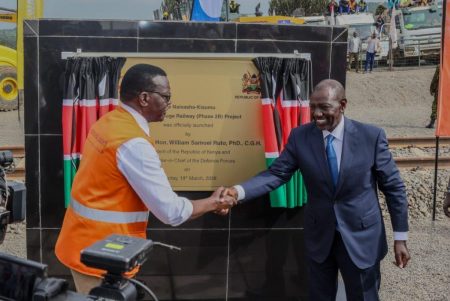
Kenya Railways Corporation has reported that construction has begun on accessible sections of its standard-gauge railway (SGR) Phase 2 programme in Narok and Kisumu counties, while land acquisition continues along the remainder of the corridor and on the Naivasha–Kisumu Phase 2B project. The account was given as a Ugandan parliamentary delegation carried out a benchmarking visit covering railway operations, freight movement and infrastructure rehabilitation.

Elsewhere along the corridor, Kenya Railways and the National Land Commission (NLC) are continuing land data capture, verification and acquisition, the processes that have to be completed before construction access can be granted. On Naivasha–Kisumu Phase 2B, gazettement, inspection and valuation of affected parcels are under way, and Kenya Railways Managing Director Philip Mainga has led inspections of proposed station sites at Olopito in Narok and Kibos in Kisumu as the corporation, the NLC and project contractors work through the land-access processes. Acquisition is also progressing in Bomet and Kericho counties.

Kenya Railways said construction cannot proceed on affected land until the required legal and administrative procedures have been completed and access secured. The works reported in Narok and Kisumu are, on the corporation's own account, confined to land already released, and no date has been given for the sections still in acquisition.

Kenya Railways Reports Start of SGR Phase 2 Works in Accessible Sections as Ugandan Delegation Visits

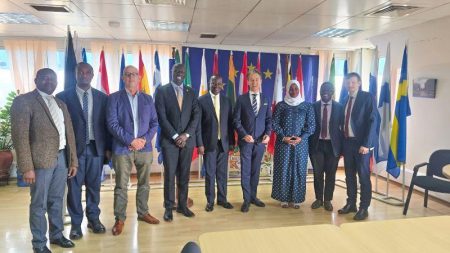
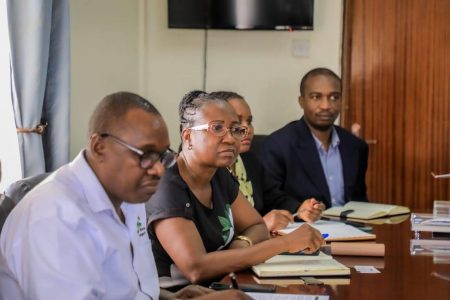
The visiting delegation, drawn from Uganda's Parliamentary Committee on Physical Infrastructure and Uganda Railways Corporation, is in Kenya from 31 August to 5 September 2026. In discussions with the visitors, Mainga said Kenya's SGR and metre-gauge railway (MGR) operate as complementary networks and are handling more than 10 million tonnes of freight, although the period that figure covers was not stated.

At the Naivasha Inland Container Depot (ICD), the delegation reviewed cargo evacuation, handling and transhipment along the Northern Corridor. Freight arriving from Mombasa by SGR transfers at Naivasha to the MGR over a 24km connecting link for onward movement towards Kisumu and Malaba. Kenya Railways put the depot's capacity at 4,000 twenty-foot equivalent units (TEU) and its current utilisation at approximately 30%.

Kenya Railways Reports Start of SGR Phase 2 Works in Accessible Sections as Ugandan Delegation Visits

The Malaba crossing featured in the discussions. Kenya Railways said around 800 containers cross the border each day and that the corridor handles about 19.4 million tonnes of freight a year, with volumes projected by the corporation to grow by more than 6% annually. The figures were not broken down between rail and road.

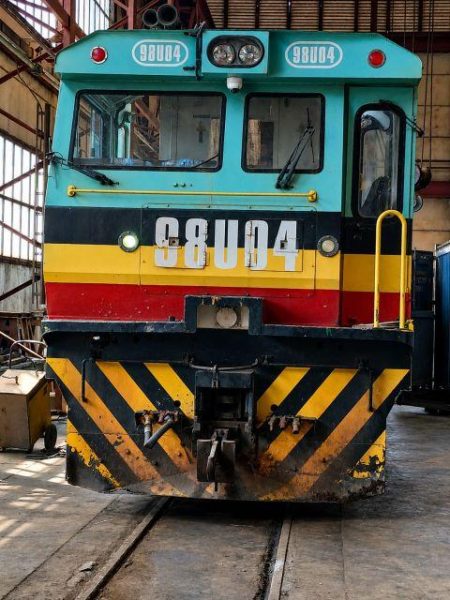
The programme also took the delegation to the Nairobi Central Workshops, where Kenya Railways set out its MGR locomotive rehabilitation, wagon overhaul, component remanufacturing and maintenance work. Uganda Railways Corporation reported progress on its own infrastructure, including the replacement of steel sleepers with concrete sleepers, and plans to rehabilitate the Malaba–Tororo MGR section.

Regional discussion covered the East African SGR Master Plan and closer integration of railway and Lake Victoria transport through Kisumu, Port Bell and Jinja, supported by the vessels MV Uhuru I and MV Uhuru II. Kenya Railways also set out proposals for commercial and logistics hubs along its corridors, with SGR-linked sites at Voi, Konza, Athi River, Bomet, Nyamira and Malaba, and MGR-linked sites at Voi, Taveta, Nakuru, Eldoret and Malaba. None of the hubs has been taken beyond proposal.

The operator said the benchmarking programme is intended to support knowledge-sharing between the two countries across railway operations, infrastructure rehabilitation, freight transport, commercial development and regional integration. Nothing disclosed during the visit changes the implementation status of the projects discussed.

Kenya Railways Reports Start of SGR Phase 2 Works in Accessible Sections as Ugandan Delegation Visits

Related News Articles