President William Ruto has officially launched the construction of the Standard Gauge Railway (SGR) Phase 2B, marking a major milestone in Kenya’s infrastructure development and regional connectivity agenda.
The new phase of the railway will extend approximately 264 kilometres from Emurtoto in Narok County to Kisumu, with an additional 8.69-kilometre branch line connecting to a newly proposed Kisumu Port. The project forms part of the broader Northern Corridor transport network aimed at linking Mombasa to Malaba and eventually integrating with other regional railway systems.
Speaking during the launch, President Ruto emphasised the project’s significance in transforming Kenya into a regional logistics hub. He noted that the SGR Phase 2B will enhance the efficiency of cargo and passenger movement, reduce transportation costs, and boost trade competitiveness across the country and the wider East African region
The SGR project builds on earlier phases, including the Mombasa–Nairobi (Phase 1) and Nairobi–Naivasha (Phase 2A) lines, which together cover nearly 600 kilometres. Phase 2B will extend the modern railway deeper into western Kenya, with plans underway for Phase 2C to connect Kisumu to Malaba at the Kenya–Uganda border.
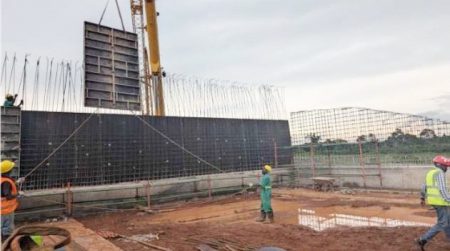
According to project details, construction will include modern railway infrastructure, passenger and freight stations, bridges, culverts, and advanced signalling and telecommunications systems. The government projects a construction timeline of approximately two years, with key stages including design finalisation, land acquisition, civil works, and systems installation before commissioning.
Beyond transportation, the project is expected to deliver significant economic benefits. These include job creation across various skill levels, opportunities for local contractors and suppliers, and growth of businesses along the railway corridor. The government has also highlighted the project’s role in supporting the blue economy, particularly through the development of Kisumu Port.
In line with sustainability goals, the SGR Phase 2B incorporates environmental and social safeguards, including community engagement, climate-resilient infrastructure, and biodiversity conservation measures.
The launch of Phase 2B signals renewed momentum in Kenya’s long-term railway master plan, first conceptualised under the East African Community framework to modernise regional transport through Standard Gauge Railway technology.
Once completed, the line is expected to significantly improve connectivity between western Kenya and the coast, reinforcing the country’s position as a key transport and trade gateway in East Africa.