Written by Phillippa Dean
Why it Matters
Southern Africa’s freight corridors cannot be strengthened by treating road and rail as competing systems. Long-distance bulk freight needs reliable rail capacity, while road remains essential for collection, distribution, short-haul movement and customer access. The challenge is to connect both modes through practical corridor planning, intermodal terminals, common-user facilities and commercial agreements that allow freight to move efficiently across the full logistics chain.
The debate is especially important for Zambia, TAZARA and wider regional trade because rail recovery depends on more than policy targets. Infrastructure rehabilitation, rolling stock availability, loading points, trucking sector participation and bankable cargo commitments will determine whether freight can shift from overloaded roads to rail in a way that is commercially viable, operationally reliable and fair to existing transport operators.
Southern Africa’s road-versus-rail debate is often framed as competition, although the more important question is whether the region can move from fragmented modal planning to an integrated logistics system in which rail carries long-distance bulk freight and road performs the critical first- and last-mile role.
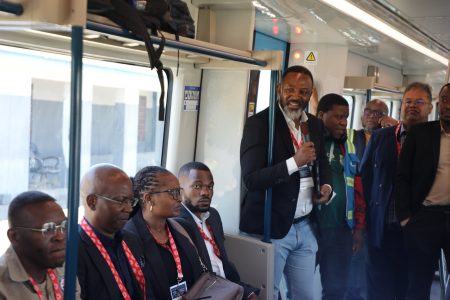
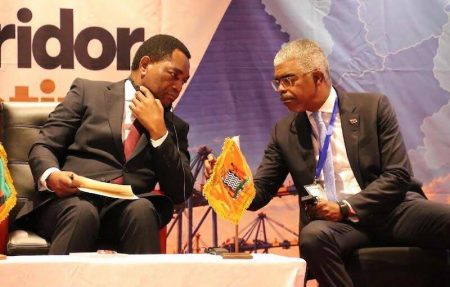
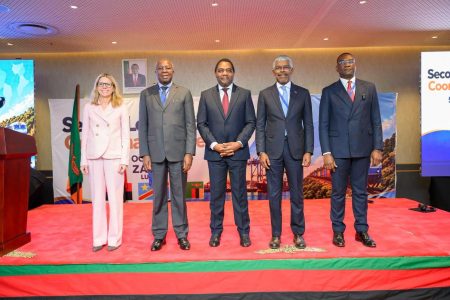
The issue was explored during the recently held Land-Linked Zambia 2026 event in a panel discussion titled Rail vs Road: Competition or Strategic Complementarity?
The discussion brought together railway operators, road transport representatives and regional rail stakeholders to examine how Southern Africa can rebuild rail capacity while recognising the role road freight has played during rail’s decline.
Across regional corridors, the imbalance is visible in practical terms. Rail has lost market share, road has absorbed much of the freight, and logistics planning has increasingly been shaped around truck-based movement. Reversing that position will require more than policy ambition.
Rail’s decline was not presented as a demand problem, but as the result of infrastructure constraints, rolling stock shortages, operational inefficiencies and fragmented corridor governance. Any shift back to rail will therefore need to be phased around actual capacity, with road integrated into the logistics chain rather than treated as a sector to be displaced.
Rail’s Long Decline and the Case for Integration
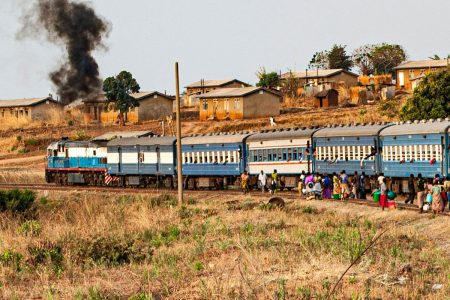
The decline in rail has unfolded over decades, with the impact now visible in congested corridors, deteriorating road conditions and rising investment at border posts built around growing truck volumes.
Rail is now entering a new phase of reform, rehabilitation and revitalisation, the three R’s – but the measure of success will be whether this produces an integrated road-rail system or leaves both modes operating in parallel, often inefficiently and in perceived competition.
In practical corridor terms, distance is one of the clearest distinctions between the two modes. Road generally remains more competitive for movements below approximately 400km, unless the cargo is high-volume and suited to short-haul rail. Rail’s advantage becomes more relevant over longer distances, particularly where bulk cargo is moving along established trade corridors.
This distinction should shape policy and investment. Road and rail do not serve the same function across all distances, commodities and logistics chains, the value lies in how they are combined.
TAZARA Concession Tests the Corridor Integration Model
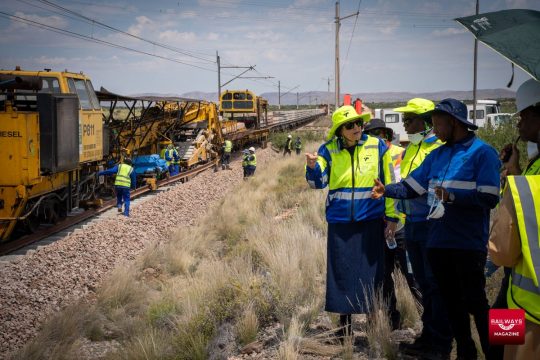
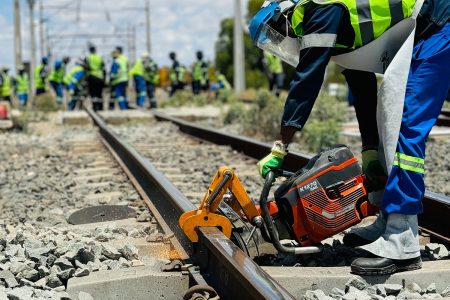
Presented as a potentially decisive intervention for corridor competitiveness, the TAZARA concession is expected to begin with repairing and rehabilitating infrastructure before new locomotives, wagons, track maintenance equipment, workshop improvements and other supporting assets are introduced.
Line speeds are expected to rise from the current range of 30 km/h to 40 km/h to between 70 km/h and 80 km/h. Equipment turnaround time is expected to reduce to approximately eight to nine days, while transit time is expected to fall from around 10 to 12 days to between three and five days.
The tonnage targets are equally important, TAZARA is currently moving around 200,000 tonnes. Under the concession plan, volumes are expected to start at approximately 1.2 million tonnes and rise to around 2.4 million tonnes within three to five years.
For rail customers, these numbers matter because reliability, turnaround time and transit time are not secondary factors. They determine whether cargo owners will move freight by rail voluntarily or continue to rely on trucks despite congestion and the cost of long-distance road haulage.
Cargo owners may be willing to move more cargo by rail, but only if rail has the equipment, infrastructure and operational capacity to handle those volumes. The sequencing is clear: fix the infrastructure, invest in rolling stock, improve reliability, and the long-distance advantages of rail become a reality.
Zambia’s Freight Imbalance
Zambia’s freight imbalance remains one of the clearest indicators of the challenge. Approximately 98% of cargo in Zambia currently moves by road, while only around 2% to 3% moves by rail. This is despite a statutory requirement for specified bulk products to move at least 30% by rail, applied at customer level rather than as a national aggregate.
The gap between policy and operational reality remains wide, rail’s current share across selected commodities remains below the intended threshold, with examples cited including sulphur at 22%, imported coal at 20%, copper at 12% and sugar at 7%.
For Zambia Railways, policy enforcement will only matter if the railway has the infrastructure, rolling stock, loading and offloading points, transhipment facilities and operational efficiency required to absorb more freight reliably.
With significant capital directed into road infrastructure, rail has had to compete for limited funding while also carrying unfunded public-service obligations, including passenger services in some cases. The result has been a slower recovery for freight rail and less capacity to rebuild at the pace required.
With sustained political will and freight-oriented investment, Zambia could begin moving more meaningfully towards the policy target of shifting 30% of specified bulk cargo to rail within the next two to three years, although progress will depend on operational delivery rather than policy intent alone.
From Modal Competition to Intermodal Contracting
Rather than replacing one mode with another, the road-vs-rail debate increasingly points towards intermodal logistics systems that use rail and road where each performs best.
South Africa’s rail reform process, including the opening of the network to private train operators, shows how rail systems are being repositioned. Yet the decline in historical rail volumes has also created space for trucks to absorb freight that was previously rail-addressable, which means the transition cannot be treated as a simple shift from road back to rail.
A workable model would keep road inside the logistics chain but define its role more clearly. Rail does not collect cargo from the shop floor, making road essential to first- and last-mile movements, depot-to-customer deliveries and cargo flows that are not directly served by rail.
Consolidation hubs, freight villages and inland terminals would give that model a practical operating structure. Trucks would move cargo to consolidation points, where rail could take over long-distance haulage. For port systems, inland terminals can also function as extensions of seaports, reducing congestion and giving both modes clearer roles.
Commercial models will also need to adapt. Instead of treating road and rail as separate or competing supply chains, contracting arrangements should recognise both modes within the same logistics solution, including risk sharing, pricing models, customer ownership and end-to-end contracting across corridors.
Cross-border rail corridors often break down because of fragmented governance, national sovereignty concerns and disconnected railway agreements. Corridor success will depend on institutional alignment, not individual control.
Where the Trucking Sector Fits into Rail Recovery
Road freight representatives were not arguing against rail recovery, but against a transition that displaces transporters before rail is ready to absorb the freight. Their concern is grounded in the scale of the sector’s role in regional trade, employment and road infrastructure financing, particularly in Zambia, where tolling and PPP structures depend heavily on truck revenue.
From the sector’s perspective, rail should be rebuilt through a managed transition rather than an abrupt shift that undermines local transporters or creates space for foreign operators to dominate freight movement. That concern becomes more acute where commodity ownership, offtake agreements and international commercial terms mean that local transporters do not always control who carries the cargo, even when policy instruments such as regional model laws, the Third Country Rule, cabotage provisions, Statutory Instrument No. 35 of 2021 and local content measures have been used to protect local transport participation.
If fuel surcharges, carbon pricing or other cost measures are imposed on road transport before rail can absorb freight reliably, those costs will be passed on to consumers, creating inflationary pressure rather than logistics reform. A managed transition would instead define road’s role within a rail-integrated system, with trucking focused on short-haul collection, distribution, emergency flexibility, depot-to-customer movements and first- and last-mile services linked to railheads, dry ports and inland terminals.
Common-User Facilities Remain a Missing Link
For rail revival strategies across the region, track rehabilitation and rolling stock procurement will only solve part of the problem. Operators still need practical interface infrastructure between road and rail, particularly for customers that do not have direct rail access, their own sidings, loading points or related facilities.
Where those customers cannot justify or fund dedicated infrastructure, common-user facilities become essential. Loading areas, terminals, sidings, warehouses, handling equipment, and inland consolidation points would allow road transporters to deliver cargo into the rail system, giving emerging customers a practical way to shift freight without building their own facilities.
In Zambia Railways’ case, the focus is increasingly moving beyond the permanent way to the full logistics chain, including loading, offloading, transhipment and partnerships with logistics companies. Chipata was cited as one example where track works and logistics infrastructure are expected to move forward within an indicative timeframe of nine to 12 months.
None of this can be delivered by railway companies in isolation. Reconnecting rail with cargo origins and destinations will require logistics firms, road transporters, cargo owners, financiers and public authorities to work within the same intermodal system.
Financing Rail Requires Cargo Commitments
Securing finance for rail projects increasingly depends on bankable cargo commitments, because funders need clarity on the volumes that will move before capital is released. Without that cargo quantification, rail operators remain caught between the investment needed to attract freight and the confirmed freight volumes needed to unlock investment.
For operators and governments, the immediate task is to identify rail-addressable freight and secure commitments from cargo owners, particularly in the mining sector. Where bulk cargo is involved, a more balanced logistics system would place most long-distance movement on rail, with road performing the collection and distribution function.
Zambia’s copper production ambitions make that work more urgent. Substantial production growth without rail recovery would push additional volumes onto already-constrained road corridors, increasing congestion, road wear, border pressure and logistics costs.
Freight Policy Will Only Work if Rail Is Ready
Southern Africa cannot continue delaying the shift of appropriate bulk freight back to rail, but policy ambition will only hold if it is matched by operational readiness. Years of neglect have made it harder for the railway sector to secure finance, restore capacity and rebuild market confidence, while a premature or punitive shift could destabilise existing logistics chains, raise consumer costs and undermine local transport operators.
For that transition to work, infrastructure rehabilitation, rolling stock investment, operating efficiency and intermodal facilities must come first. The trucking sector also needs to be brought into the process through agreements, contracts and defined first- and last-mile roles, rather than being treated as an obstacle to rail recovery.
One practical bridge would be to structure intermodal agreements between railway operators and local transporters, allowing road transporters to move cargo from areas not directly served by rail to railheads, where rail would take over the long-distance movement. That would keep local transporters active in the logistics chain while supporting the shift of appropriate freight to rail.
A Corridor System, not a Modal Argument
With TAZARA expected to be transformed within three years under the concession structure, Zambia Railways pushing ahead with rehabilitation and logistics-chain interventions, South Africa opening new rail access models, and the trucking sector indicating willingness to engage if the transition is realistic and collaborative, the debate has moved beyond a simple road-versus-rail argument.
What now matters is whether Southern Africa can design corridor logistics systems that are commercially bankable, operationally reliable and institutionally coordinated. Rail needs to become competitive where it has a natural advantage in long-distance, bulk and predictable freight, while road remains central to collection, distribution, short-haul movements, emergency flexibility and customer interface.
If concession models, rail reforms, private-sector participation and intermodal agreements are properly aligned, the region has an opportunity to move from fragmented competition to structured complementarity. Without that coordination, rail will remain underutilised, roads will remain overloaded, and infrastructure investment will continue solving one problem while deepening another.
Unless this changes, Southern Africa will not move from debate to delivery. It will keep having the same conversation indefinitely.
Written by Phillippa Dean