The West Nicholson siding gives mining operations in southern Zimbabwe a dedicated transfer point for moving bulk commodities from road to rail and onwards to the Port of Maputo. Its first lithium shipment confirms that the facility is operational and that the cross-border logistics chain involving BBR, NRZ and Mozambique’s rail network can carry mineral exports to port.
Its significance extends beyond lithium. By accommodating chrome, iron ore and other bulk commodities, the siding could consolidate export volumes from Matabeleland, improve the commercial case for rail freight and reduce dependence on long-distance road haulage. The investment also strengthens Maputo’s position as a regional export gateway for Zimbabwean minerals.
- BBR invested US$1.5 million in the West Nicholson transhipment siding.
- Lithium concentrate was the first export commodity handled at the facility.
- The inaugural shipment was destined for the Port of Maputo in Mozambique.
- The movement involved BBR, the National Railways of Zimbabwe and Silvergill Logistics.
- The siding can also handle iron ore, chrome and other bulk commodities.
- The facility adds bulk-freight handling capacity in Zimbabwe’s Matabeleland region.
- BBR intends the siding to support increased rail use and reduce pressure on the road network.
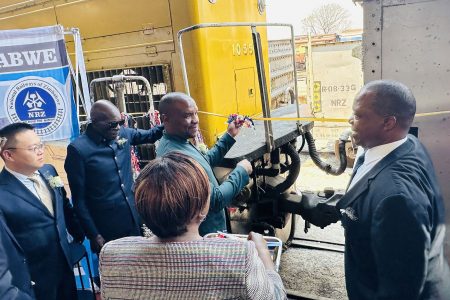
BBR’s US$1.5 million West Nicholson transhipment siding has entered operation with its first lithium concentrate export shipment, connecting Zimbabwe’s Matabeleland mining region with the Port of Maputo by rail.
Beitbridge Bulawayo Railway (BBR) has commissioned a US$1.5 million transhipment siding at West Nicholson, adding new bulk-freight handling capacity to Zimbabwe’s rail network.
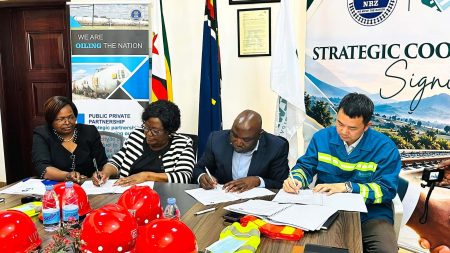
The facility handled its first export shipment when lithium concentrate departed West Nicholson for the Port of Maputo in Mozambique. The movement was undertaken in partnership with the National Railways of Zimbabwe (NRZ) and Silvergill Logistics.
The inaugural shipment demonstrated the siding’s role in moving Zimbabwean mineral exports to international markets by rail, with a focus on improving reliability, increasing capacity and reducing logistics costs.
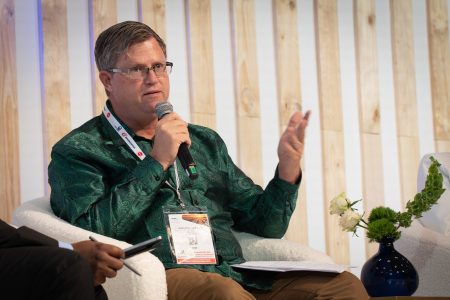
BBR General Manager Kumbulani Tendai Mabvura described the first lithium concentrate shipment as an important step in Zimbabwe’s efforts to compete more effectively in the international bulk-minerals market.
He said the West Nicholson investment reflected BBR’s strategy of expanding rail capacity rather than limiting its activities to maintaining existing infrastructure. The project also aligned with Zimbabwe’s National Development Strategy 2, which emphasises the implementation of infrastructure and economic development initiatives.
According to Mabvura, the new siding demonstrated BBR’s commitment to investing in operational infrastructure and restoring rail to a more prominent position within Zimbabwe’s national logistics system. He added that the facility would support the country’s efforts to expand mineral exports and participate more competitively in global commodity markets.
Although lithium concentrate was the first commodity handled at the facility, the siding was designed to accommodate iron ore, chrome and other bulk commodities. This positions West Nicholson as a potential export hub for mining operations across the Matabeleland region rather than as infrastructure dedicated to a single commodity.
The investment forms part of BBR’s broader strategy to increase the use of rail for bulk logistics in Zimbabwe. The company expects the siding to reduce transportation costs and turnaround times for exporters, while supporting foreign-currency earnings, industrial competitiveness, and employment along the corridor.
Moving a larger proportion of bulk freight by rail could also reduce pressure on Zimbabwe’s road network. BBR said the shift from road to rail would support its environmental, social and governance objectives by lowering the carbon impact associated with moving large volumes of mineral cargo.