Zimbabwe to Focus on Rehabilitation, Expansion and Maintenance of the National Railway Network

Zimbabwe to Focus on Rehabilitation, Expansion and Maintenance of the National Railway Network
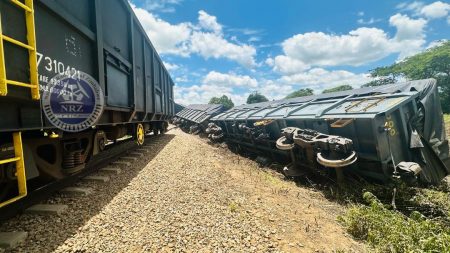
Photo ©Railways Africa // Craig Dean

Zimbabwe’s new National Development Strategy 2 has shown that National Railways of Zimbabwe (NRZ) has experienced a sharp decline in freight capacity, falling from over 12.4 million tons in 1998 to below three million tons in recent years, well below its installed capacity of 18 million tons.

This decline has led to a major shift of heavy freight from rail to road, resulting in extensive damage to road infrastructure, notably the near collapse of the Bulawayo–Hwange highway, among other roads, due to coal and mineral haulage.

The strategy is from January 2026 to December 2030. The focus will be on the rehabilitation, expansion and maintenance of the national railway network to facilitate the movement of bulk cargo, particularly from the mining sector, thereby preserving road infrastructure.

Key policy priorities will include the development of a Railway Safety and Standards Framework aligned with SADC protocols, a rolling stock localisation strategy to promote domestic manufacturing, a green rail policy to advance energy efficient and low-carbon transport and a review of the public private partnership policy to encourage sustainable investment partnerships.

NDS 2 will target to increase freight throughput from the 2025 baseline of 2.1 million tons to 12 million tons by 2030 and passenger numbers from 3,500 to 700,000 annually.

During NDS 2, the railway sector will target three core areas namely; rail infrastructure rehabilitation and upgrade, rolling stock recapitalisation, as well as signalling and telecommunications modernisation, through implementation of the following projects.

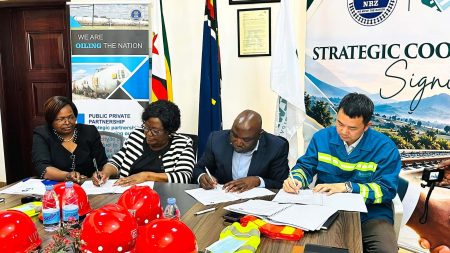
The upgrading of the Mutare–Harare–Chirundu at a cost of about, US$1.2 billion over 2027 to 2030 through a public private partnership or debt finance.

This will include the construction of a 217-kilometre new railway line linking Lion’s Den in Zimbabwe to Kafue in Zambia, which will strengthen SADC interconnectivity, facilitate seamless north–south trade and improve bulk cargo movement between Zimbabwe, Zambia and beyond into the Democratic Republic of Congo (DRC).

The construction of the Mvuma-Manhize-Rusape railway line at an estimated cost of US$550 million, to be implemented under a public private partnership arrangement, with completion targeted by 2030. This line will provide a critical link connecting iron and steel production at Manhize with domestic and export markets, thereby supporting value addition and industrialisation.

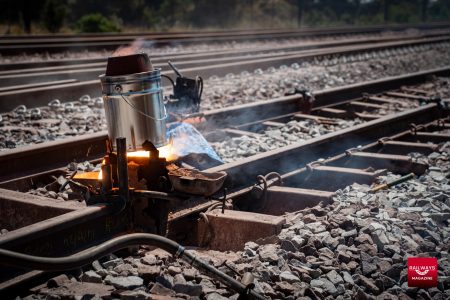
Rehabilitation of 1,700 kilometres of track, including resleepering, ballasting, tamping and turnout replacement along key export–import corridors, as well as targeted yard rehabilitation at a cost of US$480 million, implemented from 2026 to 2030, funded through Government and Mutapa Investment Fund (MIF) as well as public private partnerships. The project will achieve a 30% increase in train speed and a 50% reduction in derailments.

Furthermore, the government plans the rehabilitation of 60 critical bridges and culverts, estimated at US$60 million, to be implemented from 2026 to 2028.

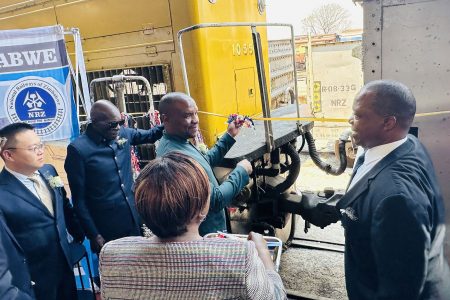
Procurement of 30 mainline locomotives at an estimated cost of US$210 million between 2026 and 2029, funded through government, debt and public private partnerships. This will increase haulage capacity to above 6.7 million tons per year.

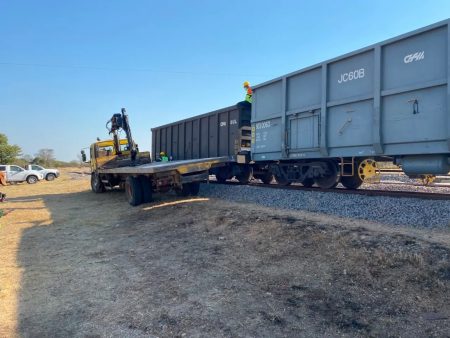
Procurement of 841 new wagons and refurbishment of 1,000 wagons at an estimated cost of US$120 million from 2026 to 2030, funded through government and public private partnership arrangements.

The planned refurbishment of 50 passenger coaches, introducing air-conditioning and Wi-Fi facilities and procuring modern Diesel Multiple Units (DMUs) at a cost of US$25 million, to be implemented from 2027 to 2030.

Furthermore, installation of entry-level train control and automation system, covering 1,000 km of track at an estimated cost of US$150 million from 2026 to 2029, financed through debt and other funding models. This will enhance train control, safety, real-time information access and automation.

Pursuant to this, coal mining companies in Hwange, led by Hwange Colliery Company, will partner government in ambitious NDS 2 plans to refurbish the critical railway line linking the coal fields to the markets.

Footnote

Written for Railways Africa by Chamwe Kaira

Related News Articles

1 min