COMESA Moves Towards Regional Railway Infrastructure Master Plan

Why it Matters

The COMESA diagnostic study is not the master plan itself, but it is the technical baseline that will shape how the future regional railway infrastructure plan is framed. For consultants, railway operators, infrastructure advisers, regulators and development partners, this procurement is an early signal of the areas COMESA wants assessed before moving into a more comprehensive planning phase.

The focus on infrastructure condition, interoperability, governance, regulation, standards, technology and capacity places the assignment directly within the region’s wider trade and logistics agenda. With rail currently carrying only a limited share of freight on major corridors, the study could help define where investment, harmonisation and cross-border coordination are most urgently required.

COMESA has issued a request for proposals for a diagnostic study that will support preparation of a future COMESA Railway Infrastructure Master Plan, marking an important step towards a more structured regional approach to rail investment, interoperability and corridor development across Eastern and Southern Africa.

The assignment, titled Diagnostic Study Towards Preparation of the COMESA Railway Infrastructure Master Plan, is being procured by the COMESA Secretariat under the Regional Infrastructure Finance Facility (RIFF) Project. The reference number is ZM-COMESA-555103-CS.

Issued on 19 June 2026, the request for proposals seeks consulting services for a three-month assignment, with the study expected to provide the supply-side diagnostic foundation for a comprehensive railway master plan to be commissioned under RIFF Phase II.

The diagnostic study is one of two parallel assignments being issued by COMESA. A separate Railway Demand Assessment and Traffic Forecasting Study is also being procured independently. While the two contracts will be awarded separately, their combined outputs are intended to provide the integrated evidence base for the future COMESA Railway Infrastructure Master Plan.

According to the terms of reference, railway transport is viewed as a key enabler of logistics efficiency and trade competitiveness across the COMESA region, particularly for landlocked Member States. COMESA notes that, in some cases, transport costs can represent up to 70% of export value, placing renewed emphasis on the role of efficient rail systems in lowering the cost of moving goods, improving regional trade performance and easing pressure on road infrastructure.

COMESA’s mandate for railway development is anchored in Articles 84 and 86 of the COMESA Treaty, which commit Member States to coordinated and complementary railway policies, harmonised legal and administrative frameworks, and common infrastructure standards to support seamless cross-border railway operations.

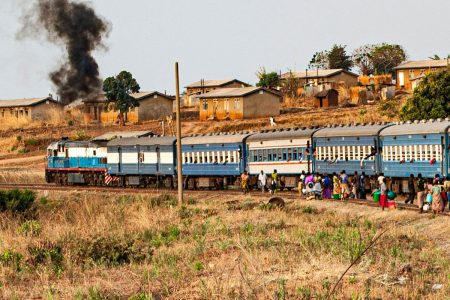
However, the region’s railway sector continues to face a complex set of structural constraints. The terms of reference identify ageing infrastructure, incompatible gauges, limited interoperability, inadequate maintenance, outdated rolling stock, weak governance structures and fragmented national regulatory frameworks among the main challenges affecting performance.

Rail’s share of freight movement along major COMESA corridors is currently estimated at only 10% to 30%, despite rail’s cost advantages for long-distance and bulk cargo. The planned diagnostic study is therefore intended to assess the current state of infrastructure, operations, institutions and governance across the region, while identifying gaps and investment priorities that could shape the future master plan.

The assignment is set to cover COMESA Member States with existing or potential railway networks, with particular focus on those forming part of, or having connectivity potential along, major regional transport corridors.

A major component of the work will be the preparation of a comprehensive inventory of existing railway networks across relevant Member States. This will include route lengths, gauge types, infrastructure condition, operational status and traffic volumes. The consultant will also assess track, bridges, tunnels, stations, signalling and communications systems, supporting utilities, rolling stock availability, rolling stock age, compatibility and maintenance capacity.

Cross-border linkages, missing links and connectivity gaps along major regional corridors will also be mapped.

The technical assessment will look at the range of standards currently applied across the COMESA railway sector, including gauge, axle loads, speed, signalling, communications and safety systems. Interoperability constraints between national networks will be assessed, with priority areas identified for technical harmonisation.

The institutional and regulatory workstream will examine ownership, governance and operating models across publicly owned railways, concessions and open-access arrangements. It will also review national railway policies, legal frameworks and regulatory regimes, with a view to identifying disparities, gaps and harmonisation opportunities.

The terms of reference also require the consultant to assess the mandates and capacity of national regulatory bodies and to examine the feasibility and potential scope of a regional railway coordination mechanism under COMESA.

Technology and modernisation form another important part of the assignment. The consultant will identify technology gaps and modernisation requirements in areas such as digitalisation, remote monitoring, energy efficiency and passenger services. Human resource capacity, skills gaps and training needs will also be assessed at national and regional levels.

The study will further review ongoing and planned railway investments to determine how well they align with regional integration objectives. This includes alignment with continental and regional frameworks such as PIDA, AU Agenda 2063, AfCFTA transport provisions, and relevant SADC, EAC and IGAD transport frameworks.

The final output will include structured recommendations, strategic priorities and a conceptual framework to guide the future preparation of the COMESA Railway Infrastructure Master Plan. The consultant is also expected to develop an indicative scope and terms of reference for that master plan.

Stakeholder engagement will form part of the process, including consultations with national railways, transport ministries, railway regulatory bodies and regional institutions in key Member States. A regional validation workshop is planned for Nairobi, where the diagnostic findings and recommendations will be presented to COMESA Member States and stakeholders.

Premium subscribers can go here to access the opportunity
Footnote

Written by Phillippa Dean

Related News Articles