Written by Phillippa Dean
Why it Matters
The Central Corridor Transit Transport Facilitation Agency (CCTTFA) provides a practical example of how African rail projects can move beyond isolated national infrastructure plans and become part of a wider regional trade system. The CCTTFA works across seven countries, three Regional Economic Communities, and multiple transport modes, demonstrating how corridor institutions can help align national priorities with cross-border economic value.
For the railway sector, the key issue is not only new infrastructure, but integration. Standard gauge railway expansion, legacy network interfaces, dry ports, ports, border systems and regional value chains all need to work together if rail is to support mineral logistics, agricultural exports, industrial growth and intra-African trade under the AfCFTA.
The Central Corridor Transit Transport Facilitation Agency (CCTTFA) is positioning rail, multimodal logistics and cross-border project coordination at the centre of regional trade integration, with standard gauge railway development, inland connectivity and corridor-level project bankability emerging as key priorities.
Adv. Flory Okonge, Executive Secretary of the Central Corridor Transit Transport Facilitation Agency, outlined the growing strategic importance of the Central Corridor during an interview with Railways Africa Editor Phillippa Dean at the recently held Land-Linked Zambia 2026 event.
His message was clear: Africa’s trade ambitions cannot be separated from logistics performance, and logistics performance cannot be addressed country by country in isolation. For the Central Corridor, the future lies in coordinated regional infrastructure, harmonised planning, multimodal integration and a stronger shift towards rail as the backbone of long-distance freight movement.
The CCTTFA is one of the continent’s most important transport and trade networks. Established in 2006, with its headquarters in Dar es Salaam, the corridor management institution brings together seven countries and operates across three Regional Economic Communities: the East African Community (EAC), the Southern African Development Community (SADC) and the Common Market for Eastern and Southern Africa (COMESA). This places the corridor in a distinctive position, linking countries, markets and projects across multiple regional economic blocs.
Its geographic reach is equally significant. The corridor serves a region of more than 200 million people and connects some of Africa’s most resource-rich territories with the Port of Dar es Salaam, as well as other strategic maritime gateways, including Tanga and Mtwara. It supports access to eastern and southern parts of the Democratic Republic of Congo, connects into Malawi and Zambia and links a wider inland market to coastal trade infrastructure.
For Railways Africa, the significance of the CCTTFA is not only in its scale, but in the way it is positioned as a platform for integrated regional infrastructure development, particularly in rail.
A Corridor With Multiple Routes and Multiple Modes
The Central Corridor is not a single-line route. It is a multimodal transport system with several routes, logistics chains and infrastructure interfaces. Its central route links the Port of Dar es Salaam through Tanzania towards the eastern Democratic Republic of Congo, passing through Dodoma, the capital of Tanzania. Its southern route connects Malawi, Zambia and Lubumbashi in the southern Democratic Republic of Congo to Dar es Salaam.
Road, rail, inland waterways, ports, aviation and pipelines all form part of the corridor’s operating framework. The agency’s role is not limited to one transport mode. It sits at the centre of regional coordination, helping align national priorities with projects that unlock broader regional economic value.
According to Okonge, infrastructure remains the critical enabler for seamless cargo movement from Tanzania’s ports to the landlocked countries served by the corridor. However, coordinating infrastructure priorities across seven countries is not a simple process. Each member state has its own national master plan, budget cycle, political priorities and development sequencing. The challenge is to identify which national projects also carry regional value.
This is where the CCTTFA institutional structure becomes important. The agency includes an Interstate Council of Ministers, made up of the ministers of transport from the seven member countries. It also has an executive board of directors comprising the permanent secretaries of the transport ministries, together with private sector representation. A Stakeholders Consultative Committee brings public and private sector actors into dialogue on trade and logistics matters, while the Secretariat manages the operational and technical coordination process.
The inclusion of the private sector at decision-making and consultative levels is a key feature of the corridor model. It reflects the reality that corridor performance depends not only on public infrastructure, but also on transport operators, logistics providers, financiers, users and cross-border trade actors.
From National Master Plans to Regional Projects
One of the most important aspects of the Central Corridor model is the way national infrastructure priorities are converted into regional projects.
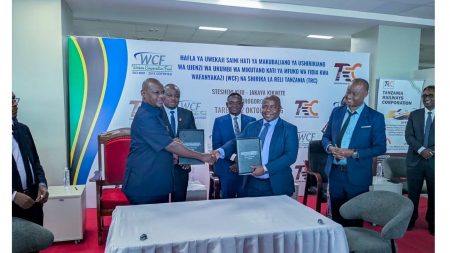
Okonge explained that the process begins with country consultation. The Secretariat engages member states, reviews their national transport master plans and identifies common priorities. Where several countries are pursuing similar infrastructure goals, particularly in rail, the agency encourages them to sit together, align their approach and formalise cooperation through agreements or memoranda of understanding.
This is especially relevant for standard gauge railway development. Tanzania, the Democratic Republic of Congo, Burundi, Uganda and Rwanda all have SGR ambitions linked to the wider Central Corridor network. Rather than viewing these projects as separate national initiatives, the Central Corridor approach is to help structure them as linked regional projects.
This reduces the risk of disconnected investment and improves the likelihood that infrastructure will support cross-border trade flows rather than stop at national borders. It also helps address one of Africa’s recurring transport infrastructure challenges: duplication of assets, fragmented planning and rail networks that do not fully integrate into regional value chains.
For the transformation of the Central Corridor, the agency engaged consultants to visit member countries, identify key priorities and develop criteria for selecting projects with regional impact. The outcomes were then presented at a regional meeting, where member countries assessed and voted on priority projects.
The process identified catalytic anchor projects and regional value chain opportunities, including iron and steel, e-mobility, pharmaceuticals and agriculture. These priorities are now expected to proceed to more detailed feasibility and bankability work, with the aim of positioning them for financing and implementation.
This approach is particularly relevant for rail. Railway projects require long-term demand certainty, cross-border operating logic and strong economic justification. A railway that serves only one national segment may struggle to achieve its full value, while a railway embedded in a regional trade corridor can support industrialisation, mineral logistics, agricultural exports, container flows and inland market access.
Financing the Corridor Development Agenda
The CCTTFA work is financed through both internal and external resources.
Internally, the agency is supported by a user-pay mechanism. Bulk cargo moving through the Port of Dar es Salaam to Central Corridor member states is charged at a rate of 0.3 cents per tonne. The levy is collected through the Tanzania Ports Authority and its partners, and forms part of the agency’s internal resource base.
These internal resources fund the Secretariat’s operations and allow the agency to support selected projects directly. Okonge pointed to the rehabilitation of 20 flatbed wagons for Uganda Railways Corporation and 20 flatbed wagons for Tanzania Railways as examples of corridor-generated funds being reinvested into practical rail and logistics improvements. The 40 wagons cost approximately USD700,000.
The agency has also used internal resources for non-rail projects that support corridor efficiency. These include the construction of a roadside station in Uganda at the Masaka-Mutukula border and the equipping of a control room for the Tanzania Revenue Authority. The control room supports monitoring of cargo movement from Dar es Salaam to Tanzania’s borders, helping reduce cargo dumping risks and limiting unnecessary human intervention along the logistics chain.
Externally, the Central Corridor works with a range of development partners and financiers, including the African Development Bank, the African Union Commission, GIZ, the World Bank, the Development Bank of Southern Africa and TradeMark Africa. Okonge indicated that TradeMark Africa has been one of the corridor’s key long-term partners, supporting development work across member states for more than a decade.
The distinction between internal and external funding is important. Internal resources give the agency a measure of operational independence and allow it to respond to targeted corridor needs. External resources, however, are essential for large-scale infrastructure development, feasibility studies, project preparation and financing mobilisation.
For major rail projects, this blended approach is likely to remain critical. The scale of SGR expansion, cross-border rail studies and bankability work requires both institutional coordination and access to development finance.
Rail at the Centre of the Central Corridor
The Central Corridor’s rail environment is technically complex. It includes metre gauge, Cape gauge and standard gauge systems. TAZARA operates as part of the wider regional rail context, while Tanzania’s metre gauge network continues to connect Dar es Salaam with inland destinations including Kigoma and Mwanza. At the same time, standard gauge railway development is now emerging as the corridor’s flagship rail priority.
Okonge described the SGR programme as central to the corridor’s future, particularly because five of the seven member countries have expressed SGR ambitions. Tanzania, Burundi, the Democratic Republic of Congo, Uganda and Rwanda all form part of the wider SGR development picture.
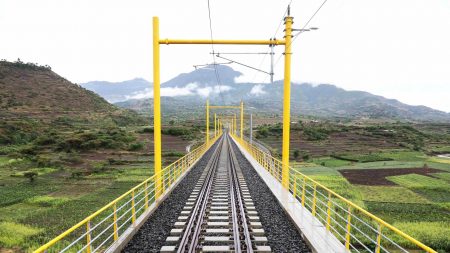
The Central Corridor SGR vision includes a major axis from Tanzania through Burundi and towards Kindu in the Democratic Republic of Congo. In Tanzania, sections of the SGR are already operational, including the Dar es Salaam to Dodoma section, which Okonge identified as functional for both passenger and freight services.
Burundi has also started construction on its side, while feasibility work is ongoing for the Burundi to the Democratic Republic of Congo connection. The final report for that study is expected before the end of the year, after which the next steps would include funding mobilisation and procurement.
A second major SGR development path involves Tanzania, Uganda and the northern part of the Democratic Republic of Congo, including Kisangani. The countries have already signed a memorandum of understanding, and the Infrastructure Project Preparation Facility (IPPF) under AUDA-NEPAD, through the African Development Bank, is involved in supporting feasibility work. The project has been included in the current financial year work plan of IPPF-AUDA-NEPAD.
A further planned SGR connection would link Tanzania to Rwanda through Isaka and Kigali. Together, these projects point to an emerging SGR network logic in which Tanzania’s rail development is not only a national programme, but a platform for regional connectivity into the Great Lakes region and beyond.
Managing Gauge Diversity
One of the most important practical issues for the region is how different rail gauges will interact.
The Central Corridor includes metre gauge, Cape gauge and standard gauge systems. This creates operational and technical complexity, particularly where freight flows need to move across systems. Gauge breaks can affect efficiency, increase handling requirements and complicate fleet deployment. However, Okonge indicated that the systems are already able to interface in certain locations, including at Kwala Dry Port in Dar es Salaam, where the different railway systems are connected.
The challenge now is to make that integration more efficient. Digital systems, operational coordination and better interface planning will be required if the corridor is to avoid creating parallel infrastructure that does not fully support through-movement of cargo.
This is where the corridor’s multimodal mandate becomes important. Rail cannot be planned in isolation from ports, dry ports, roads, inland waterways and border systems. The value of SGR investment will depend on the quality of its interface with legacy rail systems, last-mile cargo facilities, customs processes, port capacity and regional industrial demand.
This raises a broader African rail question. How should countries balance the development of new standard gauge systems with the continued use and rehabilitation of existing metre gauge and Cape gauge networks?
The pragmatic answer is that standard gauge is being treated as the flagship future system, particularly because of its capacity, environmental benefits and regional ambitions. At the same time, existing networks remain relevant and must continue to function where they provide essential connectivity. The priority is not simply to replace one system with another, but to build an integrated rail logistics environment that can move cargo more efficiently across the corridor.
TAZARA and the Wider Regional Connectivity Lesson
TAZARA was highlighted as an important example of cross-border rail cooperation between Tanzania and Zambia, developed with Chinese support and now undergoing renewed efforts towards revitalisation.
For Okonge, TAZARA demonstrates both the potential and the challenges of cross-border rail. It shows that African countries can cooperate on major rail infrastructure where there is shared political will and a common economic objective. It also shows that such infrastructure requires continued reinvestment, operational discipline and renewed cooperation when performance declines.
This message resonated strongly with the themes of Land-Linked Zambia 2026, where regional corridors, rail connectivity and the need to strengthen links between ports and landlocked economies were high on the agenda. Zambia’s strategic position, alongside developments linked to Mozambique, Zimbabwe, the Lobito Corridor and Nacala, reflects a wider continental shift towards corridor-based development rather than isolated national transport projects.
The lesson is that regional connectivity requires more than infrastructure. It requires countries to agree on priorities, co-finance studies, align technical standards, mobilise funding and build institutions capable of coordinating across borders.
Rail, Trade and the AfCFTA Agenda
The Central Corridor’s work is closely aligned with the broader African Continental Free Trade Area agenda. Okonge emphasised that African economies are increasingly interdependent and that no country can optimise its trade potential by looking inward or closing itself off from its neighbours.
For Railways Africa, this is a critical point. Rail corridors are not only transport assets. They are economic instruments that support regional trade, industrialisation and market integration. The full value of the AfCFTA cannot be unlocked without reliable, high-capacity logistics systems linking ports, production centres, mining regions, agricultural zones and inland markets.
The Central Corridor is therefore not simply coordinating infrastructure. It is helping shape the physical architecture required for intra-African trade. By working with continental institutions, development partners and member states, the agency is positioning corridor development as part of Africa’s wider trade integration agenda.
For the railway sector, infrastructure alone will not be enough. Rail projects must be embedded in corridor logic, supported by cross-border agreements, linked to value chains and designed to serve regional demand.
Written by Phillippa Dean