Why it Matters
- The R3.4 billion programme is the largest private freight rail investment in South Africa, directly addressing about 5 percent of the national rail capacity shortfall and strengthening the country’s logistics competitiveness.
- With a minimum 60 percent local content requirement and more than 660 direct jobs, the investment stimulates industrialisation, supplier development and skills growth across South Africa’s rail manufacturing ecosystem.
- Modernised, fuel-efficient locomotives and newly built wagons will reduce logistics costs, improve reliability on key corridors and ease congestion at ports and on national roads.
- The programme demonstrates tangible confidence in South Africa’s rail reform agenda, signalling strong alignment between policy certainty, private capital mobilisation and long-term economic outcomes.
- Increased rail capacity unlocks wider multiplier effects for mining, agriculture, manufacturing and export logistics, supporting national growth objectives and strengthening regional trade corridors.
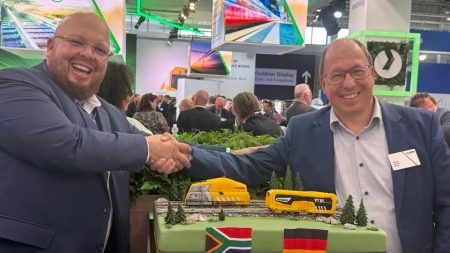
Traxtion has confirmed it is concluding a R3.4 billion rolling stock investment programme to expand freight capacity and support South Africa’s rail reform agenda. The programme, comprising R1.8 billion in locomotives and R1.6 billion in wagons, is the largest private freight rail investment in South Africa’s history in terms of fleet size and value, with a minimum 60% local content target and 662 direct jobs projected during build and deployment. The added capacity is expected to address about 5% of the national freight rail capacity shortfall.
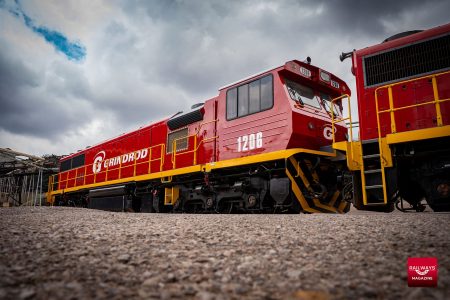
The investment includes 46 Wabtec diesel-electric locomotives (42 U26C partly modernised locomotives and four C30-8MMI fully modernised locomotives) acquired from KiwiRail in New Zealand. Working with Wabtec, the 42 U26C fleet will be upgraded to C30MEI specification, featuring brand-new, fuel-efficient 7FDL-EFI engines and advanced Brightstar control systems, improving tractive performance and reliability. All locomotive upgrade work will take place at Traxtion’s Rail Services Hub in Rosslyn, anchoring local manufacturing and supplier participation.
The 46 locomotives will be shipped in four tranches between April 2026 and August 2027. Each batch of 10 to 12 locomotives will undergo a four-month modernisation cycle, including engine and control system upgrades, major six-yearly services and full repainting. The first upgraded units will roll out in Q3 2026, marking the historic entry of Traxtion’s trains to South African mainline operations.
“Private capital flows when Government policies create confidence in the private sector to invest. This investment is our vote of confidence in South African rail and in the reform momentum we are seeing,” said James Holley, CEO of Traxtion. “Every additional locomotive we put to work lowers logistics costs, protects the road network, improves our environmental footprint, and most importantly, creates jobs in the upstream economy.”
“We have structured this programme to maximise South African industrial value-add, such as local assembly, supplier development, and skills transfer, while getting modern locomotives and wagons into service as quickly as possible. The objective is to move more freight by rail, reliably, and at scale. We expect that all the wagons for this project will be domestically manufactured by our existing trusted wagon suppliers”
What the investment delivers
- Capacity where it is needed: High capacity and highly reliable locomotives and wagons dedicated to high-demand bulk and container flows, easing pressure on South African ports and key corridors.
- Local content and jobs: At least 60% local content across the programme, a minimum of 662 direct permanent jobs projected through manufacturing, assembly, commissioning and operation.
- Supplier ecosystem growth: Multi-year demand for components, maintenance, and technical services to deepen South Africa’s rail services and manufacturing base.
- Skills and safety: Training and certification for operating crews and technical teams supported by Traxtion’s Government-accredited Rail Training Centre at Rosslyn.
Aligned with rail reform
Traxtion’s announcement comes amid the implementation of South Africa’s rail reform framework, including the separation of infrastructure and operations and the build-out of economic regulation.
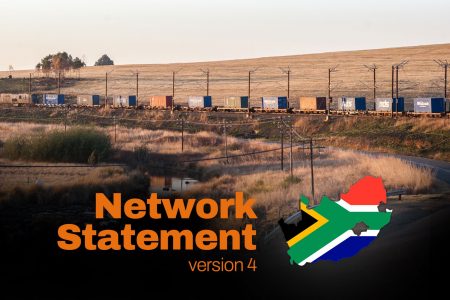
“We welcome the progress to date and the leadership shown by the Department of Transport and the Interim Rail Economic Regulatory Capacity,” Holley said. “We are preparing to unlock significantly more in further investment. To unlock that the next iteration of the Rail Access Agreement under the Network Statement must be fully bankable with service-level guarantees for awarded slots, balanced legal protections, and clear recognition of lender rights.”
This investment marks a defining milestone for private sector participation in South Africa’s rail reform journey. As a long-term investor in Traxtion, Harith is confident in rail’s potential to unlock immense economic value. “This programme sets a new benchmark for how private investment, aligned with policy certainty and local value creation, can deliver transformative outcomes for South Africa and the continent,” said Sipho Makhubela, CEO of Harith.
A proven African growth model
Traxtion operates across 10 African countries and has an existing fleet of more than 50 locomotives on long-term contracts. On regional corridors such as TAZARA and in the Democratic Republic of Congo, third-party access regimes have underpinned material volume gains, with annual rail volumes increasing significantly since their introduction.
“These results are repeatable when the business case is right. South Africa can capture the same benefits, like more tonnage on rail, lower system costs, and stronger industrial spillovers, if we keep momentum on reform, access and the planned infrastructure PSPs,” said Holley.
A catalyst for broader economic impact
Traxtion’s R3.4 billion programme forms part of a larger R5 billion private-sector commitment signalled at the launch of the National Rail Policy in 2022. Beyond immediate build-and-deploy activity, the company expects multiplier effects across mining, agriculture, manufacturing and export logistics as volumes shift from road to rail.
“The expansion of Traxtion’s locomotive fleet delivers a strong competitive advantage and showcases how patient infrastructure capital drives industrialisation, job creation and regional trade. Harith is encouraged by the reform momentum, which is now translating into measurable commercial and socio-economic returns,” added Makhubela.
“Rail is a network industry. When trains move efficiently, the whole economy moves. This programme is about getting South Africa’s freight system working for growth and proving that private-sector investment, aligned with reform, can deliver fast, measurable gains for the country and the region,” concluded Holley.